

+91 98209 33660
Precision-engineered, continuous-duty gas handling and fluid aeration systems compliant with global ISO/CE standards and Indonesian PLN electrical grids.
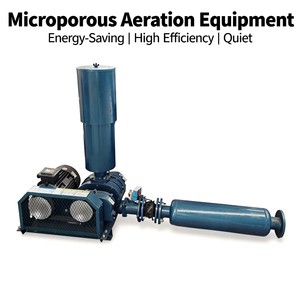
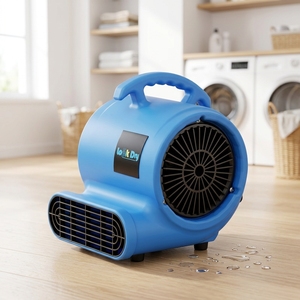
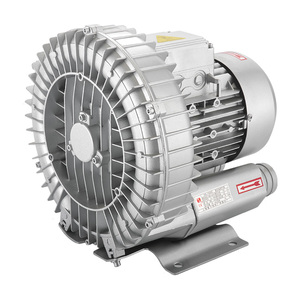
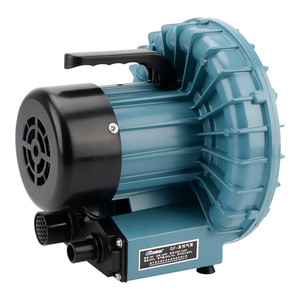
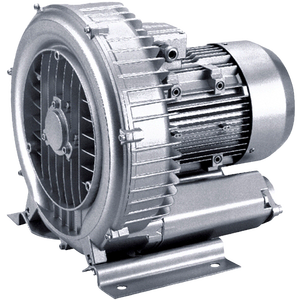
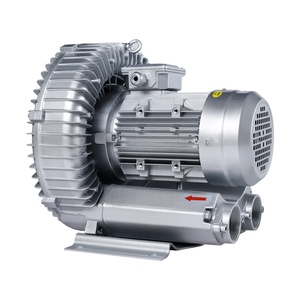
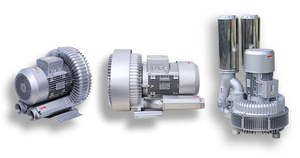
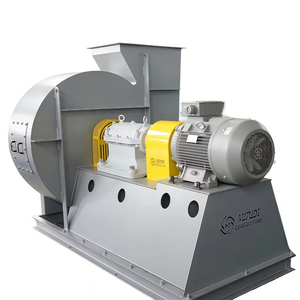
A Ring Blower (also referred to as a side channel blower, vortex blower, or regenerative blower) operates on a non-displacement, regenerative fluid dynamics acceleration principle. Unlike positive displacement Roots blowers or rotary vane pumps, ring blowers transfer kinetic energy to the gas medium via a series of non-contacting radial impeller blades rotating inside a high-precision toroidal housing.
As the electric motor drives the impeller, atmospheric gas is drawn into the inlet port. Centrifugal force hurls the gas outward into the side channel where it is compressed and forced back toward the base of adjacent blades. This regenerative helical vortex path repeats dozens of times per second, building cumulative static pressure equivalent to multi-stage positive displacement machines without requiring internal lubrication or experiencing mechanical friction.
Technical Information Gain Note: For industrial procurement officers and system integrators across Indonesia, selecting the optimal ring blower configuration requires evaluating ambient humidity degradation, elevation head losses, gas temperature rise ($\Delta T$), and continuous thermal duty curves under the Indonesian PLN grid (380V/220V 50Hz ±10% voltage variance).
Modern industrial applications in tropical coastal environments—such as Jakarta's North Coast, East Java's marine aquaculture belts, and Sumatra's palm oil processing centers—require robust metallurgical standards to prevent atmospheric oxidation and thermal fatigue:
Tailored fluid movement and aeration engineering across Indonesia's core manufacturing hubs, industrial estates, and aquaculture regions.
Deployed extensively across Banyuwangi, Situbondo (East Java), Lampung, and South Sulawesi. Our 1.5kW to 5.5kW vortex ring blowers provide deep-water fine-bubble aeration for intensive biofloc and pond raceway systems, boosting Dissolved Oxygen (DO) levels above $6.0\text{ mg/L}$ to maximize stocking densities.
Essential for industrial estates in Cikarang, Karawang, MM2100, and Tangerang. Side channel blowers deliver pulse-free pressurized air to submerged fine-pore diffusers, accelerating biological oxidation of Chemical Oxygen Demand (COD) and Biological Oxygen Demand (BOD) in factory effluent tanks.
In Bandung, Majalaya, and Cimahi textile clusters, ring blowers power vacuum dewaxing, automated fabric suction tables, dye-bath air agitation, and lint extraction units operating continuously across 3-shift production cycles.
Used by food, pharmaceutical, and plastic granule processing plants in Surabaya, Gresik, and Semarang for lean phase vacuum conveying, automated pick-and-place suction cups, and continuous bottle drying air-knife lines.
Indonesia's industrial landscape is undergoing rapid modernization driven by the government's "Making Indonesia 4.0" initiative and the Ministry of Marine Affairs and Fisheries (KKP) roadmap for sustainable aquaculture. Key structural shifts shaping the demand for high-efficiency side channel blowers include:
Traditional surface paddlewheels suffer from high mechanical wear, splash evaporation losses, and limited oxygen transfer efficiency in deep water ($>1.5\text{m}$). Modern Vannamei shrimp farms in East Java and Lampung are migrating toward high-pressure ring blowers connected to bottom micro-porous aeration tubing, increasing oxygen absorption rates by over $40\%$ while cutting energy consumption per hectare.
The Ministry of Environment and Forestry (KLHK) has heightened enforcement of wastewater discharge compliance for factories in Jabodetabek and Greater Surabaya. Industrial plants are upgrading traditional blowers to low-noise, oil-free side channel blowers to ensure 24/7 aerobic digestion reliability without risk of hydraulic oil contamination.
Comparative technical data for single-stage and double-stage ring blowers under standard testing conditions ($20^\circ\text{C}, 1013\text{ mbar}$).
| Model Series | Stage Type | Power (kW / HP) | Max Airflow (m³/h) | Max Pressure (mbar) | Max Vacuum (mbar) | Noise Level (dB) |
|---|---|---|---|---|---|---|
| RB-V120-1S | Single Stage | 0.12 kW / 0.16 HP | 45 m³/h | 80 mbar | -70 mbar | 50 dB(A) |
| RB-V750-1S | Single Stage | 0.75 kW / 1.0 HP | 145 m³/h | 190 mbar | -170 mbar | 63 dB(A) |
| RB-V1500-1S | Single Stage | 1.5 kW / 2.0 HP | 210 m³/h | 220 mbar | -200 mbar | 64 dB(A) |
| RB-V2200-1S | Single Stage | 2.2 kW / 3.0 HP | 318 m³/h | 270 mbar | -240 mbar | 69 dB(A) |
| RB-V4000-2S | Double Stage | 4.0 kW / 5.5 HP | 320 m³/h | 410 mbar | -340 mbar | 72 dB(A) |
| RB-V7500-2S | Double Stage | 7.5 kW / 10.0 HP | 530 m³/h | 600 mbar | -460 mbar | 74 dB(A) |
| RB-V15000-2S | Double Stage | 15.0 kW / 20.0 HP | 1050 m³/h | 1040 mbar | -730 mbar | 78 dB(A) |
Building on over five decades of electromechanical engineering heritage (established in 1974), our direct-factory supply model bridges high-precision manufacturing with localized technical support for the Indonesian archipelago:
Every motor rotor and stator core is wound using 100% electrolytic grade copper coils with Class H insulation ($180^\circ\text{C}$ thermal limit). Automated varnish vacuum impregnation prevents dielectric breakdown during heavy voltage surges on rural power grids.
Extruded housings undergo multi-stage alkaline washing, chromate conversion coating, and electrostatically applied epoxy powder baking. Optional PTFE fluorocarbon coating is available for hyper-saline aquaculture environments.
100% of manufactured units are subjected to static pressure testing, acoustic decibel evaluation, digital dynamic balancing, and electrical leak detection prior to export palletization.
Custom shaft extensions, dual-frequency motor windings (50Hz / 60Hz auto-switchable), specific inlet/outlet flange threading (BSP/NPT), and specialized IP65 explosion-proof junction boxes are available upon technical drawing review.
Clear engineering answers regarding power compatibility, shipping logistics, customs documentation, and maintenance protocols.
Yes. We manufacture electric motors customized specifically for Indonesian voltage standards. Our three-phase models operate seamlessly on 380V/50Hz, and single-phase models are engineered for 220V/50Hz. All motors feature a ±10% voltage variance tolerance to withstand grid fluctuations in remote industrial areas or coastal aquaculture farms.
Static pressure requirements depend on water depth and line friction losses. As a baseline rule of thumb: 1 meter of water depth equals approximately $100\text{ mbar}$ of backpressure. Adding $30\text{ mbar}$ to $50\text{ mbar}$ for pipe friction and diffuser resistance, a pond with $1.5\text{m}$ water depth requires a ring blower rated for at least $200\text{ mbar}$ continuous discharge pressure (e.g., our 1.5kW or 2.2kW single-stage models).
Because ring blowers feature 100% oil-free, non-contact impellers, routine maintenance is minimal. Operators should regularly clean or replace the inline inlet air filter to prevent dust ingress, inspect the SKF/NSK bearings every 10,000 operational hours, and ensure ambient cooling fan covers remain unobstructed.
We provide complete export documentation for smooth clearing at Tanjung Priok (Jakarta), Tanjung Perak (Surabaya), or Belawan (Medan). Documentation includes Certificate of Origin (Form E for ASEAN-China free trade duty concessions), ISO 9001 quality compliance certs, CE declarations, HS-coded Commercial Invoices, and detailed Packing Lists.
Yes. Our blowers can be mounted horizontally or vertically. For outdoor marine installation (such as coastal aquaculture ponds), we recommend specifying our IP55 tropicalized enclosure option along with a protective rain canopy to prevent direct exposure to salt spray and monsoonal rainfall.
Connect with our senior application engineers to receive full product datasheets, CAD dimensional drawings, airflow curve charts, and wholesale FOB/CIF pricing for Indonesian sea ports.