
Engineering Excellence Since 1974 · Thane, India

The Ultimate B2B Procurement & Sourcing Guide to External Rotor Motor Blowers

Comprehensive engineering insights on space-saving compact design, aerodynamic thermal management, EC/AC efficiency, and direct OEM customization for high-static pressure applications.

50+Years of motor & blower manufacturing excellence
50%Axial space savings vs conventional motor drives
40,000+Hours bearing operational service life (L10)
100%In-house winding, rotor balancing & airflow testing
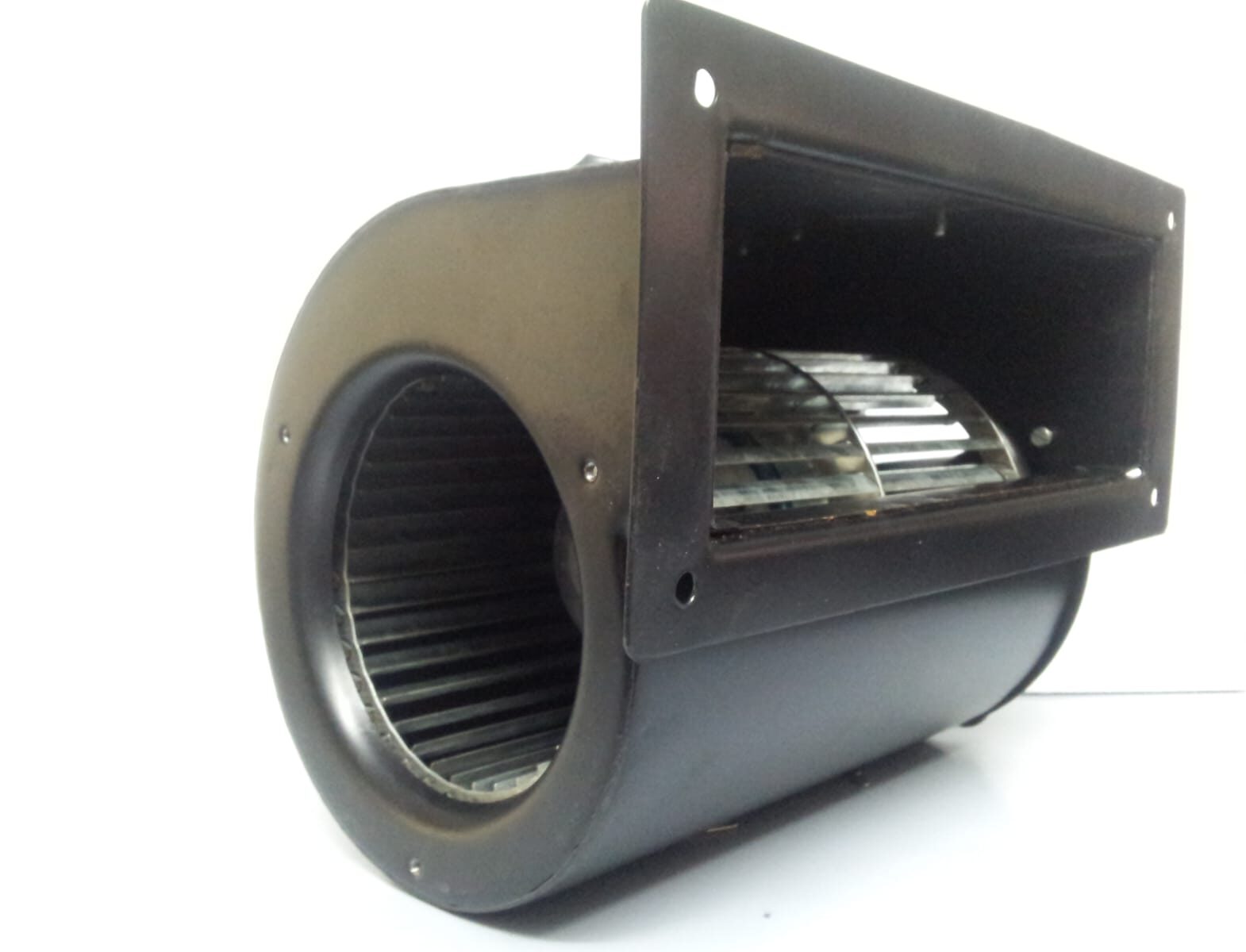
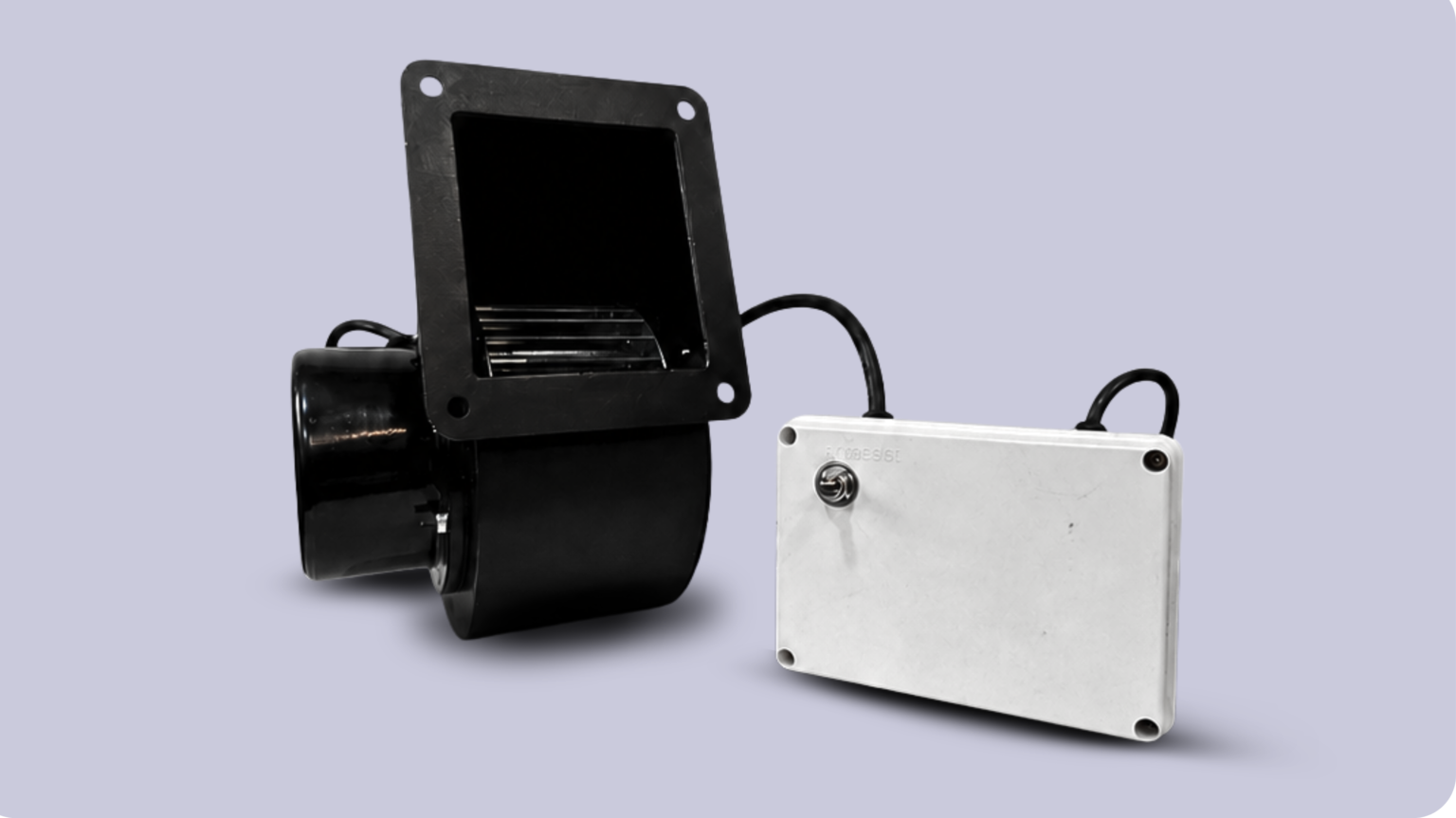
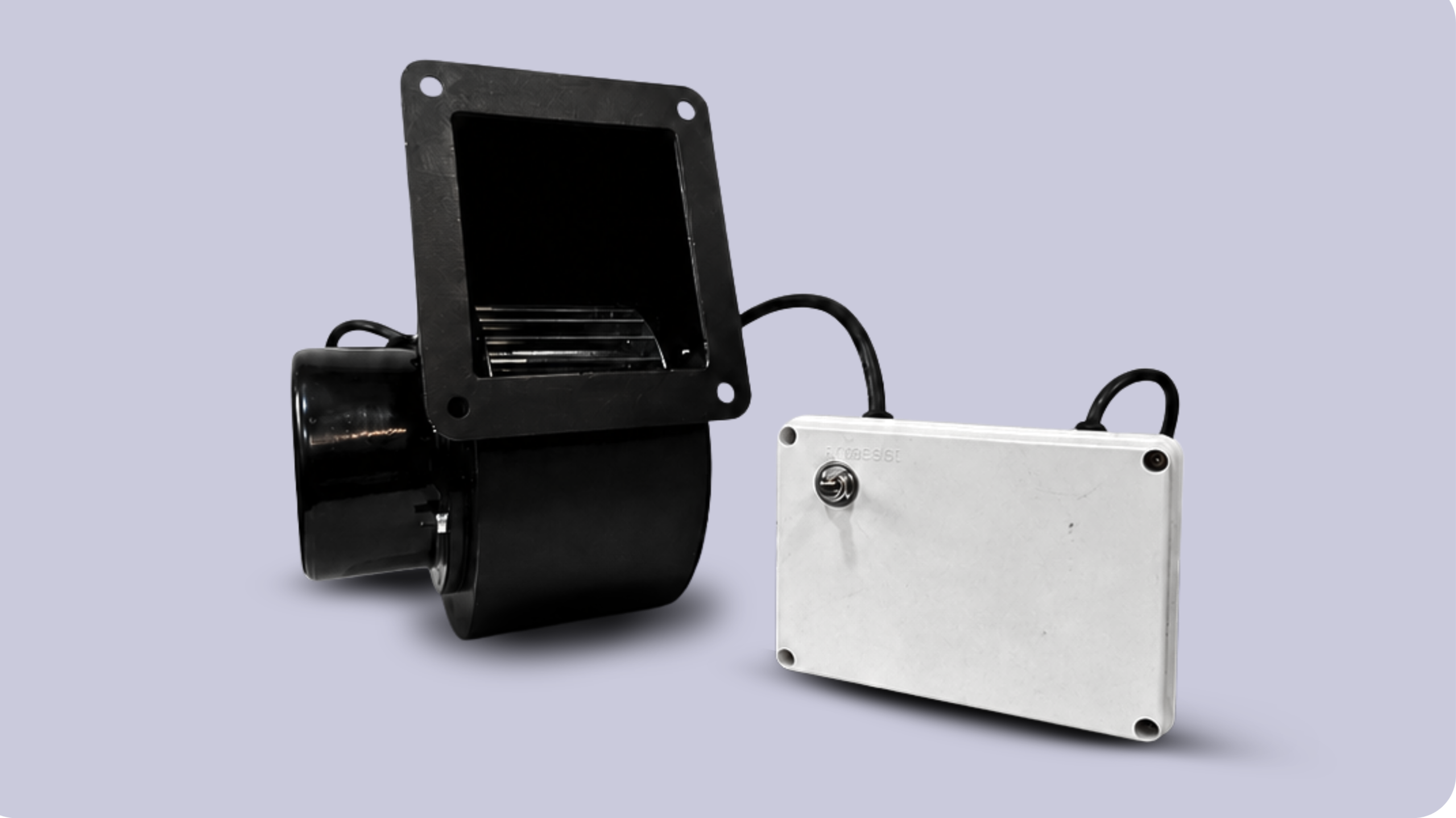
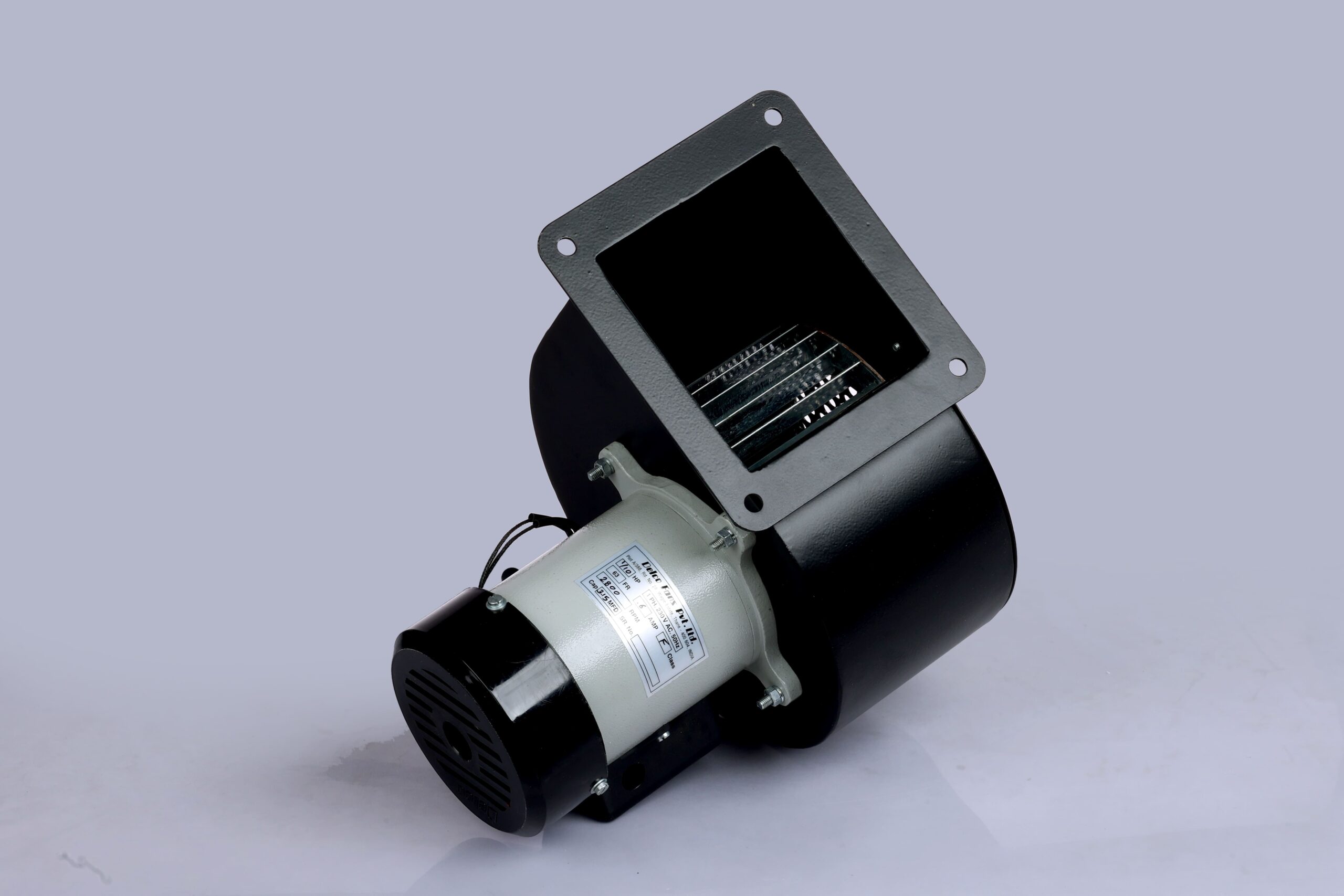
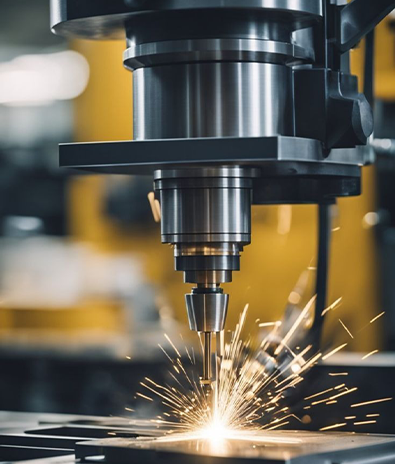
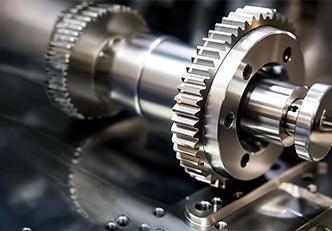
Precision motor winding and machining at Delco Fans plant External rotor motor blower housing assembly detail Delco Fans 50 years seal
Technical Depth & Fundamentals

Understanding External Rotor Motor Technology: The Physics of Compact Aerodynamics

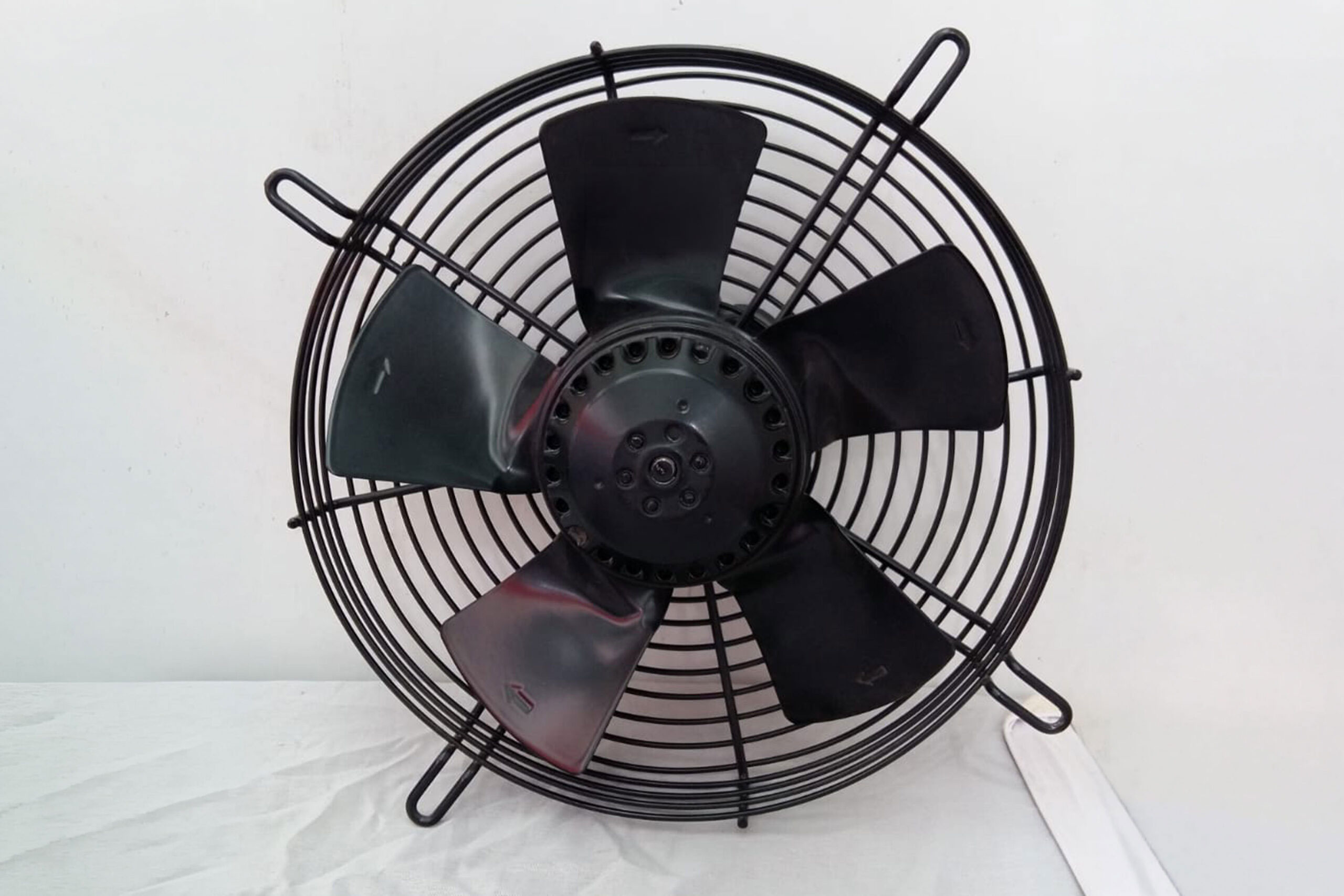
In conventional air movement equipment, an internal rotor motor drives an external impeller via a prolonged drive shaft or belt transmission system. This legacy design creates significant axial bulk, introduces mechanical vibration vectors, and limits thermal dissipation from the motor core. By contrast, an External Rotor Motor Blower structurally flips the conventional motor geometry inside out.

In an external rotor configuration, the stationary internal stator is anchored directly around the fixed central shaft, while the outer rotor housing rotates around it. The centrifugal fan wheel (impeller) is press-fitted or directly welded onto the exterior circumference of this rotating rotor shell. This integrated design unlocks profound engineering advantages for OEM system designers worldwide:

  • Maximum Axial Compactness: By placing the motor internal to the impeller hub, the total axial depth of the blower assembly is reduced by up to 50%, allowing seamless installation into space-constrained HVAC plenums, medical enclosures, and electrical cabinets.
  • Direct Convective Cooling: Because the outer rotor housing is exposed directly within the suction airflow pathway of the incoming air stream, heat generated by electrical resistance within the motor is rapidly dissipated via forced convection. This keeps winding temperatures significantly lower, prolonging varnish integrity and bearing lubricant performance.
  • Superior Dynamic Stability & Lower Noise: Coupling the impeller directly to the wide outer diameter of the rotor distributes rotational inertia evenly. Delco Fans dynamically balances every external rotor motor assembly to ISO 1940 Grade G2.5 tolerances, eliminating shaft whip, bearing chatter, and structural vibration resonance.
  • Optimized Operating Efficiency: Eliminating drive belts, external pulleys, and flexible couplings completely removes mechanical friction losses, yielding higher wire-to-air energy transformation efficiency across continuous duty cycles.
Send an Inquiry
Engineering Matrix

Technical Performance & Specification Parameters

Compare key operational characteristics across Delco’s standard external rotor motor blower series. Custom windings, shaft dimensions, and flange drillings are executed upon OEM request.

Technical Specifications Matrix for Delco External Rotor Motor Blowers
Model Family Impeller Dia (mm) Max Airflow (CFM / m³/h) Max Pressure (Pa) Voltage / Freq Insulation Class Ingress Protection Typical Noise (dBA)
DF-ERB-120 Single Inlet 120 mm 260 CFM / 440 m³/h 380 Pa 230V / 50-60Hz Class F (155°C) IP54 / IP55 54 dBA
DF-ERB-140 Single Inlet 140 mm 380 CFM / 645 m³/h 450 Pa 230V / 50-60Hz Class F (155°C) IP54 / IP55 58 dBA
DF-ERB-160 Single Inlet 160 mm 520 CFM / 880 m³/h 520 Pa 115V / 230V Single/3-Ph Class F / H IP55 62 dBA
DF-ERB-133 Double Inlet 133 mm 580 CFM / 980 m³/h 320 Pa 230V / 50-60Hz Class F (155°C) IP54 60 dBA
DF-ERB-146 Double Inlet 146 mm 750 CFM / 1270 m³/h 390 Pa 230V / 50-60Hz Class F (155°C) IP54 63 dBA
DF-EC-190 Backward Curved 190 mm 420 CFM / 710 m³/h 610 Pa 230V EC (0-10V Control) Class F (155°C) IP54 65 dBA
DF-EC-225 Backward Curved 225 mm 730 CFM / 1240 m³/h 700 Pa 230V EC (0-10V Control) Class F / H IP55 68 dBA
B2B Procurement FAQ

Frequently Asked Questions by Global OEM Buyers & Engineers

Clear, technical answers to common queries submitted to our engineering desk regarding External Rotor Motor Blowers.

In an internal rotor motor blower, the inner shaft spins inside a stationary frame, requiring an external shaft extension to connect to the fan wheel. This setup extends the total length (axial depth) of the assembly and isolates the motor inside its own frame where cooling relies on separate cooling blades. In an External Rotor Motor Blower, the rotor shell surrounds the internal stationary stator. The fan wheel is mounted directly onto the rotating outer shell. This compact integration cuts physical length by up to 50% while placing the motor shell directly in the incoming intake air path for efficient forced convective cooling.
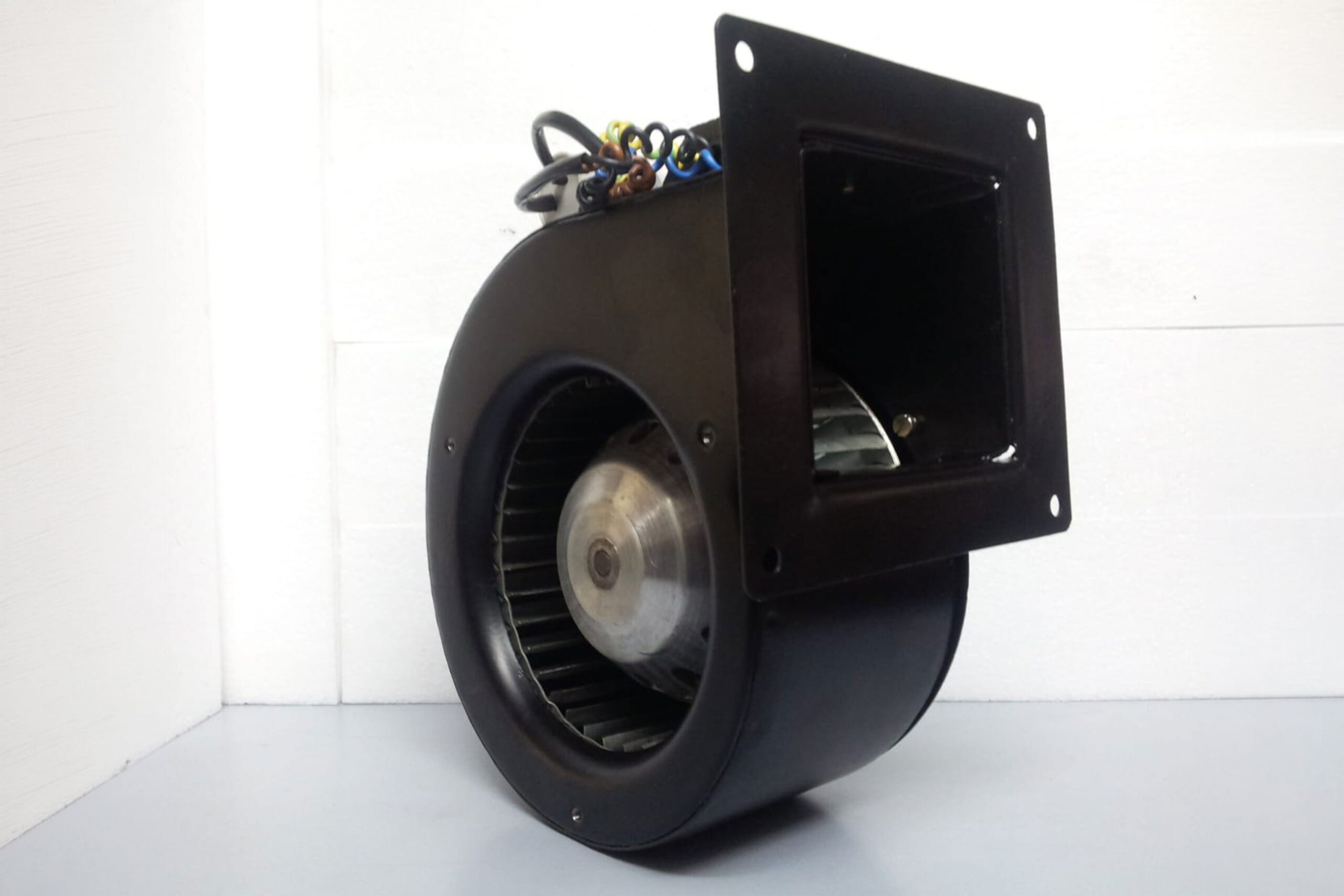
Single inlet external rotor blowers draw air axially through one side and accelerate it radially out through a tightly contoured scroll housing. This focused scroll volute efficiently converts dynamic velocity pressure into high static pressure, making it ideal for forcing air through clogged HEPA filters, dense heat exchanger coils, long ducting runs, or pressurized equipment cabinets.
Bearing failure in external rotor blowers is typically caused by unmitigated ambient heat buildup, dynamic rotor imbalance, or improper axial preload. Delco Fans mitigates these risks by:
  • Using maintenance-free, sealed, deep-groove precision ball bearings packed with wide-temperature-range synthetic grease (-30°C to +140°C).
  • Leveraging direct airflow over the rotating rotor housing to reduce internal bearing ambient operating temperatures.
  • Dynamically balancing 100% of external rotor impellers on computerized balancing rigs to ISO 1940 Grade G2.5.
  • Integrating Class F/H insulation and automatic thermal overload protection (TOP) switches into the winding core.
AC External Rotor Blowers run directly on standard AC grid power (single-phase 115V/230V or three-phase 400V) and speed control is achieved via voltage reduction (triac or autotransformer). They are robust, economical, and simple to operate. EC (Electronically Commutated) Blowers integrate permanent magnet BLDC motor technology with onboard power electronics. EC blowers run on AC supply but convert it internally to DC, achieving significantly higher energy efficiency (IE4/IE5 level), reduced operating heat, precise speed control via 0-10V / PWM signals, and smart telemetry capabilities.
Yes. Delco Fans specializes in OEM custom manufacturing. We routinely adapt discharge mounting flange hole patterns, discharge throat angles (0°, 90°, 180°, 270°), cable lead lengths, waterproof connectors, custom wire harness terminations, and private-label nameplate branding to match your exact assembly line requirements.
Every production batch undergoes 100% routine electrical testing (hi-pot dielectric insulation test, resistance check, no-load current/wattage), rotational direction verification, vibration analysis, and visual inspection at our facility in Thane, India. Comprehensive batch test certificates, dimensional reports, and material compliance documentation are provided for global OEM customs clearance.
Delco Fans engineering team conducting routine motor testing
E-E-A-T & Manufacturing Advantage

Why Global OEMs Partner with Delco Fans Pvt. Ltd.

Established in 1974 in Wagle Industrial Estate, Thane, Maharashtra, India, Delco Fans has accumulated over five decades of specialized experience in fractional horsepower electric motors and industrial air movement systems.

Unlike trading vendors or catalog assemblers, Delco executes the entire production lifecycle under strict quality management systems:

  • In-House Tooling & Stator Winding: Precision automatic copper winding, insulation lamination, and varnish vacuum impregnation ensure electrical reliability under harsh continuous duty.
  • Computerized Dynamic Balancing: Every external rotor impeller assembly is balanced to ISO 1940 Grade G2.5, eliminating unwanted acoustic hum and mechanical vibration.
  • Application-Driven Co-Engineering: Our engineering desk collaborates directly with your CAD design team to size airflows (CFM vs. static pressure curves), select optimal winding impedance, and establish duty-point compliance before tool release.
  • Proven Export & Logistics Infrastructure: Experienced in serving OEM accounts across North America, Europe, the Middle East, and Asia-Pacific with robust export packaging, short lead-times, and reliable serial production batch consistency.
Send an Inquiry

Request a Technical Quote & OEM Engineering Consultation

Submit your duty point requirements—Airflow (CFM/m³/h), Static Pressure (Pa), Voltage, Dimension Constraints, and Target Application—and our engineers will tailor the ideal External Rotor Motor Blower configuration for your system.

Send an Inquiry Contact Us directly