
Industrial Ventilation Infrastructure & Exhaust Fan Specification for Greater Sydney
In modern industrial manufacturing, logistical warehousing, and process processing facilities across New South Wales (NSW), mechanical ventilation is a critical baseline requirement for worker safety, thermal regulation, and structural integrity. Selecting an qualified Industrial Exhaust Fans Supplier & Exporter for Sydney requires a deep understanding of localized environmental challenges, Australian compliance frameworks (specifically AS/NZS 1668.2 and the National Construction Code - NCC Section J), and advanced aerodynamic engineering.
Facilities located in Greater Sydney’s premier industrial corridors—such as Wetherill Park, Blacktown, Smithfield, Silverwater, Eastern Creek, and the burgeoning Western Sydney Aerotropolis—face unique operational environments. Summer ambient indoor temperatures in uninsulated steel distribution centers frequently exceed 42°C, while coastal facilities surrounding Botany Bay, Port Jackson, and Kurnell are exposed to aggressive C4/C5 marine salt-spray corrosion. Industrial air movement systems must be specified with precise thermodynamic and mechanical margins to prevent premature stator breakdown, bearing seizure, or efficiency degradation.
Key Engineering Takeaway for Sydney Procurement Directors
Standard commercial-grade exhaust fans often fail prematurely in Western Sydney due to severe summer thermal spikes and high continuous duty cycles. Specifying industrial-grade fans with Class H copper magnet wire winding, double-sealed C3 clearance ball bearings, and marine-grade protective surface treatments guarantees operational longevity and compliance with Safe Work NSW airborne contaminant exposure thresholds.
Thermodynamic & Aerodynamic Sizing for NSW Industrial Facilities
Selecting the correct industrial exhaust system is not simply a matter of volumetric displacement (CFM or m³/h). Engineers must accurately compute total system resistance (static pressure measured in Pascals) imposed by ducting networks, louvres, filtration banks, and pressure differentials across building envelopes.
Industrial exhaust fan aerodynamics generally fall into three distinct mechanical typologies, each designed for specific static pressure duty points:
Heavy-Duty Axial Fans
Designed for high volumetric airflow rates at zero to moderate static pressures (0 - 150 Pa). Ideal for roof-mounted power ventilators, wall-mounted warehouse extraction, and general heat clearance in high-bay distribution centers.
Centrifugal Blowers (Backward Curved)
Engineered for high static pressure conditions (200 - 2,500+ Pa) where exhaust air must pass through long ducted runs, HEPA or carbon filtration stages, or chemical scrubbers. Non-overloading power curves protect the motor under varying airflow loads.
Cross-Flow & Tangential Air Movements
Provides a linear, uniform laminar air velocity across narrow widths. Frequently specified for industrial air curtains over warehouse rapid-action doors in Eastern Creek to retain internal refrigerated air while blocking pest entry.
Australian Compliance Matrix: AS/NZS 1668.2 & Safe Work NSW Standards
Deploying commercial and industrial exhaust fans in Sydney requires strict adherence to statutory engineering standards. Non-compliant ventilation systems expose facility operators to substantial regulatory fines from Safe Work NSW and local councils.
- AS/NZS 1668.2 Compliance: Governs mechanical ventilation in buildings, dictating minimum outdoor air supply rates, toxic fume extraction protocols, and acoustic emission levels at property boundaries (often enforcing noise levels below 45 dB(A) at night in mixed industrial-residential interfaces like Silverwater or Mascot).
- NCC Section J Energy Efficiency: Demands high motor efficiency (IE2, IE3, or EC electronically commutated motor technology) and variable speed control integration to minimize energy consumption across commercial and industrial operations.
- Hazardous Area Ventilation (IECEx / ATEX): Chemical manufacturing in Botany or spray paint booths in Blacktown require anti-sparking brass-inlet centrifugal exhaust fans powered by explosion-proof Ex d / Ex e motors.
Industrial Exhaust Fan Specification & Duty Profile Comparison
The matrix below outlines standard performance envelopes for industrial extraction blowers supplied and exported to Greater Sydney industrial sites:
| Fan & Drive Series | Motor Rating (kW / HP) | Voltage & Phase (50Hz) | Airflow Volume (CFM / m³/h) | Static Pressure (Pa) | Target Sydney Industry |
|---|---|---|---|---|---|
| Direct Drive Wall Axial (Series AF) | 0.37kW - 3.0kW | 230V 1-Ph / 415V 3-Ph | 2,500 - 22,000 m³/h | 50 - 180 Pa | Logistics Warehousing (Wetherill Park) |
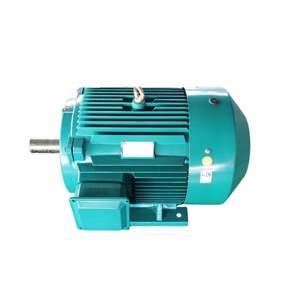
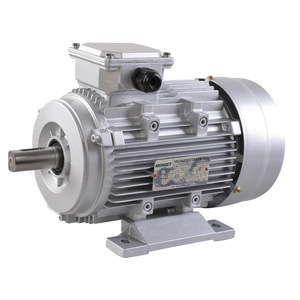
| Heavy Duty Centrifugal (YE3 Motor) | 2.2kW - 45.0kW | 415V 3-Phase 50Hz | 1,800 - 35,000 m³/h | 500 - 3,200 Pa | Metal Fabrication & Fume Scrubbing |
| Extruded Aluminium Inverter Drive | 0.75kW - 7.5kW | 415V VFD Compatible | 3,000 - 15,000 m³/h | 150 - 650 Pa | Food Processing & Cold Storage Facilities |
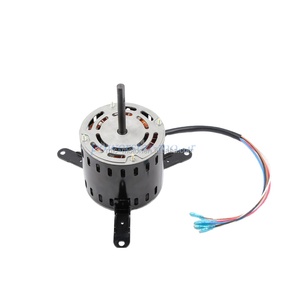
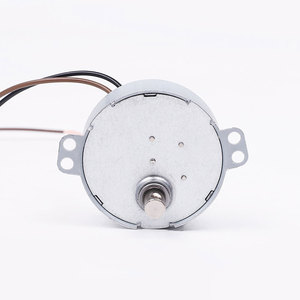
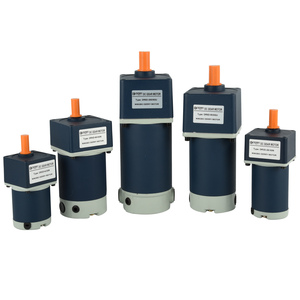
| Compact Shaded Pole / FHP Blower | 25W - 370W FHP | 230V Single Phase | 250 - 1,800 m³/h | 30 - 220 Pa | OEM Equipment & Electrical Cabinet Cooling |
| Explosion-Proof Chemical Blower | 1.1kW - 18.5kW | 415V Ex d / Ex e 50Hz | 1,200 - 18,000 m³/h | 350 - 2,100 Pa | Chemical Storage & Paint Manufacturing |