

+91 98209 33660
Explore our CE-certified range of high-torque AC induction motors, shaded pole drives, and centrifugal blowers engineered specifically for OEM and replacement integration across New Zealand.
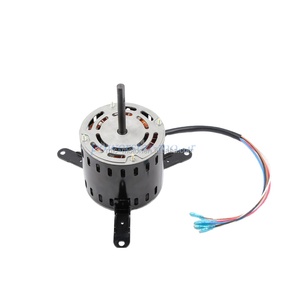
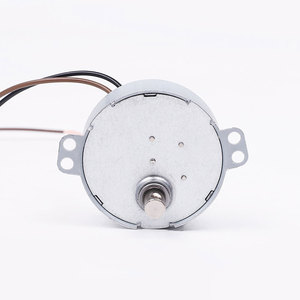
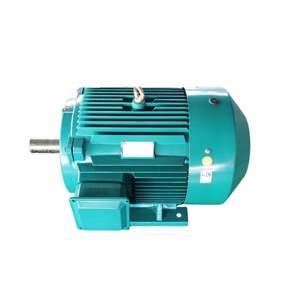
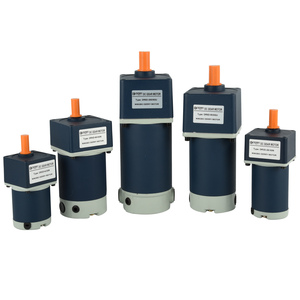
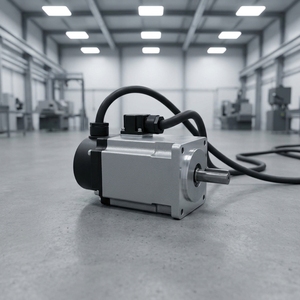
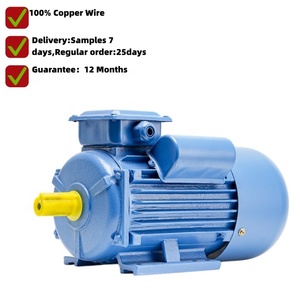
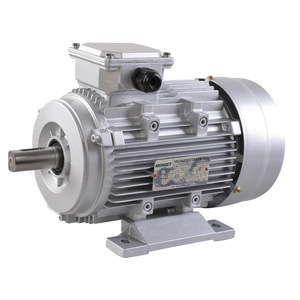
A Comprehensive Technical Whitepaper on Airflow Aerodynamics, Motor Efficiency Standards, and Marine-Grade Corrosion Protection for OEM Engineers & Procurement Specialists across Auckland, Wellington, Christchurch, and Regional NZ.
Designing and specifying HVAC fans, blowers, and fractional horsepower (FHP) electric motors for New Zealand requires a deep understanding of local environmental and electrical constraints. New Zealand’s single-phase low voltage grid operates strictly at 230V AC, 50Hz, while standard three-phase industrial equipment requires 400V AC, 50Hz. Importers and original equipment manufacturers (OEMs) who attempt to utilize off-the-shelf 60Hz North American or non-rated Asian motors often suffer severe thermal degradation, core saturation, reduced airflow velocity, and premature motor failure due to frequency mismatch.
Furthermore, New Zealand’s geographical topology exposes industrial equipment to intense maritime environmental pressures. With no point in the country located more than 130 kilometers from the sea, ambient atmospheric air carries substantial salt concentrations (NaCl) paired with high relative humidity levels, frequently exceeding 80% in regions like Northland, Auckland, and the West Coast. Standard steel fan housings and low-grade motor windings degrade rapidly under these conditions. As a premier CE-certified HVAC fan manufacturer, our engineering team builds air movement products incorporating marine-grade C4/C5 surface treatments, double-sealed stainless steel ball bearings, and Class H vacuum-pressure impregnated (VPI) copper windings specifically tuned for 50Hz operation.
Technical Insight for NZ Engineers: When operating a 60Hz calibrated motor on New Zealand’s 50Hz supply without adjusting voltage, the magnetizing current increases by approximately 20%, raising core temperatures significantly. Our factory pre-calculates flux density to guarantee continuous S1 duty cycle operation at 230V/400V 50Hz without thermal overload tripping.
In modern commercial buildings, timber processing mills, and agricultural cold-storage infrastructure across NZ, air resistance within ductwork dictates overall system power consumption. The fundamental pressure-flow relationship in centrifugal blowers and axial fans follows strict affinity laws:
| Fan & Motor Type | Impeller Geometry | Typical Static Pressure (Pa) | Ideal NZ Application Sector | Efficiency Class Range |
|---|---|---|---|---|
| AC Shaded Pole Motors | Direct-Coupled Axial / Small Cage | 20 - 80 Pa | Refrigeration Display Cabinets & Small Dampers | IE1 / Standard Efficiency |
| Single-Inlet Centrifugal Blowers | Forward-Curved Galvanized Steel | 150 - 650 Pa | Commercial Kitchen Hoods & Cleanroom Filtration | IE2 / High Efficiency |
| Double-Inlet Centrifugal Blowers | Direct-Drive External Rotor | 200 - 850 Pa | HVAC Air Handling Units (AHU) & Roof Package Units | IE2 / IE3 Premium |
| Backward-Curved Centrifugal Fans | Three-Dimensional Aerofoil Blades | 300 - 1200+ Pa | Dairy Powder Spray Drying & Heavy Filtration | IE3 / IE4 / EC Motor Integrated |
| Three-Phase Asynchronous Drives | Cast Aluminum / Steel Axial Impellers | 50 - 400 Pa | Timber Drying Kilns & Agricultural Exhaust | IE2 / IE3 Compliant |
For high-resistance ducted networks governed by New Zealand Building Code (NZBC) Clause H1 (Energy Efficiency requirements), choosing backward-curved or double-inlet centrifugal blowers reduces specific fan power (SFP). Our specialized fans maintain laminar airflow profiles, suppressing turbulent noise generation to meet strict local council acoustic emission thresholds (NZS 6802 Standards for Environmental Noise).
From agricultural processing in Canterbury to commercial high-rises in Auckland, our CE-certified motors and fan blowers are custom engineered to solve regional operational challenges.
New Zealand's world-leading dairy processing facilities demand sterile, washdown-rated air movement. Our stainless-steel housing centrifugal blowers and IP66 pure copper winding motors resist caustic Clean-In-Place (CIP) chemicals while delivering high static pressure for HEPA-filtered spray drying towers.
Forestry products require accelerated kiln drying under high humidity and elevated ambient temperatures (up to 90°C). Our Class H insulated, aluminum-shell 3-phase asynchronous axial fans withstand harsh terpene-laden air streams, facilitating rapid moisture reduction without motor burnout.
To comply with updated NZBC H1 insulation and air-tightness rules, commercial installations require continuous ventilation. Our low-noise shaded pole geared motors and compact cross-flow fans deliver constant, vibration-free fresh air intake for energy-recovery ventilators.
Cold-chain integrity for seafood, meat, and horticulture exports relies on robust condenser cooling. Our synchronous high-torque fan motors feature electro-coated anti-corrosion treatments, protecting against salt spray degradation on marine transport vessels and coastal packhouses.
How regulatory shifts, sustainability goals, and building performance standards are impacting motor selection for engineers and purchasing managers.
With MBIE tightening the New Zealand Building Code H1 energy efficiency clauses, HVAC designers are moving rapidly away from inefficient shaded pole designs toward IE2/IE3 induction units and Electronically Commutated (EC) blowers that reduce operating kWh costs by up to 35%.
As New Zealand industries phase out coal and gas boilers in favor of high-temperature industrial heat pumps, demand has surged for high-torque 3-phase inverter-duty motors (such as our 1.5KW Aluminum Shell series) capable of driving heavy fluid and heat exchanger fans.
Post-pandemic health regulations and damp residential housing initiatives (Healthy Homes Guarantee Act) have driven immense demand for continuous-duty, low-dB cross-flow and centrifugal exhaust blowers capable of operating 24/7 without acoustic nuisance.
Over 50 Years of In-House Engineering Expertise, Stringent Quality Testing, and Direct OEM Customization Capabilities.
Established in 1974, our manufacturing infrastructure has refined motor winding, rotor dynamic balancing, and blower scroll aerodynamic profiling over five decades, guaranteeing predictable performance on the factory floor.
Unlike assembly-only vendors, we control 100% of component tooling, lamination stamping, pure copper wire winding, thermal shock chamber testing, and locked-rotor checks, ensuring zero batch-to-batch quality deviation.
We work directly from your engineering CAD drawings. From custom shaft diameter, flat keyways, threaded ends, and lead wire lengths to specific thermal protector trip points (110°C to 150°C), we adapt units to fit your chassis.
Our complete product range complies with Low Voltage Directive (LVD 2014/35/EU) and Electromagnetic Compatibility (EMC 2014/30/EU). Our technical construction files simplify local New Zealand Regulatory Compliance Mark (RCM) registration.
We maintain streamlined export logistics pathways delivering directly to Port of Auckland, Tauranga, and Lyttelton (Christchurch). Export-grade reinforced wooden crating ensures products arrive moisture-free and damage-free.
Get direct line access to senior electrical and mechanical design engineers for duty-point verification, torque-speed curve analysis, dynamic pressure matching, and thermal rise calculations prior to placing volume orders.
Everything you need to know regarding certifications, voltage compatibility, lead times, and custom OEM modifications for importing into NZ.
Yes, absolutely. All motors and centrifugal blowers designated for the New Zealand market are specifically wound and engineered for 230V single-phase or 400V three-phase operation at a frequency of exactly 50Hz. This ensures that electrical flux density, stator coil temperature rise, rated speed (RPM), and shaft torque operate strictly within rated efficiency curves without risking thermal overload or premature winding breakdown.
Under the New Zealand Electricity (Safety) Regulations 2010, electrical equipment imported into NZ must comply with recognized safety standards (such as AS/NZS 60335.1 or AS/NZS 60034 for rotating machinery). CE certification under the EU Low Voltage Directive (LVD 2014/35/EU) aligns closely with International Electrotechnical Commission (IEC) standards, which form the technical base for AS/NZS specifications. We provide complete test reports (including dielectric strength, insulation resistance, and thermal endurance) to assist your local RCM compliance filing.
Yes. Customization is our primary operational strength. We routinely manufacture custom stainless-steel shaft extensions, dual-shaft outputs, specific D-flat configurations, threaded ends, and customized mounting brackets (B3, B5, B14 flange standards). For severe coastal or agricultural environments, we supply IP55, IP65, or IP66 sealed enclosures with anti-rust epoxy coatings and C4/C5 marine paint finishes.
Standard OEM production lead time is typically 15 to 25 business days depending on volume and degree of customization. Sea freight transit time to main New Zealand ports—including Port of Auckland, Tauranga (North Island), and Lyttelton / Christchurch (South Island)—is generally 18 to 24 days. Expedited air freight for prototype evaluation samples or critical replacement parts is available via DHL/FedEx with a 4-to-7-day delivery window.
The choice is governed by system static pressure (airflow resistance). If your system pushes air through long ductwork, HEPA filters, heat exchangers, or tight bends, static pressure is high, making a Centrifugal Blower (single or double inlet) necessary to prevent airflow stalling. If your requirement is high-volume air movement over an open space with minimal resistance (such as timber kiln circulation, workshop exhaust, or simple cabinet cooling), an Axial Fan offers maximum energy efficiency and compact installation depth.