+91 98209 33660
Continuous-duty AC shaded pole, induction gear, and synchronous motor units verified against rigorous UL, CSA, and California Title 24 energy performance standards.
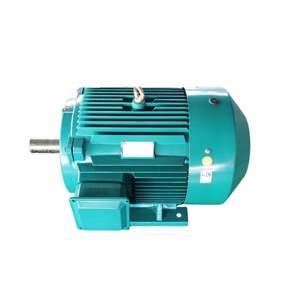
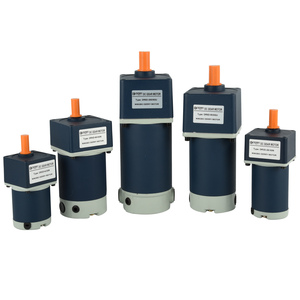
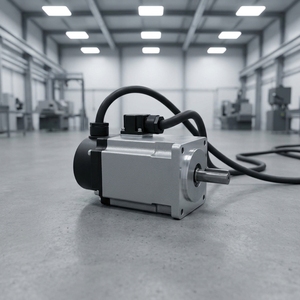
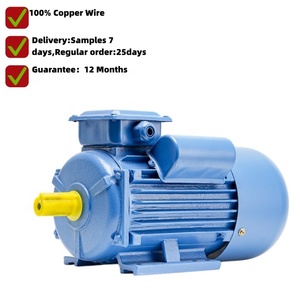
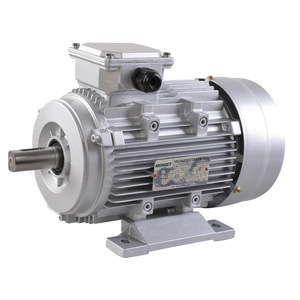
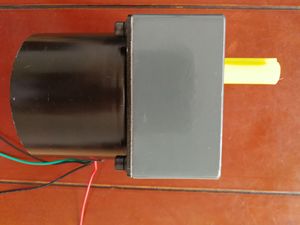
The Southern California industrial corridor—spanning Los Angeles County, Orange County, the Inland Empire (San Bernardino and Riverside), and Ventura—represents one of the most sophisticated fractional horsepower (FHP) motor and air movement specification landscapes in North America. Original Equipment Manufacturers (OEMs) operating within the Los Angeles basin face a unique convergence of technical challenges: strict compliance with California Code of Regulations Title 24 (Building Energy Efficiency Standards), rigorous air quality compliance directives from the South Coast Air Quality Management District (SCAQMD), and demanding thermal operational parameters caused by elevated summer ambient conditions in interior warehouse logistics complexes.
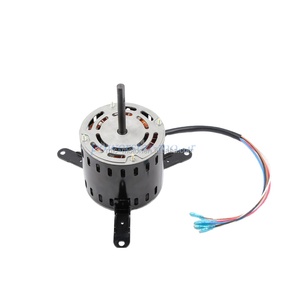
Among single-phase AC induction motors, AC Shaded Pole Motors remain the benchmark engineering choice for low-torque, continuous-duty applications where mechanical simplicity, extreme operational longevity, electromagnetic silence, and economical cost-to-performance ratios are non-negotiable. Designed with a salient pole stator structure and heavy copper shading rings, these motors eliminate the need for mechanical centrifugal switches, external starting capacitors, or electronic commutators. This inherently reduces potential points of electromechanical failure, providing Los Angeles equipment designers with an ultra-reliable power unit for commercial refrigeration, fan coil units (FCUs), medical device cooling, and industrial cabinet ventilation.
Los Angeles Market Compliance Insight: OEM components exported to or operated in Southern California must maintain stable thermal rise profiles at 115V AC / 60Hz nominal line voltage under continuous duty (S1 cycle), adhering to UL 1004-1 and CSA C22.2 No. 100 standards while preserving low acoustic footprints (dB level) for urban commercial installations.
An AC shaded pole motor operates on the principle of a rotating magnetic field generated by spatial asymmetrical phase shift across the stator pole faces. The stator consists of laminated silicon steel sheets with salient poles, where a portion of each pole piece is encircled by a short-circuited copper strap known as a shading coil or shading ring.
When an alternating voltage (typically 115V 60Hz across North America) energizes the main stator winding, the magnetic flux passing through the unshaded segment of the pole induces an alternating voltage and high localized current within the copper shading ring. The opposing magnetic flux produced by this induced current delays the total magnetic flux change in the shaded portion relative to the unshaded portion. This spatial and temporal phase displacement generates an elliptical, moving magnetic field across the air gap, establishing sufficient locked-rotor torque (LRT) to accelerate the cage rotor up to synchronous speed minus slip (typically operating at 1300 to 1550 RPM under 60Hz supply).
Utilizing Class H/Class F 200°C rated magnet copper wire to minimize I²R copper losses, guaranteeing lower internal temperature rise under prolonged Southern California operation.
Equipped with dual precision ball bearings or self-aligning sintered bronze sleeve bearings featuring synthetic ester oil reservoirs for up to 50,000 continuous operating hours.
Built-in automatic reset thermal overload protectors (normally 130°C to 150°C cutoff) or impedance-calculated stators preventing fire hazards during rotor lock.
To assist project engineers, HVAC procurement managers, and mechanical designers across the Los Angeles metropolitan area (including Long Beach, Commerce, City of Industry, and Santa Clarita), the following empirical data matrix details standard physical and electrical parameters across our core AC motor production lines:
| Motor Series / Type | Nominal Voltage & Frequency | Rated Power Output | Speed (RPM @ 60Hz) | Bearing Construction | Protection Rating | Target Local Application |
|---|---|---|---|---|---|---|
| SP-60 Series Shaded Pole | 115V AC / 60Hz (230V optional) | 2.5W - 25W | 1300 - 1550 RPM | Sintered Sleeve / Ball | Impedance / Thermal Class B/F | Walk-in Evaporator Fans, Display Cases |
| MCP Single-Phase Cooler Motor | 115V AC / 60Hz | 150W - 250W | 1425 - 1725 RPM | Heavy-Duty Sealed Ball | IP44 / Thermal Overload | Evaporative Air Coolers, HVAC Blowers |
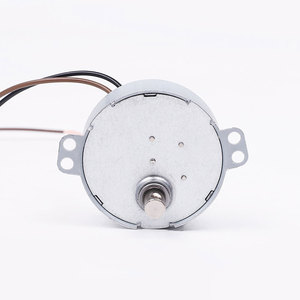
| 50KTYZ Synchronous Motor | 110V - 220V AC / 50/60Hz | 6W - 14W | 2.5 - 50 RPM (Geared) | Precision Gear Train | IP20 / Impedance Protected | Damper Controls, Rotating Vanes, Medical |
| FHP Induction Gear Motor | 110V / 220V Single Phase | 6W - 400W | 10 - 500 RPM (Adjustable) | High-Load Ball Bearings | IP54 / Class F Insulation | Packaging Conveyors, Dosing Pumps |
| YE3 Premium Efficiency 3-Phase | 230V / 460V Dual Voltage 60Hz | 0.75KW - 15KW (1HP-20HP) | 1750 / 3500 RPM | Heavy Cast Iron / Steel Ball | IE3 High Efficiency / IP55 | Heavy Fluid Machinery, Plant Exhaust |
Understanding regional commercial environments is critical to achieving high reliability and long service life. Below are the primary application domains where Delco Fans' AC Shaded Pole and FHP electric motors are deployed throughout the Los Angeles marketplace:
Greater Los Angeles houses the largest concentration of cold-storage warehousing, refrigerated food processing plants, and commercial grocery chains in the Western United States. Shaded pole motors power the evaporator fan assemblies inside walk-in freezers, reach-in display cabinets, and refrigerated transport units. In these sub-zero or high-humidity environments, moisture ingress and lubricant congelation are leading causes of premature failure. Our shaded pole motors feature sealed synthetic low-temperature lubricants (operational down to -40°C) and vacuum-impregnated stator windings (epoxy dip varnish), guaranteeing moisture resistance and frost-free continuous operation.
With California's strict Title 24 efficiency codes, heating and air conditioning manufacturers require fan coil motors, duct boosters, exhaust blowers, and air purifier motors that maximize airflow per watt while maintaining whisper-quiet operation. Shaded pole cross-flow blowers and tangential fans engineered by Delco deliver a uniform horizontal air curtain with low turbulence, making them the preferred component for hotel fan coil units, high-rise apartment ventilation systems, and cleanroom air showers across Downtown Los Angeles, Century City, and Irvine.
The biomedical and life-science research cluster surrounding Pasadena, Thousand Oaks, and San Diego demands zero-vibration, zero-EMI motion components. Delco's micro-synchronous and small shaded pole motors undergo dynamic rotor balancing to grade G2.5, ensuring smooth operation in laboratory centrifuges, blood analyzers, constant-temperature incubators, and medical cabinet air circulation units.
From commercial convection ovens and warming cabinets to beverage dispensers and soft-serve ice cream machines, motors operate under high ambient thermal stress. Delco shaded pole and induction geared motors utilize Class F (155°C) and Class H (180°C) insulation systems equipped with internal automatic-reset thermal cutouts, preventing motor burnout during heavy kitchen shift operations.
For more than five decades—since our founding in 1974—Delco Fans Pvt. Ltd. has built an unyielding reputation as a direct manufacturer-exporter of fractional horsepower electric motors, geared motors, and industrial air movement blowers. Serving international OEM partners and major distribution hubs like the Port of Los Angeles and Port of Long Beach, we bridge the gap between custom engineering agility and cost-competitive manufacturing scale.
Direct Manufacturing Advantage: Unlike trading intermediaries or catalog distributors, Delco retains 100% in-house control over stamping tooling, copper coil winding, rotor die-casting, CNC shaft machining, dynamic impeller balancing, and final routine load testing at our Thane manufacturing facility.
Below are clear, expert answers to key engineering, regulatory, and purchasing questions frequently asked by Southern California procurement officers, design engineers, and industrial distributors: