
+91 98209 33660
Explore our high-performance speed reduction series, engineered for maximum torque density, whisper-quiet operation, and long service life.
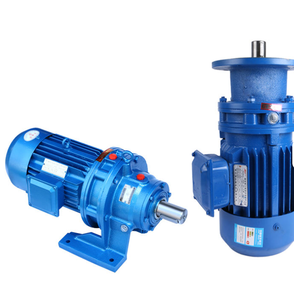
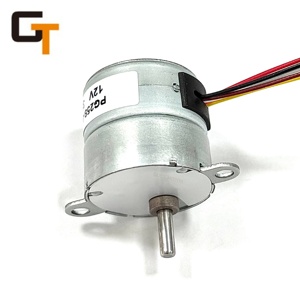
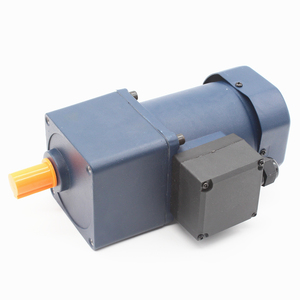
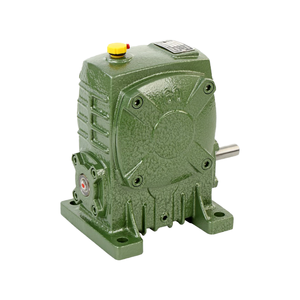
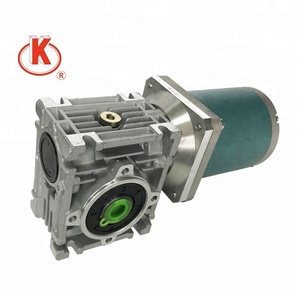
In modern industrial automation, robotics, heavyduty manufacturing, and HVAC infrastructure, the torque-speed tradeoff is governed by the mechanical reduction gearbox. As prime movers—such as AC induction motors, electronically commutated (EC) brushless drives, or permanent magnet DC motors—typically operate at optimal efficiencies at high angular velocities (1500 to 3000 RPM), their direct coupling to operational loads is often thermodynamically and mechanically inefficient.
A precision-engineered reduction gearbox acts as a mechanical torque multiplier and speed reducer, transforming low-torque, high-speed kinetic energy into controlled, high-torque output with exceptional kinematic accuracy. As a world-leading manufacturer and exporter with origins dating back to 1974 at our Thane industrial complex, our engineering approach synthesizes advanced tribology, metallurgy, finite element analysis (FEA), and precision gear tooth meshing geometry.
Selecting the optimal speed reducer requires a granular understanding of tooth engagement dynamics, mechanical efficiency curves, backlash limits, and radial load ratings. Below is a comprehensive engineering breakdown of the premier gearbox topologies featured in modern power transmission architectures.
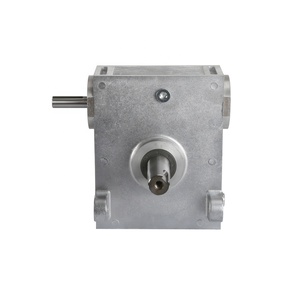
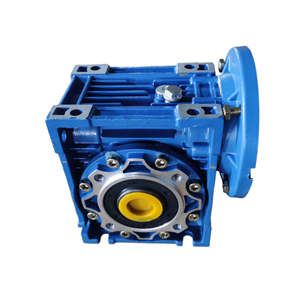
Utilizing a hardened steel worm screw paired with a synthetic bronze (CuSn12) worm wheel, right-angle worm gearboxes provide high single-stage reduction ratios (up to 100:1) within a compact footprint. Key features include inherent self-locking capability and shock resistance.
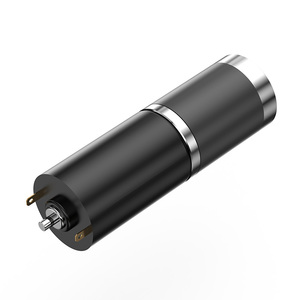
Designed for demanding motion control, planetary gearboxes distribute load symmetrically across multiple planet gears orbiting a central sun gear. This architecture yields unmatched torque density, torsional stiffness, and ultra-low backlash (down to <3 arc-min).
Employing non-sliding rolling contact via cycloid disc curves and pin wheel assemblies, cycloidal reducers withstand extreme shock loads up to 500% of their rated torque without tooth shear, ensuring zero-catastrophic-failure reliability.
To assist OEM procurement teams and plant engineering specialists, the following comparative dataset highlights key mechanical metrics across primary reduction gearbox classifications:
| Gearbox Type | Single-Stage Ratio Range | Mechanical Efficiency | Torsional Backlash | Shock Load Capacity | Primary Industrial Use Case |
|---|---|---|---|---|---|
| Worm Gear (NMRV / WP) | 7.5:1 – 100:1 | 65% – 90% | 15 – 35 arc-min | High (Self-Locking) | Conveyors, Packaging, Elevators, HVAC |
| Planetary Gear (24V/Micro) | 3:1 – 100:1 | 90% – 97% | < 3 – 10 arc-min | Moderate to High | Robotics, AGVs, Medical Equipment, AGV Drives |
| Cycloidal Reducer (X Series) | 9:1 – 87:1 | 85% – 93% | < 1 – 5 arc-min | Exceptional (500% overload) | Mining, Heavy Automation, Mini Tractors |
| Inline Helical Geared Motor | 1.5:1 – 280:1 | 95% – 98% | 10 – 20 arc-min | Moderate | Pumps, Mixers, General Machinery Drives |
As global supply chains transition toward Industry 4.0 standards and sustainable manufacturing, gearbox procurement criteria have evolved from basic capital expenditure evaluation to total cost of ownership (TCO) optimization. Crucial technological shifts defining the next decade of power transmission include:
Next-generation reduction gearboxes are embedded with vibration, acoustic, and thermal sensors. Real-time telemetry predicts lubrication degradation and bearing fatigue prior to operational downtime.
Polyalkylene Glycol (PAG) and Synthetic Hydrocarbon lubricants are replacing conventional mineral oils, lowering internal fluid friction and extending maintenance intervals from 5,000 to over 20,000 operational hours.
High-tensile aluminum alloy housings (such as die-cast RV series casings) engineered with computer-optimized cooling fins reduce system weight by up to 35% while maximizing heat dissipation capacity.
When engineering an application-specific motion system, relying solely on nominal motor power ratings can lead to premature mechanical failure. Engineers must calculate the required operational torque ($T_2$) using the following formula:
$$T_2 = \frac{P_1 \times 9550 \times \eta}{n_2}$$
Where $P_1$ is input power in kW, $n_2$ is output speed in RPM, and $\eta$ represents gearbox mechanical efficiency. Furthermore, service factors ($f_s$) ranging from 1.0 (smooth uniform load, 8h/day) to 2.0+ (heavy shock loading, 24h continuous operation) must be applied to guarantee long-term operational margin.
Since 1974, Delco Fans Pvt. Ltd. has operated as a premier manufacturer of fractional horsepower motors, geared motors, and industrial air movement solutions from our facility in Wagle Industrial Estate, Thane, India. Our integrated shop-floor capabilities guarantee repeatable quality across series production.
Every gearbox assembly undergoes rigorous load-curve validation, sound spectrum testing, and leak-proof seal verification before dispatch, ensuring zero-defect deployment in critical field applications.
Expert insights regarding industrial gearbox selection, customization options, maintenance protocols, and global exporter capabilities.
Worm gearboxes (such as NMRV or WP series) excel in applications requiring right-angle output orientation, high self-locking capability, and budget-effective single-stage speed reduction. Planetary gearboxes are preferred when high power density, axial inline alignment, minimal backlash (<5 arc-min), and precise positioning accuracy are required, such as in robotics and CNC automation.
Yes. As an engineering-first manufacturer, we specialize in OEM/ODM customization. We tailor input flanges (NEMA / IEC mounts), solid or hollow output shaft profiles, keyways, special gear ratios, thermal insulation classes, and custom synthetic lubrication tailored to extreme low-temperature or high-ambient operating environments.
When operated within rated torque and thermal limits with proper lubrication maintenance, quality reduction gearboxes deliver a service life exceeding 15,000 to 20,000 operating hours. Synthetic lubricated, factory-sealed units (like small RV worm reducers) often operate maintenance-free throughout their operational life.
Backlash refers to the clearance gap between meshing gear teeth measured in arc-minutes (1/60th of a degree). In precision positioning applications (such as automated indexing or robotic arms), lower backlash prevents cumulative positional error during movement reversals.
All exported reduction gearboxes are verified against routine electrical and mechanical testing protocols. We supply full technical dossiers, dimensional CAD drawings, duty-cycle curves, material certificates, and export-compliant seaworthy packaging for global shipping.
Share your operational parameters—required speed, torque, duty cycle, mounting envelope, and input motor type—and our power transmission engineers will formulate an optimal solution.
Contact Us