
Top Trusted Fume Extractor Factories & Exporter

Precision Air Filtration Systems & Industrial Extraction Solutions for OEM/ODM Buyers Worldwide

50+
Years Manufacturing Excellence
99.97%
HEPA & ESP Filtration Efficiency
85+
Global Export Markets
ISO 9001
CE & UL Compliant Quality

Engineering-Grade Industrial & Commercial Fume Extractors

High-efficiency smoke absorbers, dust collectors, and electrostatic precipitators designed for rigorous continuous-duty cycles.
Fume Extractor Laser Smoke Absorber HEPA Filter 150W FES150
Fume Extractor Laser Smoke Absorber HEPA Filter 150W FES150 Dust Extractor
Power: 150W Brushless Motor Filtration: HEPA H13 (0.3µm) Certification: CE Approved
Contact Us
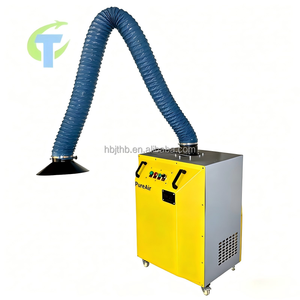
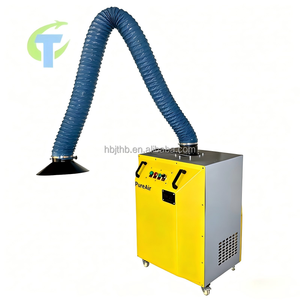
Industrial Portable Extractor Smoke Dust Collector Welding Fume Extractor
Industrial Portable Extractor Smoke Dust Collector Welding Dust And Fume Extractor
Duty: Heavy-Duty Welding Design: Portable Wheel Unit Airflow: High Static Pressure
Contact Us
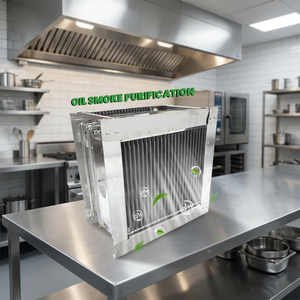
Electrostatic Field Fume Extractor Kitchen Air Cleaner Engine
Electrostatic Field Fume Extractor Kitchen Air Cleaner Engine Stainless Steel 220V
Core Tech: Electrostatic Precipitator Material: Stainless Steel & Aluminum Voltage: 220V Commercial
Contact Us
Low Noise Strong Suction 150W Dust Collector With Hepa Filter
Low Noise Strong Suction 150W Salon Dust Collector With HEPA Filter
Noise Level: < 52 dB Ultra-Quiet Control: Adjustable Speed Knobs Target: Micro-dust & Organic Fumes
Contact Us
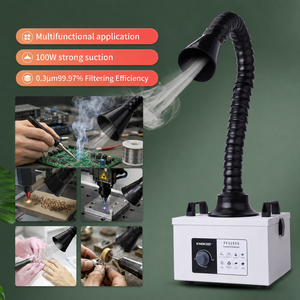
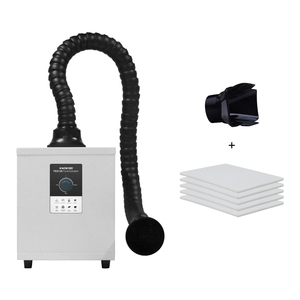
KNOKOO FES150S 100W Mini Solder Fume Extractor
KNOKOO FES150S 100W Mini Solder Fume Extractor 3 Layer HEPA Filter
Layers: Pre-filter + HEPA + Carbon Footprint: Compact Benchtop Unit Application: PCB Electronics & Lab Laser
Contact Us
Flexible Dual-Arm Industrial Welding Fume Extractor
New Flexible Dual-Arm Industrial Welding Fume Extractor With Mobile Design
Arms: Dual 360° Flexible Extraction Mobility: Lockable Heavy-Duty Casters Filter Life: Extended Surface Area
Contact Us
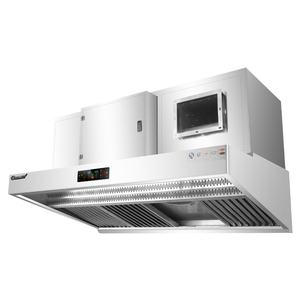
Commercial Kitchen Smoke Extractor Hood With Electrostatic Precipitator
System: Integrated Extraction Hood Purification: Electrostatic Greaseless ESP Compliance: Commercial Fire & Health Code
Contact Us
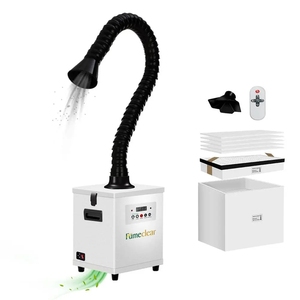
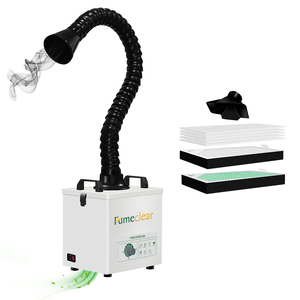
FUMECLEAR 100W Strong Suction Laser Fume Extractor
FUMECLEAR 100W Strong Suction Laser Fume Extractor 0.3µm 99.7% Filter
Efficiency: 99.7% Purification at 0.3µm Target Gas: Volatile Organic Compounds (VOCs) Use Case: Chemical Fumes & Laser Marking
Contact Us

Industrial Fume Extraction: Technical Architecture & Whitepaper

Comprehensive engineering insights for OEM procurement teams, plant managers, and environmental safety officers.

1. Executive Overview & Industrial Health Imperatives

Modern industrial processing, precision laser engraving, automated PCB soldering, and high-volume commercial culinary production generate dangerous airborne contaminants. Sub-micron particulate matter (PM2.5 and PM0.1), heavy metal oxides, dangerous Volatile Organic Compounds (VOCs), and persistent greasy aerosols represent major risks to human health, operational safety, and machinery longevity. Leading international manufacturing facilities must implement localized source capture air filtration systems to strictly satisfy OSHA PELs, EU CE directives, and ISO 14001 environmental safety frameworks.

As a established manufacturing pioneer with over five decades of motor, blower, and fluid dynamics engineering heritage since 1974, our factory complex delivers standardized and custom engineered air handling systems. By uniting specialized fractional horsepower (FHP) motor technology, optimized centrifugal impellers, and advanced multi-stage filtration matrices, our fume extractors maintain exceptional fluid kinetic control across high static resistance environments.

Engineering Insight: Fluid Dynamic Resistance & Static Pressure

Air filtration efficiency is governed by the fan static pressure curve vs system resistance. High-grade HEPA filters generate an initial clean resistance of 150 to 300 Pa, escalating up to 600 Pa when loaded. Standard axial fans fail under these conditions; only backward-curved centrifugal blowers powered by high-torque EC motors maintain certified volumetric flow velocity.

2. Anatomy of Multi-Stage Filtration Matrices

Achieving a verified 99.97% containment rate for sub-micron particulate matters requires a scientifically layered filtration architecture. Single-layer air cleaners suffer rapid surface clogging, leading to excessive motor strain, thermal overload, and premature component fatigue. Our manufacturing standard relies on an orchestrated multi-tier purification process:

  • Primary Pre-Filtration Layer: High-density non-woven synthetic mesh engineered to capture larger particulates (> 50µm) such as airborne dust, coarse metal shavings, and large textile fibers. Protects downstream fine media from premature surface blinding.
  • Intermediate Secondary Media: Medium-efficiency pleated cotton or fiber filters that remove 5µm to 10µm sub-particles, drastically extending the service life of high-cost HEPA elements.
  • H13 / H14 Medical-Grade HEPA Filter: Micro-glass fiber structure engineered via wet-laid non-woven technology. Operating on principles of interception, impaction, and diffusion, this layer captures 99.97% to 99.99% of airborne particles down to 0.3 micrometers (µm)—the Most Penetrating Particle Size (MPPS).
  • Chemical Vapour & VOC Adsorption Bed: Virgin pelletized activated carbon impregnated with specialized chemical agents (catalytic alumina/potassium permanganate) designed to neutralize toxic gas compounds, formaldehyde, benzene, soldering rosin vapors, and acrid acrylic fumes via chemisorption.
  • High-Voltage Electrostatic Precipitator (ESP) Cells: Designed for industrial welding and commercial kitchen environments with heavy oil smoke. Ionizer wires impart a positive electrical charge (+12kV) to oil mist particulates, which are subsequently pulled and deposited onto negatively charged (-6kV) collector plates, achieving maintenance-washable, zero-consumables filtration.

3. Technical Performance Matrix Across Industrial Applications

The comparative data matrix below details operational specs, airflow kinetics, and filtration methodologies for our specialized equipment line:

Application Category Primary Airborne Contaminant Core Extraction Technology Airflow Volume (CFM) Static Pressure Range Recommended Filter Cycle
Laser Engraving / Marking Acrylic smoke, fine carbon dust, VOCs 3-Stage HEPA + Impregnated Carbon 150 - 350 CFM 800 - 1200 Pa 6 - 9 Months
Heavy Industrial Welding Hexavalent chromium, iron oxide fumes Dual-Arm HEPA + Spark Arrestor 800 - 1800 CFM 1400 - 2200 Pa 12 Months (Self-Cleaning)
Commercial Kitchens Grease aerosols, persistent oil smoke Dual-Field Electrostatic Precipitator 1500 - 5000 CFM 200 - 450 Pa Washable (No Replace)
Electronics Soldering / PCB Colophony rosin fume, lead/tin particulate Micro Benchtop HEPA + Carbon 100 - 220 CFM 400 - 700 Pa 4 - 6 Months
Beauty Salons & DTF Printing Monomer vapors, fine chemical dust Low-Noise Adjustable HEPA Unit 120 - 280 CFM 350 - 600 Pa 6 Months

4. Strategic Enterprise Advantages of Our Factory Direct Supply

Sourcing directly from an established original equipment manufacturer (OEM) provides international buyers with measurable operational and commercial benefits over third-party trading agencies. Built on a foundation of full vertically integrated production, our facility maintains tight quality control across all critical sub-assemblies:

  • In-House Motor & Blower Winding: Unlike assemblers who purchase off-the-shelf motors, our factory custom winds stators, balances external rotor impellers dynamically to G2.5 precision, and tests thermal endurance up to Class H (180°C) standards.
  • Precision Sheet Metal & Enclosure Tooling: Automated CNC laser cutting, robotic welding, and electrostatic powder coating ensure robust structural frames, zero structural air leakage, and superior acoustic attenuation.
  • Dynamic Pressure & Leakage Validation: Every manufactured unit undergoes strict aerosol photometer leak testing and aerodynamic wind-tunnel characterization prior to export clearance.
  • Custom OEM / ODM Adaptations: Flexible engineering options covering voltage inputs (110V 60Hz / 220V 50Hz / 380V 3-Phase), duct arm geometries, digital touch control interfaces, smart filter saturation alarms, and white-label branding.

Future Industry Trends & Procurement Outlook (2025–2030)

Key technological transformations driving international procurement strategies for air safety equipment.

⚡

1. EC Energy-Efficient Motors

Transition from legacy AC motors to Electronically Commutated (EC) brushless DC drives. EC motors reduce operational energy consumption by up to 65% while permitting infinitely variable, closed-loop speed adjustment via 0-10V or PWM signals.

📡

2. Smart IoT Filter Monitoring

Integration of real-time differential pressure transducers and optical VOC sensors. Modern units automatically broadcast maintenance warnings to facility management networks (Modbus / Wi-Fi), preventing unmonitored filter breakthrough.

♻️

3. Low Carbon Footprint Media

Procurement teams are favoring wash-capable electrostatic collection cells and bio-based recyclable filter frames over disposable single-use plastic cartridges to satisfy corporate Net-Zero carbon mandates.

🛡️

4. Modular Multi-Process Units

Future-ready factories demand adaptable, quick-change cartridge housings that allow quick swapping between HEPA, active carbon, or spark-arresting modules without re-engineering main ductwork lines.

🔇

5. Active Acoustic Attenuation

Advanced fluid dynamic impeller designs paired with internal sound-dampening acoustic foams permit high static pressure extraction while holding ambient benchtop noise below 50 dBA for operator comfort.

🌐

6. Strict Global Compliance

Rapid adoption of updated workplace safety standards requires export units to possess dual CE/UL safety certifications alongside certified ISO 16890 / EN 1822 filter testing validation.

Global Sourcing & Technical FAQ

Essential guidance for international purchasing managers, distributors, and engineering contractors.

How do I accurately calculate the required CFM airflow for my workstation?
Volumetric airflow requirement depends on capture velocity, hood distance, and process intensity. The standard formula is: Airflow (CFM) = Capture Velocity (ft/min) × Area of Hood/Enclosure (sq. ft.). For laser engraving or soldering, a minimum capture velocity of 100-150 ft/min at the source point is recommended to ensure complete capture before fumes disperse into ambient air.
What is the structural difference between HEPA filtration and Electrostatic Precipitators (ESP)?
HEPA filtration uses dense physical glass fiber media to trap dry airborne particulates down to 0.3 microns at high efficiencies (99.97%), requiring periodic replacement as media fills. ESP units utilize high-voltage electric fields to ionize and collect wet, sticky oil mists and heavy smoke onto metal plates. ESP collector cells are washable and reusable with zero consumable filter costs, making them ideal for commercial kitchens and heavy machine oil-coolant mist extraction.
Can your factory manufacture custom OEM extractors built to our specific dimensions and branding?
Yes. As a direct manufacturer with complete in-house sheet metal tooling, motor winding, and assembly lines, we provide comprehensive OEM/ODM services. We can customize physical dimensions, housing materials (Stainless Steel 304/316 or Powder-Coated Carbon Steel), motor specifications (voltage, phase, frequency), digital control panels, and custom branded silkscreen labels with low minimum order quantities (MOQs).
How do you verify filter saturation and prevent toxic fume breakthrough?
Our advanced industrial units feature integrated digital differential pressure gauges that monitor resistance across the filter stages. As particulates accumulate, static pressure increases; once the threshold is crossed, an audible alarm and LED indicator alert operators to replace the filter. Gas-phase carbon beds can be fitted with air quality VOC sensors to monitor chemical saturation in real-time.
What international electrical and safety standards do your fume extractors comply with?
All export units are manufactured under ISO 9001 quality control protocols and comply with European CE directives (Low Voltage Directive 2014/35/EU and EMC Directive 2014/30/EU). Electrical components, motors, and wiring conform to UL and RoHS environmental regulations, ensuring smooth customs clearance and regulatory compliance across North America, Europe, and Asia-Pacific markets.

Request Factory-Direct Pricing & Technical Specifications

Partner with a trusted manufacturing leader. Speak with our application engineering team to configure custom extraction solutions or receive a competitive wholesale quote.

Contact Us