Future Procurement Trends in Electrical Panels & Drive Systems (2025–2030)
As modern manufacturing transitions toward Smart Manufacturing, Industry 4.0, and decarbonization targets, procurement managers and electrical engineering leads face evolving requirements when sourcing electrical panels, cooling units, and continuous-duty AC/EC drive motors. Understanding these key trends is essential for securing long-term operational resilience and maintaining competitive cost structures.
1. Shift from Traditional AC Induction to High-Efficiency EC (Electronically Commutated) Motors
While traditional shaded pole and AC induction motors remain the workhorses of standard panel ventilation due to their rugged simplicity, global procurement is rapidly pivoting toward Electronically Commutated (EC) brushless DC technology. EC motors incorporate integrated inverter electronics, allowing smooth 0-10V or MODBUS speed modulation. This enables electrical cabinet cooling systems to adjust fan speeds dynamically based on real-time internal cabinet temperature, cutting energy consumption by up to 45%.
2. Stringent Energy Efficiency Standards (IE3, IE4 & Ultra-Premium IE5)
Regulatory bodies across the European Union (EU Ecodesign Regulation 2019/1781), the United States (DOE mandates), and Asia are enforcing higher minimum efficiency performance standards (MEPS). Sourcing agents must ensure that 3-phase asynchronous motors specified in electrical control houses meet at least IE3 Premium Efficiency or IE4 Super Premium Efficiency ratings to avoid import compliance blockages.
3. Smart Thermal Monitoring & Predictive IoT Enclosure Cooling
Future-ready electrical panel enclosures are no longer passive steel boxes. They are equipped with integrated sensor arrays measuring differential static pressure, humidity, dew point, and bearing vibration. B2B procurement leads now prioritize fan and motor manufacturers that provide units with tachometer outputs, thermal overload signal leads, and IoT-ready control interfaces.
Procurement Insight: Total Cost of Ownership (TCO) Calculation
Over a 10-year continuous operating cycle of an electrical control panel, the initial purchase price of an internal cooling motor accounts for less than 5% of its total lifecycle cost. Electricity consumption accounts for over 88%, with maintenance making up the rest. Choosing high-efficiency motors dramatically drops total lifecycle expenses.
Technical Selection Matrix: Motor & Blower Specs for Electrical Enclosures
Select the optimal motor topology based on thermal loading, static pressure resistance, and duty requirements:
| Motor / Blower Topology |
Typical Power Range |
Efficiency Rating |
Max Enclosure Static Pressure |
Ideal Application Scenario |
| AC Shaded Pole Motor |
5W – 50W |
Standard (20-30%) |
Low (< 25 Pa) |
Direct panel ventilation, low-cost internal agitation fans |
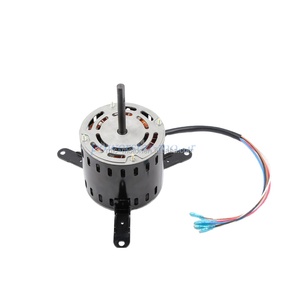
| Single-Phase AC Induction (MCP/YC) |
120W – 2.2kW |
IE1 / IE2 Class |
Medium (50 – 150 Pa) |
Evaporative panel coolers, general fluid pumps, compressors |
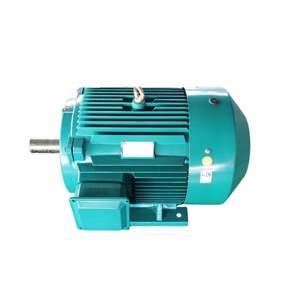
| 3-Phase Squirrel Cage (YE3/IE3) |
0.75kW – 375kW |
IE3 / IE4 Premium |
High (> 300 Pa) |
Heavy industrial MCC panels, central HVAC blowers, main drives |
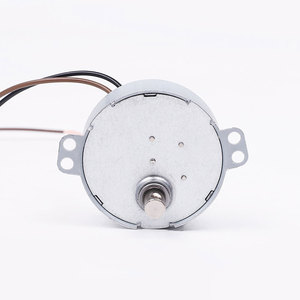
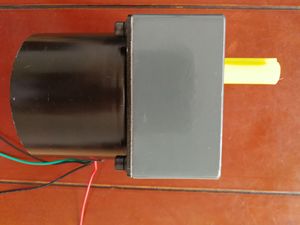
| Permanent Magnet Synchronous (50KTYZ) |
2W – 30W |
High Power Factor |
N/A (Rotary Motion) |
Switchgear motorized actuators, louver control, positioners |
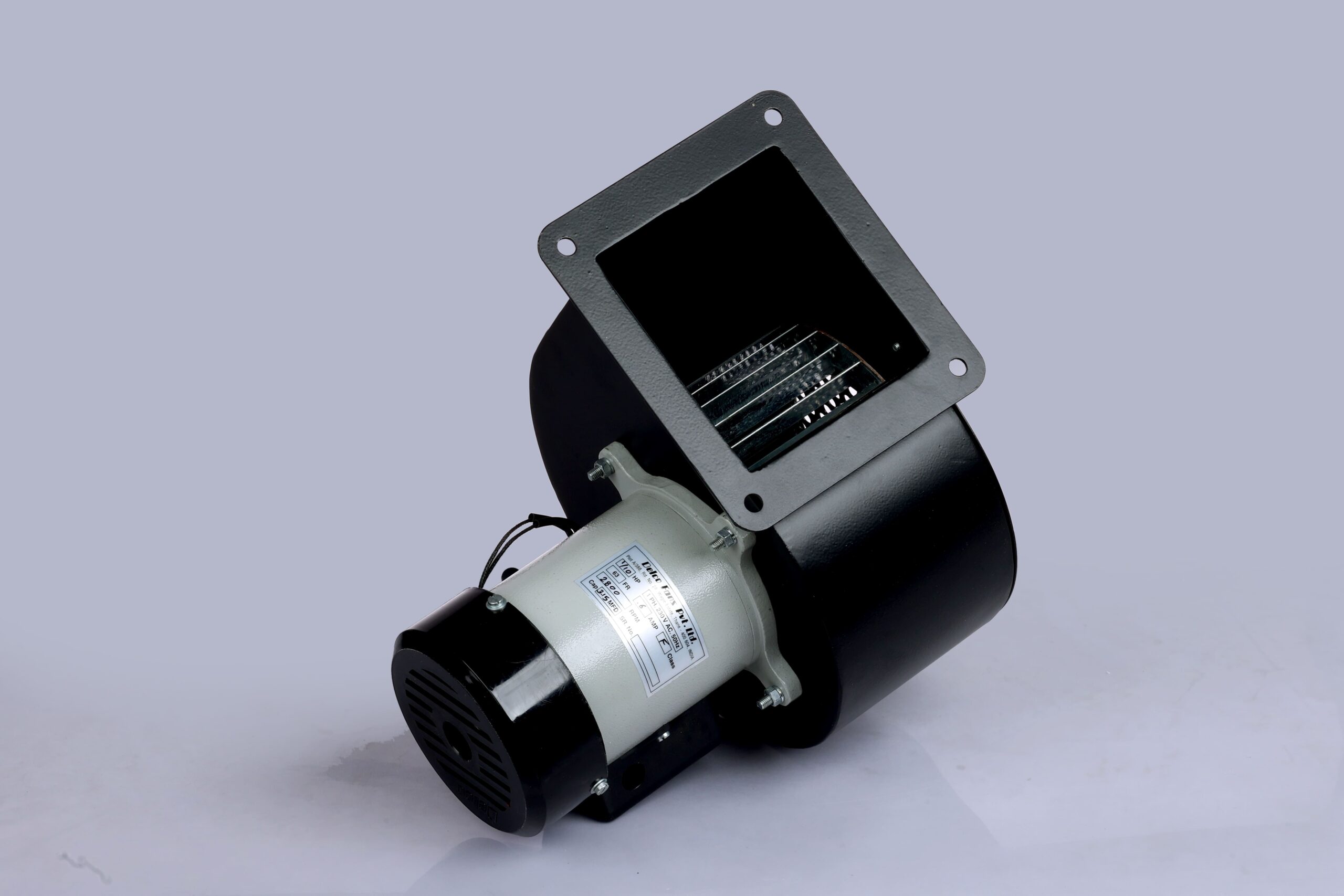
| Centrifugal Blower (External Rotor) |
50W – 750W |
High Hydraulic Eff. |
Very High (> 400 Pa) |
High-density VFD drive racks, filtered air intake units |
| Customized EC Brushless Blower |
35W – 1.5kW |
IE4 / IE5 Equivalent |
Variable / Smart Adj. |
Precision cleanroom electrical panels, server rack cooling |
Engineering & Product Development Trends in Electrical Drive Technology
The engineering topology of industrial motors and panel ventilation equipment is undergoing a major evolution driven by advanced metallurgy, precision manufacturing, and thermal physics.
A. Silicon Steel Core Lamination & Reduced Core Losses
Modern motor manufacturers are upgrading from standard cold-rolled steel to ultra-thin, high-permeability cold-rolled non-oriented (CRNO) silicon steel laminations (0.35mm to 0.5mm thickness). This dramatically reduces eddy current losses and hysteresis losses within the stator core, keeping the internal motor operating temperature substantially lower under continuous full-load conditions.
B. Precision Dynamic Rotor Balancing & Extended Bearing Lifespans
Mechanical vibration in electrical panel cooling blowers can translate into structural resonance across sheet metal enclosures, inducing premature wear on electrical relays and terminal blocks. Leading factories utilize two-plane computerized dynamic balancing to balance rotors down to G2.5 balance quality grades. Coupled with premium synthetic polyurea-greased sealed ball bearings (such as SKF/NSK), operating life expectancies now routinely exceed 50,000 continuous operating hours without maintenance.
C. High-Protection Ingress Insulation (IP55 to IP68 & Anti-Corrosion Coatings)
Electrical control cabinets in harsh marine environments, coastal chemical plants, or dusty cement facilities require cooling units capable of withstanding extreme humidity and chemical fumes. Advanced motor builds incorporate electro-phoretic dip coatings (E-coat) on aluminum and cast iron housings, double-lip oil seals, and fully potted stator windings with epoxy resin to achieve true dust-tight and water-jet resistant operation.
D. Aerodynamic Scroll Housing & CFD Optimization
Airflow turbulence inside centrifugal blower housings is a primary source of acoustic noise and pressure loss. Using 3D computational fluid dynamics (CFD) modeling, impeller blade curvature, entrance angles, and scroll expansion ratios are optimized to convert kinetic air energy into static pressure smoothly. This allows smaller motor frames to deliver equal or superior CFM performance against dense dust filters.
Request Custom OEM Motor & Electrical Panel Blower Quotations
Speak directly with our senior application engineering team in Thane, India. We evaluate your airflow, torque, duty cycle, and enclosure constraints to deliver optimized motor prototypes and scalable factory pricing.