

+91 98209 33660
Precision-engineered single-phase, three-phase, and specialized geared motors built to withstand continuous industrial duty cycles.
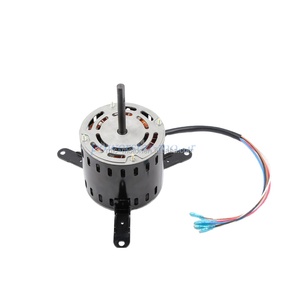
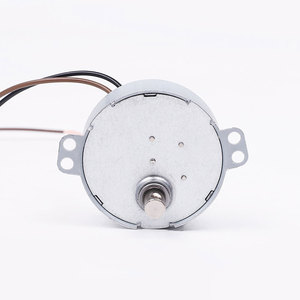
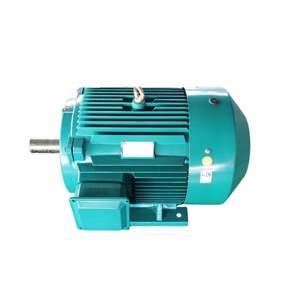
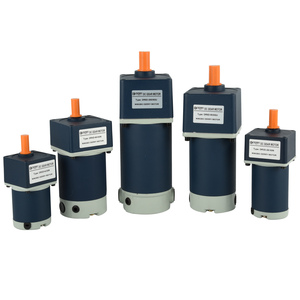
In modern industrial process engineering, thermal management, and HVAC systems, selecting the appropriate air movement machinery dictates operational efficiency, equipment service life, and overall energy consumption. Centrifugal blowers (also designated as radial fans) represent the cornerstone of high-pressure fluid dynamic systems. Unlike axial fans—which displace air parallel to the shaft axis—centrifugal blowers utilize dynamic centrifugal force to accelerate air radially outward, converting kinetic energy from a rotating impeller into static pressure head.
For OEM procurement directors and systems engineers, sourcing from validated centrifugal blower manufacturers and suppliers requires an in-depth understanding of system curves, aerodynamic blade geometries, motor coupling protocols, and environmental thermal rise tolerances. A properly matched blower ensures stable airflow against high system resistance, such as duct friction loss, HEPA filtration barriers, and heat exchanger matrix drops.
Key Engineering Insight: System resistance increases quadratically with airflow velocity (Pstatic ∝ Q2). Sizing a centrifugal blower requires precise mapping of your system resistance curve against the manufacturer's fan performance curve to prevent stall, aerodynamic surge, and motor thermal overload.
The aerodynamic efficiency, noise signature, and pressure development of a centrifugal blower depend fundamentally on its impeller design and motor integration architecture. Leading global manufacturers engineer three primary impeller geometries tailored to specific industrial operational parameters:
Characterized by numerous small, forward-slanted blades. Best suited for high-volume airflow at low-to-medium static pressures. Compact physical footprint makes them ideal for packaged HVAC fan coils and electronic equipment cooling enclosures.
Featuring heavy-duty backward-inclined or airfoil blade profiles. Delivers maximum total mechanical efficiency (exceeding 80%) with non-overloading horsepower characteristics, ideal for continuous duty in dust-laden process environments and industrial cleanrooms.
Designed for severe industrial service, material conveying, high-temperature furnace exhaust, and corrosive vapor extraction. Self-cleaning geometry resists particle accumulation and structural fatigue.
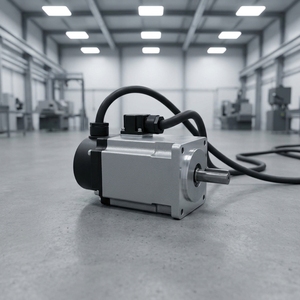
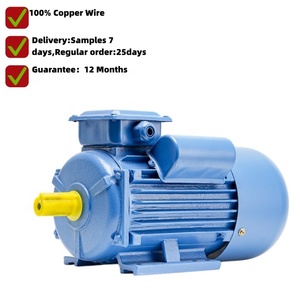
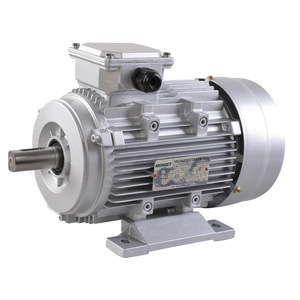
A centrifugal blower’s operational reliability is inextricably linked to its drive motor. As a veteran enterprise manufacturer, Delco Fans Pvt. Ltd. (founded in 1974 in Thane, Maharashtra, India) has mastered the integration of single-phase AC shaded pole motors, three-phase asynchronous squirrel cage motors (IE2/IE3 standards), and next-generation Electronically Commutated (EC) external rotor drives.
In-house manufacturing capabilities allow customized motor windings, precision dynamic balancing according to ISO 1940 standards, Class H thermal insulation impregnation, and dual-shielded ball bearing seating to ensure over 50,000 hours of continuous operation without maintenance.
Selecting the optimal air displacement configuration requires balancing mechanical efficiency, electrical power factor, noise levels, and physical housing dimensions. Review our technical engineering selection guide below:
| Product Architecture | Impeller Type | Static Pressure Capability | Efficiency (Total Mechanical) | Best-Fit OEM Industrial Application |
|---|---|---|---|---|
| Single Inlet Blowers | Forward / Backward Curved | Medium to High (up to 1,500 Pa) | 68% - 82% | Medical sterilisers, laboratory fume hoods, localized process cooling |
| Double Inlet Blowers | Forward Curved Twin Impellers | Medium (up to 800 Pa) | 62% - 74% | HVAC Air Handling Units (AHU), commercial refrigeration cabinets |
| Tangential / Cross Flow | Multi-Vane Cylindrical | Low (up to 150 Pa) | 45% - 58% | Air curtains, PCB panel cooling, slim consumer heating units |
| EC Backward Curved Blowers | Airfoil Backward Curved | Very High (up to 2,500 Pa) | 82% - 90% (IE5 equivalent) | Data center CRAC units, cleanroom FFUs, smart IoT ventilation |
| Heavy Industrial Exhaust Fans | Radial Steel / Cast Alloy | Extreme Duty (Dust/Fume) | 55% - 70% | Foundry fumes, packaging line exhaust, sawdust extraction |
Established in 1974, Delco Fans Pvt. Ltd. stands as an authoritative force in electric motor manufacturing and air movement engineering. Operating from Wagle Industrial Estate, Thane, India, Delco has evolved over five decades from a precision motor workshop into a fully integrated OEM partner for Fortune 500 enterprises across North America, Europe, Asia, and the Middle East.
Unlike catalogue-only traders, our engineering facility controls the complete manufacturing lifecycle in-house:
Utilizing high-purity electrolytic grade 99.9% copper wire with automated tension control, eliminating inter-turn shorting risk and minimizing thermal resistance under peak motor torque.
Every rotor assembly and centrifugal impeller undergoes two-plane computerized dynamic balancing to G2.5 precision limits, suppressing acoustic noise and bearing wear vibration.
Every batch undergoes routine electrical dielectric strength checks, high-voltage breakdown resistance, thermal temperature rise tests, and AMCA 210 airflow performance chamber validation.
As international energy regulations (such as EU ErP Directive 2029 and US DOE motor efficiency mandates) tighten, global procurement managers are accelerating the transition from traditional AC induction blowers to Electronically Commutated (EC) Centrifugal Blowers. Understanding these strategic trends is critical for forward-looking OEM product lifecycle planning:
Modern industrial equipment demands dynamic control over ventilation rates. EC blowers integrate onboard microprocessors accepting 0-10V, PWM, or RS485 Modbus RTU signals. This enables real-time airflow modulation based on sensor feedback (temperature, differential pressure, CO2 concentration), cutting operational energy consumption by up to 40% compared to fixed-speed AC motors.
Noise pollution in commercial HVAC, medical devices, and cleanroom environments has made acoustic performance a core procurement metric. Advanced suppliers utilize Finite Element Analysis (FEA) and Computational Fluid Dynamics (CFD) to optimize blade trailing-edge geometries, reducing turbulence-induced vortex shedding noise without compromising static pressure generation.
Geopolitical shifts and freight vulnerabilities have compelled major OEMs to diversify away from single-source manufacturing countries. India has emerged as a globally preferred manufacturing hub for electric motors and industrial blowers, combining robust engineering talent, raw material availability (high-grade electrical silicon steel and copper wire), and stringent IP protection standard compliance.
Find engineering-level answers to common technical, customization, and procurement questions regarding centrifugal blowers and electric motor selection.
Consult with our senior application engineers to review your duty point—airflow, static pressure, duty cycle, and mounting dimensions. Get full technical specs and OEM pricing today.
Get Catalog