

+91 98209 33660
Precision-engineered AC, DC, and EC motor-driven air movement solutions built for OEM applications, severe continuous duty, and strict static pressure compliance.
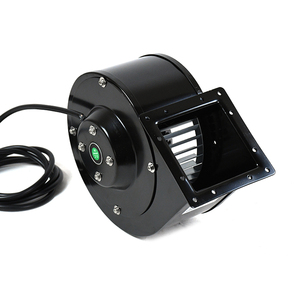
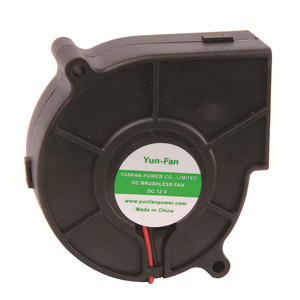
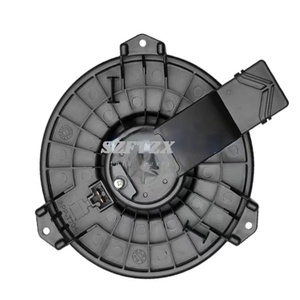

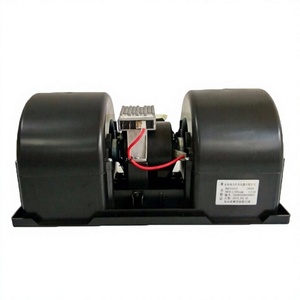
In modern industrial manufacturing, heating, ventilation, air conditioning (HVAC), electronic enclosure cooling, and process automation systems, selecting top trusted blower fan factories is no longer merely a purchasing decision—it is a core systems engineering safeguard. Industrial blower fans and fractional horsepower (FHP) electric motors operate as the cardiovascular heartbeat of thermal management systems. A failure in dynamic balancing, insulation rating, or rotor-stator concentricity can lead to severe mechanical resonance, premature bearing breakdown, or thermal runaway in expensive OEM equipment.
When procurement managers, mechanical engineering leads, and original equipment manufacturers (OEMs) evaluate global factory options, they must navigate beyond surface-level trade listings to examine fundamental manufacturing competencies. A top-tier factory must possess fully integrated production capabilities: in-house lamination stamping, automated copper winding, dynamic rotor balancing to strict ISO 1940 standards, precise varnish impregnation, and aerodynamic performance validation using calibrated wind tunnels conforming to AMCA 210 / ISO 5801 guidelines.
Core Procurement Insight: The true cost of an industrial blower fan is not measured by its unit FOB price, but by its level-of-service operating efficiency, acoustic performance, thermal margin over ambient rating, and MTBF (Mean Time Between Failures) across a 50,000-hour continuous duty cycle.
To identify top-tier blower fan factories, technical audit teams must systematically evaluate six key operational dimensions during facility audits:
Evaluation of electromagnetic simulation capabilities (FEA), slot-fill ratio optimizations, copper purity grade (99.99% ETP copper wire), and high-grade cold-rolled silicon steel lamination processing.
Dual-plane high-precision dynamic balancing of fan impellers and rotors (G2.5 rating) to suppress operational vibration amplitude below 1.5 mm/s, extending bearing lifespan.
Implementation of Class B (130°C), Class F (155°C), or Class H (180°C) thermal insulation systems with vacuum pressure impregnation (VPI) for moisture and chemical resistance.
Custom impeller geometry design—forward curved multiblade, backward curved radial, or axial blade pitches—optimized using Computational Fluid Dynamics (CFD).
IP44, IP54, and IP55 environmental ingress protection ratings, utilizing double-sealed precision ball bearings (NSK/SKF grade) and anti-corrosive powder coatings.
Automated electrical safety checks (Hi-Pot voltage withstand test, insulation resistance, surge testing) coupled with no-load speed, current, and noise verification.
When analyzing established manufacturing capabilities within the international motor and blower fan sector, Delco Fans Pvt. Ltd. stands out as an exemplary engineering-driven manufacturer. Founded in 1974 and operating from its flagship industrial facility in Wagle Industrial Estate, Thane, Maharashtra, India, Delco Fans brings over five decades of continuous manufacturing experience to OEM buyers worldwide.
Unlike asset-light trading houses or standard catalog distributors, Delco Fans maintains complete shop-floor ownership over every stage of the manufacturing cycle. Their production infrastructure includes dedicated die-making facilities, precision punching presses, automatic stator winding machines, dynamic balancing stations, and custom assembly lines designed for fractional horsepower (FHP) motors, shaded pole motors, single/double inlet centrifugal blowers, tangential cross-flow blowers, axial exhaust fans, and inline helical/worm geared electric drives.
Choosing the correct blower fan architecture requires matching your system resistance curve (static pressure) against the aerodynamic performance characteristics of different fan families. The matrix below outlines standard operational thresholds for system design engineers:
| Fan / Blower Type | Airflow Volume (CFM) | Static Pressure Capability | Acoustic Footprint | Primary Industrial Applications |
|---|---|---|---|---|
| Forward Curved Centrifugal | Medium to High | Moderate to High ($P_s$ up to 800 Pa) | Low to Moderate | Duct ventilation, air handling units (AHU), HVAC coils, cleanroom modules. |
| Backward Curved Centrifugal | High | High to Very High ($P_s$ up to 1500+ Pa) | Ultra-Low (High Efficiency) | Fume extraction, heavy dust filtration, data center cooling, industrial drying. |
| Tangential / Cross-Flow | Uniform Wide Air Curtain | Low ($P_s$ under 150 Pa) | Extremely Quiet | Refrigerated display cases, air curtains, fan coil heaters, medical equipment. |
| External Rotor Axial Fan | Very High | Low to Moderate ($P_s$ under 300 Pa) | Moderate | Electrical enclosure panel cooling, condenser units, heat exchangers, exhaust. |
| Electronically Commutated (EC) | Fully Variable (PWM/Modbus) | Adaptive Pressure Control | Ultra-Low Noise | Energy-critical VAV systems, smart HVAC, telecom shelters, lab ventilation. |
The global industrial blower fan manufacturing landscape is undergoing significant technological and structural shifts. Enterprise procurement officers and system designers must factor five major macro trends into their long-term vendor qualification and product selection roadmaps:
While traditional AC shaded pole and permanent split capacitor (PSC) motors remain valued for their simplicity and low initial cost, Electronically Commutated (EC) motor technology is expanding rapidly. EC motors combine AC line input with brushless DC motor operation via integrated onboard electronics. This transition typically delivers 30% to 50% energy savings, reduces motor heat generation, and enables closed-loop speed control without requiring external variable frequency drives (VFDs).
Industrial fans are transitioning from passive mechanical components to active, intelligent nodes within Industry 4.0 factory automation networks. Modern OEM blowers feature 0-10V, PWM speed control inputs, and tachometer pulse outputs. Advanced EC fan units incorporate RS485 Modbus RTU protocols, enabling real-time monitoring of motor operating temperature, rotational speed (RPM), vibration signals, and total running hours for predictive maintenance.
Acoustic regulations in residential, commercial HVAC, and laboratory environments are driving demand for lower sound pressure levels. Modern blower fan factories utilize advanced Computational Fluid Dynamics (CFD) and Finite Element Analysis (FEA) software to model airflow turbulence at blade tips. Innovations such as serrated blade trailing edges, bionic impeller profiles, and psychoacoustically optimized scroll housings allow factories to deliver higher static pressures at lower operating RPMs.
Global environmental directives (RoHS, REACH, ErP 2020/2025 efficiency targets) are reshaping raw material sourcing. Leading factories are adopting high-efficiency silicon steel laminations to lower iron losses, bio-based composite impellers, lead-free copper soldering, and recyclable aluminum housings. Furthermore, zero-waste manufacturing processes, closed-loop water systems, and solar-assisted factory plants are becoming key differentiators during corporate ESG vendor audits.
In response to global logistics disruptions, tariff shifts, and regional concentration risks, international procurement teams are moving away from single-country sourcing models. India has emerged as a premier hub for high-precision motor engineering and industrial blower fan manufacturing. Facilities like Delco Fans' Thane plant provide robust manufacturing capabilities, skilled engineering talent, strong intellectual property protection, and stable export logistics to Europe, the Americas, the Middle East, and Southeast Asia.
Connect directly with technical application engineers to analyze your system duty point, discuss custom OEM configurations, or request product catalogs.
Get Catalog