

+91 98209 33660
Direct factory supply of high-torque spindle motors, micro permanent magnet synchronous units, and heavy-duty three-phase induction drives engineered for continuous OEM duty cycles.
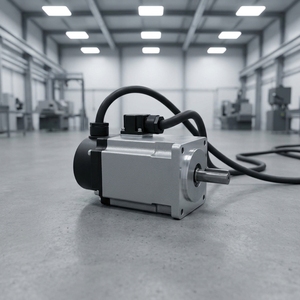
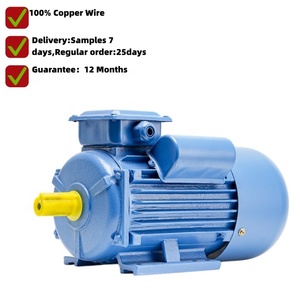
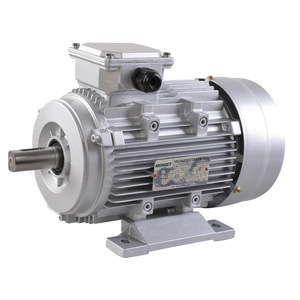
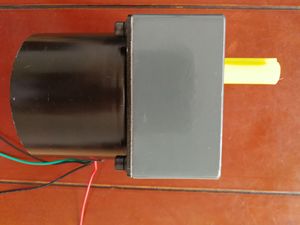
Combining over five decades of motion control legacy with modern CNC grinding, automated wire coil winding, and rigorous load-curve testing to eliminate downtime in critical industrial applications.
From fine-bore housing turning to micron-level spindle shaft grinding, every component is manufactured using state-of-the-art CNC grinding machines. This control guarantees rotational alignment, zero axial play, and strict compliance with global OEM dimensional tolerances.
Instead of supplying static catalog-only motors, our engineering team calculates system static pressure, rotor inertia, thermal rise limits, and load curves to configure custom voltage, shaft profile, and winding density configurations for exact operational duty points.
Every single motor batch undergoes 100% routine inspection: dielectric surge withstand testing, phase-to-phase resistance checking, no-load vibration spectrum monitoring, and locked-rotor current validation under simulated ambient temperature extremes.
In high-precision manufacturing, automated CNC machining, and heavy-duty fluid handling systems, the electric drive acts as the core engine determining machining accuracy, surface finish quality, energy efficiency, and operational lifespan. Procuring high-speed spindle motors, shaded pole drives, or three-phase asynchronous motors from China and global manufacturing leaders requires a clear understanding of dynamic balancing, thermal dissipation design, rotor insulation, and VFD (Variable Frequency Drive) compatibility.
Technical Insight: High-speed motorized spindle units eliminate intermediate belt or gear transmissions, directly transferring electromagnetic torque to the cutting tool or impeller. Maintaining dynamic balance under high RPM is essential to preventing chatter marks, bearing degradation, and harmonic resonance.
The mechanical efficiency and thermal endurance of an AC motor depend heavily on stator lamination geometry and copper slot-fill percentage. Low-cost motors often rely on copper-clad aluminum (CCA) wires or inferior silicon steel sheets, leading to elevated I²R resistive heat losses, premature insulation breakdown, and reduced torque output. Leading Chinese motor suppliers utilize high-permeability cold-rolled silicon steel stampings combined with 100% oxygen-free pure copper magnet wire rated for Class F (155°C) or Class H (180°C) thermal thresholds. This design maintains maximum torque density while minimizing operational temperature rise during continuous S1 duty cycles.
For CNC spindle drives operating between 6,000 RPM and 42,000 RPM, mechanical vibration must be held within strict ISO 1940 Grade G2.5 or G1.0 standards. Achieving this stability requires dynamic two-plane electronic balancing of the rotor assembly prior to final casing integration. Furthermore, bearing selection defines the spindle’s radial and axial rigidity. High-end spindle units employ angular contact ceramic hybrid ball bearings (Si3N4) arranged in preloaded tandem or back-to-back configurations. Ceramic balls exhibit significantly lower thermal expansion coefficients and lower density than conventional steel balls, reducing centrifugal loading and friction-induced heat generation under extreme rotational speeds.
Modern industrial plants rely on Variable Frequency Drives (VFDs) to modulate spindle speeds and regulate motor power output dynamically. However, pulse-width modulation (PWM) inverters introduce high-frequency voltage spikes (dV/dt) that stress stator phase insulation. To ensure long service life without inter-turn short circuits, premium AC motors designed for inverter duty integrate corona-resistant enamel wire, reinforced phase separators, and vacuum pressure impregnation (VPI) varnish treatment. This robust insulation structure prevents partial electrical discharge, even when long cable lengths generate reflected voltage wave peaks.
As global industries transition toward Automation 4.0, carbon neutrality, and higher efficiency benchmarks, international buyers are re-evaluating their sourcing criteria for industrial electric drives. China's spindle motor manufacturing sector is rapidly advancing from cost-competitive assembly to high-precision engineering and smart motion integration.
While traditional AC induction motors remain industry mainstays, Electronically Commutated (EC) and Permanent Magnet Synchronous Motors (PMSM) are gaining strong market share. PMSM technology achieves ultra-high energy efficiency matching IE4 and IE5 standards, retaining constant torque across a wide speed range without rotor slip losses.
Next-generation spindle drives feature built-in vibration accelerometers, PT100/PT1000 thermal sensors, and digital encoders embedded directly within the rear end-shield. This design enables predictive maintenance routines via real-time IoT monitoring, warning machine operators of bearing wear or thermal anomalies before failure occurs.
Stringent energy efficiency legislation across Europe, North America, and Asia-Pacific dictates that industrial three-phase induction drives must comply with IEC 60034-30-1 standard efficiency classes (IE3 Premium Efficiency minimum). Top Chinese motor exporters are standardizing IE3 and IE4 compliant frames across their export lines, utilizing optimized rotor slot geometry and premium grade magnetic steel.
Machinery manufacturers increasingly require compact, frameless, or direct-drive motor modules customized to fit proprietary machine geometry. Customization options include specialized shaft keyways, hollow-shaft encoder passages, liquid cooling jacket ports, and custom IP65/IP67 seals for wet CNC machining environments.
Use this technical comparison matrix to evaluate motor typologies against your specific mechanical load requirements, speed range, and environmental operating conditions.
| Motor Category | Typical Power Range | Speed Range (RPM) | Efficiency Class | Primary Industrial Application | Key Advantage |
|---|---|---|---|---|---|
| CNC High-Speed Spindle Motor | 1.5 KW – 30 KW | 6,000 – 42,000 RPM | High / Inverter Duty | CNC Milling, Engraving, Woodworking, Metal Cutting | Micron Runout Precision, Liquid/Air Cooling Options |
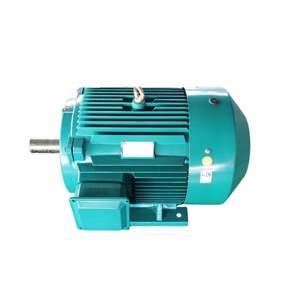
| YE3 Three-Phase Asynchronous Motor | 0.75 KW – 315 KW | 750 – 3,000 RPM | IE3 Premium Efficiency | Heavy Industrial Pumps, Compressors, Conveyors, CNC Drives | High Starting Torque, Rugged Cast Iron Frame |
| IE2 Single-Phase AC Induction Motor | 0.18 KW – 3.7 KW | 1,400 – 2,800 RPM | IE2 High Efficiency | Fluid Equipment, Machine Tools, Workshop Pumps | Reliable Capacitor-Start, Low Maintenance Duty |
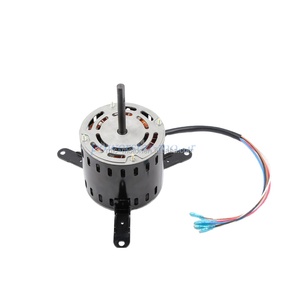
| AC Shaded Pole Motor | 5 W – 100 W | 1,200 – 3,000 RPM | Standard OEM | Evaporator Fans, Refrigeration, Air Curtains, Small Dampers | Cost-Effective, Simple Construction, Long Life |
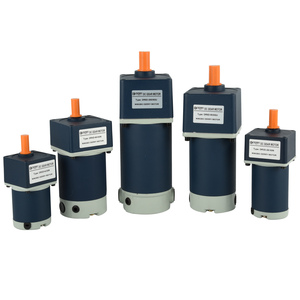
| Helical & Worm Geared AC Motor | 0.1 KW – 15 KW | 10 – 500 RPM | IE2 / IE3 Equivalent | Automated Assembly Lines, Packaging Machines, Mixers | High Output Torque, Right-Angle Gear Efficiency |
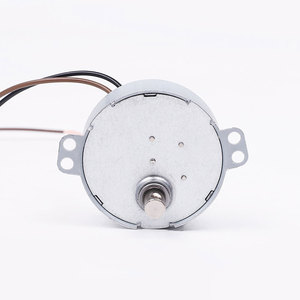
| 50KTYZ Permanent Magnet Synchronous | 2 W – 25 W | 2.5 – 100 RPM | Compact Synchronous | Valves, Vending Dispensers, Medical Actuators, Fans | Self-Holding Torque, Precise Fixed Speed Output |
Evaluating an overseas motor supplier requires looking beyond basic product catalog specifications. To protect your production supply chain against early motor failure and inconsistent build quality, procurement engineers should enforce the following four-stage quality verification process:
Verify that the factory performs 100% High-Potential (Hi-Pot) flash testing and Phase-to-Phase insulation resistance testing (Megger test > 100 MΩ at 500V DC) before motor varnish dipping.
Check the factory’s dynamic balancing equipment certificates. Spindle shafts must demonstrate dial indicator total radial runout (TIR) within 0.002 mm at the spindle nose.
Request continuous duty thermal rise curve reports measured under rated ambient temperature conditions. Motor housing temperature stabilization must remain within Class F insulation allowances.
Common technical and logistical questions asked by international buyers sourcing spindle motors and AC electric drives.
Air-cooled spindle motors rely on shaft-driven or electric cooling fans to dissipate heat across external aluminum fins. They are easier to install and maintain, making them ideal for woodworking and general engraving. Water-cooled (or liquid-cooled) spindle motors circulate liquid coolant through internal housing jackets, providing superior heat dissipation, lower operating noise, and constant temperature control essential for high-speed metal cutting and continuous duty.
Yes. Leading manufacturers offer complete OEM engineering support. Customizations include shaft diameter, keyway dimensions, threaded ends, custom mounting flanges (NEMA/IEC standard), specialized lead wire lengths, waterproof connector plugs, and IP65/IP68 environmental sealing enclosures.
Select a VFD with a rated output current that meets or exceeds the full-load amperage (FLA) of the spindle motor, rather than matching horsepower alone. For heavy cutting or fast acceleration cycles, choose a heavy-duty sensorless vector control VFD capable of supplying 150% rated torque at low frequencies.
Industrial motors exported to North America, Europe, and international markets should comply with CE directive standards, ISO 9001 quality management, RoHS environmental compliance, and UL or CSA safety marks where required by the destination market.
Standard catalog motor orders typically ship within 10 to 15 business days. Customized OEM orders requiring specific shaft machining, custom stator windings, or specialized housing coatings generally take 25 to 35 business days, including full quality testing prior to export shipping.
Share your operational parameters—power rating, operational voltage, target RPM, dynamic load torque, and mounting envelope—and our engineering team will provide a tailored technical proposal and competitive pricing structure.
Get a Quote