

+91 98209 33660
Precision-engineered fractional horsepower electric motors, synchronous drivers, pure copper induction units, and specialized air movement impellers for OEM equipment worldwide.
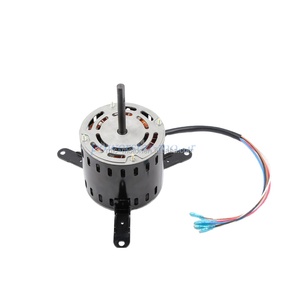
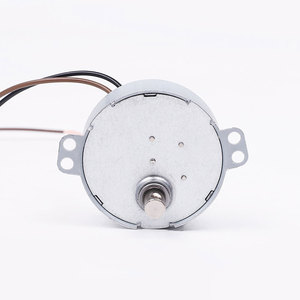
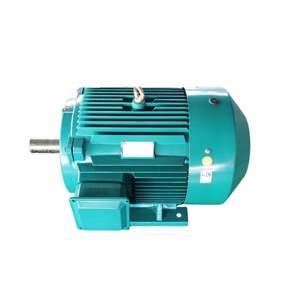
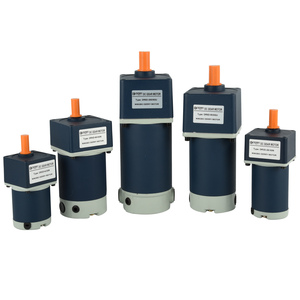
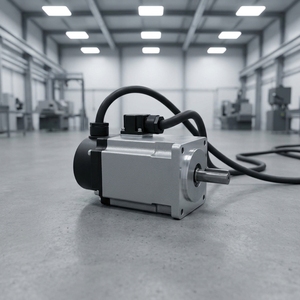
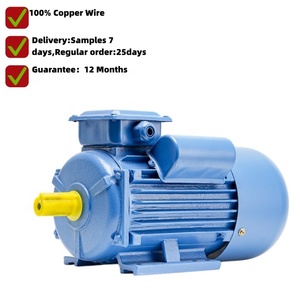
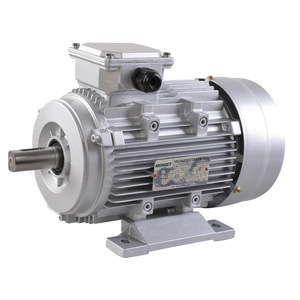
Over five decades of shop-floor engineering rigor, custom tooling capability, and stringent quality control protocols ensure uninterrupted operational lifetime for your thermal equipment.
Established upon decades of continuous motor design and fan wheel balancing, our engineering team evaluates real load curves, duty cycles, and thermal ambient limits to build robust HVAC air movement systems.
We utilize premium Class F and Class H insulated copper wire with automated precision winding. This delivers low thermal rise, superior energy conversion, and extended continuous-duty life compared to copper-clad alternatives.
Every centrifugal impeller, axial fan blade, and motor rotor undergoes precision dynamic balancing to ISO Grade G2.5 standard, eliminating unwanted vibration, reducing acoustic dBA noise, and extending bearing lifespan.
We engineer custom shaft profiles, threaded ends, keyways, specialized mounting flanges, and tailored lead wire terminations to fit directly into your tightest mechanical envelope without requiring structural redesigns.
Our facility operates calibrated aerodynamic test benches, thermal rise chambers, locked-rotor endurance stations, and high-voltage dielectric insulation testers to ensure compliance with global CE, UL, and RoHS standards.
From raw silicon steel lamination stamping and aluminum die-casting to final powder coating and run-in testing, we maintain complete control over production to guarantee repeatable quality for batch volumes.
Building reliable HVAC motors and centrifugal fans requires an unyielding commitment to physical tolerances. Minor imperfections in concentricity or dynamic rotor unbalance lead to accelerated bearing wear, acoustic hum, and premature coil burnout inside demanding commercial air handlers.
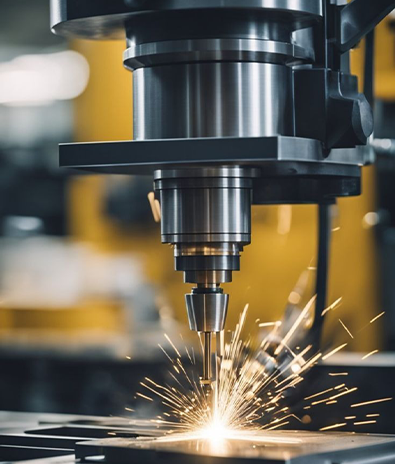
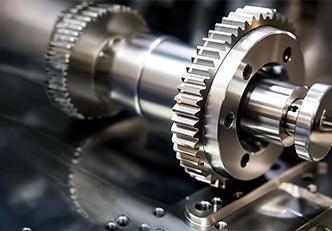
At our manufacturing complex, CNC turning centers work alongside automated winding lines to ensure that motor stators, rotors, and housing brackets align within micro-level tolerances. Every batch is verified against real load curves, ambient heat profiles, and backpressure conditions before leaving the factory floor.
The international Heating, Ventilation, Air Conditioning, and Refrigeration (HVAC/R) industry is undergoing a monumental transformation. Procurement executives, OEM system engineers, and plant managers are migrating away from legacy motor designs toward high-efficiency, acoustically tuned, and smart-controllable air movement assemblies. Navigating this shift requires a thorough understanding of regulatory compliance, total cost of ownership (TCO) models, and supply chain risk mitigation.
Global environmental regulations—such as the European Union’s ErP Directive, the U.S. Department of Energy (DOE) fan efficiency regulations, and China's GB18613 standards—are imposing strict minimum energy performance requirements. Systems previously utilizing standard AC shaded-pole or low-efficiency induction motors are rapidly transitioning to IE2, IE3, and Electronically Commutated (EC) permanent magnet drives.
Procuring high-efficiency fans directly reduces active power consumption (kW) and decreases thermal loss within air handlers. Over a 10-year service lifecycle, electricity costs account for over 85% of total fan ownership expenditure. OEM buyers who adopt optimized blade profiles and high-efficiency copper wound induction motors gain an immediate competitive advantage by offering lower operating costs to end-users.
Off-the-shelf catalog motors often force system designers into compromising on static pressure margins, envelope dimensions, or noise criteria. Modern HVAC procurement prioritizes original equipment co-engineering, where fan manufacturers deliver custom-wound stators, tailored shaft lengths, specialized mounting flanges, and tuned impeller pitch angles.
By collaborating directly with factory application engineers during the early prototyping stage, OEMs eliminate unnecessary adapters, reduce assembly step labor on their production lines, and achieve optimal operating efficiency at their specific duty points (CFM vs Static Pressure Pa).
| Motor / Fan Technology | Electrical Efficiency Range | Acoustic & Vibration Profile | Typical Speed Control Options | Best-Fit HVAC Applications |
|---|---|---|---|---|
| AC Shaded Pole Motors | 30% – 45% Efficiency | Moderate hum; simple mechanical design | Fixed Speed / Voltage Taps | Evaporator units, display cases, small exhaust fans |
| Single-Phase AC Induction (IE2) | 65% – 78% Efficiency | Low noise; high reliability dual ball bearings | Triac phase-cut, VFD compatible | Condensers, air handlers, commercial coolers |
| Three-Phase Premium (IE3 / YE3) | 88% – 94% Efficiency | Ultra-low vibration; industrial continuous run | Inverter / VFD (0-50/60Hz modulation) | Heavy fluid equipment, large AHUs, industrial cooling towers |
| Electronically Commutated (EC) | 82% – 92% Efficiency | Silent operation; integrated electronics | PWM, 0-10V analog, Modbus RS485 | Cleanroom FFU, precision data center cooling, VAV boxes |
Supply chain volatility over recent years has redefined procurement evaluation metrics. Global buyers no longer choose suppliers based on piece-part price alone. Strategic resilience demands manufacturers with robust raw material integration (in-house silicon steel stamping, copper coil winding, die-casting), comprehensive quality control certifications, transparent lead times, and financial stability.
Top Chinese fan manufacturers who possess complete vertically integrated production capabilities provide international clients with price predictability, reliable batch consistency, and agility in adjusting production volumes based on market fluctuations.
The next decade of HVAC fan development will be defined by advancements in fluid dynamics simulation, advanced motor electromagnetics, materials engineering, and smart diagnostics. Equipment manufacturers must understand these innovations to future-proof their product lineups.
Computational Fluid Dynamics (CFD) enables engineers to model 3D airflow velocity vectors, turbulence intensity, and blade boundary layer separation. By replacing traditional stamped metal blades with aerodynamically contoured backward-curved impellers and serrated blade trailing edges, air turbulence noise is dramatically reduced while increasing static pressure capability per watt consumed.
Modern continuous-duty motors must withstand harsh environments, including ambient heat up to 60°C, high relative humidity, and power grid fluctuations. The integration of Class F (155°C) and Class H (180°C) wire insulation systems, combined with automatically resetting thermal overload protectors (PTO/PTC), ensures motor windings resist insulation breakdown even under stalled rotor or extreme overload conditions.
In residential, commercial, and medical applications, fan sound pressure level (dBA) is a key buying criterion. Noise reduction is achieved through psychoacoustic engineering: utilizing skew-angled stator slots to minimize cogging torque, anti-vibration rubber isolation mounts, dynamic balance verification, and housing scroll geometry optimization that eliminates high-frequency tonal spikes.
Integration of Hall sensors, Modbus communication, and intelligent drive electronics allows HVAC fans to provide real-time feedback on operational RPM, motor temperature, and operating hours. System controllers can dynamically modulate fan speed according to actual thermal loads, saving substantial energy during partial-load conditions while providing predictive maintenance alerts before failure occurs.
Our motor and air movement assemblies are purpose-built to deliver quiet, continuous air delivery across diverse industrial sectors.

Condenser cooling, supermarket display cases, air handling units (AHU), and fan coil systems requiring reliable continuous duty.

Ultra-quiet, low-vibration centrifugal blowers for bio-safety cabinets, incubators, blood analyzers, and cleanroom air showers.

High-torque reduction geared motors and forced-ventilation cooling drives for automated production lines, conveyors, and mixers.

Axial exhaust fans and filter fan units engineered to dissipate heat from sensitive variable frequency drives, PLCs, and control panels.
Clear, technical answers from our engineering desk to assist buyers, procurement officers, and design teams.
To provide an optimized design recommendation and quotation, our engineering team requires: (1) Target Airflow volume in CFM or m³/h, (2) Operating Static Pressure in Pascals or inches W.G., (3) Supply Voltage and Frequency (e.g., 115V/60Hz, 230V/50Hz, or 380V Three-Phase), (4) Ambient operating temperature range, (5) Maximum allowable noise level (dBA at 1 meter), (6) Dimensional constraints and mounting preferences, and (7) Required duty cycle (continuous S1 vs intermittent S2/S3).
Every individual rotor assembly and fan impeller undergoes two-plane computerized dynamic balancing in accordance with ISO 1940 Grade G2.5 standards. We utilize precision dynamic balancing machines that detect unbalance down to fractions of a milligram, automatically removing or adding balance weights. This process prevents motor bearing fatigue, eliminates resonance noise inside equipment housings, and ensures smooth operation across years of service.
Our standard motor series feature Class B (130°C) or Class F (155°C) copper wire insulation, with Class H (180°C) available for high-temperature applications. For thermal safety, we integrate internal automatic-reset thermal protectors (PTO switches) or Positive Temperature Coefficient (PTC) thermistors directly into the winding heads to disconnect power instantly if coil temperatures exceed safe thresholds due to locked rotor or blocked airflow conditions.
Yes, OEM customization is a core enterprise strength. We regularly machine custom shaft diameters, double-flat D-shafts, keyways, external threading, and custom shaft lengths. Additionally, we manufacture customized mounting brackets, resilient rubber ring isolators, specialized lead wire lengths, and molex/amp/quick-disconnect electrical connector terminals to streamline your final product assembly.
Axial fans excel at moving high volumes of air (CFM) against low static pressure resistance (open path air distribution, cabinet cooling). Centrifugal blowers redirect air at a 90-degree angle and generate high static pressure, making them the correct choice when air must be forced through dense air filters, heat exchangers, long ductwork, or restrictive evaporator coils where system backpressure is high.
100% of manufactured units undergo automated end-of-line electrical and operational testing. This includes high-voltage dielectric insulation breakdown tests (Hi-Pot), no-load current and wattage measurement, direction of rotation verification, locked-rotor current check, and noise vibration inspection. Sample units from every lot undergo full wind-tunnel performance curve validation and continuous full-load thermal rise testing.
Our manufacturing facilities operate under ISO 9001:2015 quality management systems. Product lines are certified to relevant CE, UL, RoHS, and CCC standards. Comprehensive material safety compliance documentation (including REACH and RoHS compliance certificates for pure copper magnet wire, steel laminations, and bearings) is provided with every commercial order.
Standard prototype samples are produced within 7 to 10 working days. Fully custom shaft or housing toolings typically require 15 to 20 days for sample validation. Commercial batch MOQs vary from 100 to 500 units depending on the motor frame size and custom tooling requirements. Scheduled blanket order shipments with buffer stock management are available for long-term contract partners.
Connect directly with our application engineering desk to review your performance curve requirements, request customized sample units, or receive factory-direct wholesale pricing.