

+91 98209 33660
Direct OEM-engineered motion and air movement solutions designed for high-duty continuous industrial operations.
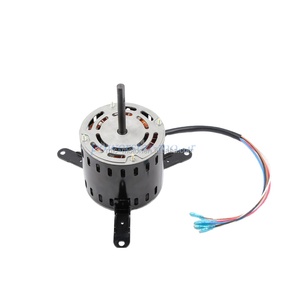
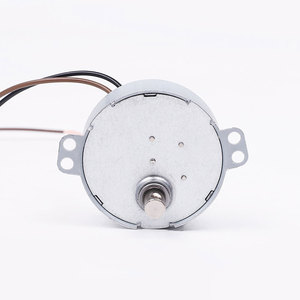
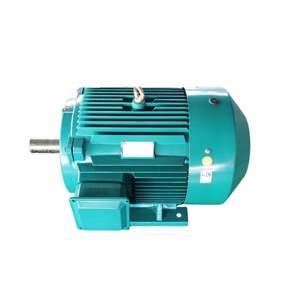
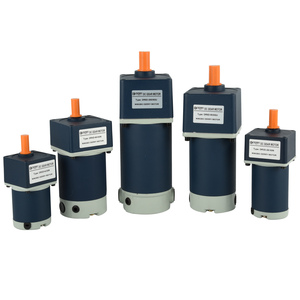
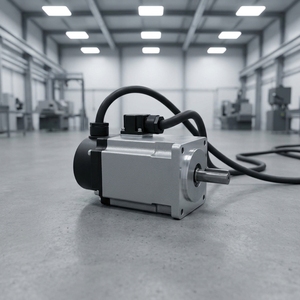
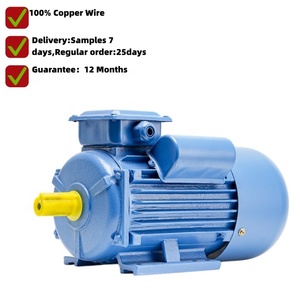
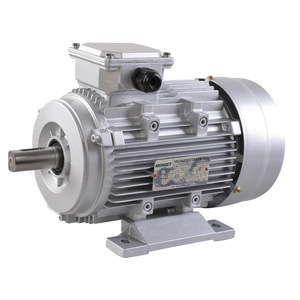
Draft fans constitute the operational backbone of industrial thermal management, boiler combustion control, HVAC ventilation, and process gas exhaust systems. Categorized fundamentally into Induced Draft (ID) Fans and Forced Draft (FD) Fans, these turbomachines regulate pressure differentials, overcome mechanical system resistance, and maintain precise stoichiometric air-to-fuel ratios in thermal power plants, metallurgical smelters, incinerators, and large-scale industrial complexes.
When global procurement teams evaluate China draft fan factories and export suppliers, evaluating vendor competency requires analyzing motor winding dynamics, rotor aerodynamic efficiency, thermal isolation mechanisms, and mechanical balance grades. With over 50 years of manufacturing lineage dating back to 1974, top-tier manufacturing processes have evolved from basic air movement assembly to advanced electro-mechanical systems integration.
Information Gain Metric: High-efficiency draft fans operating under IE3/IE4 motor standards reduce plant auxiliary power consumption by 14% to 22% annually compared to legacy IE1 installations, significantly altering the Total Cost of Ownership (TCO) for global industrial buyers.
Understanding the exact thermodynamic requirement of the fluid medium is vital before issuing a Request for Quotation (RFQ) to Chinese factories:
Why leading global OEMs choose qualified Asian manufacturing hubs for high-reliability draft fan production.
Computational Fluid Dynamics (CFD) modeled impellers maximizing total pressure efficiency (η_tot > 86%) while suppressing acoustic emissions and vortex turbulent noise.
100% dual-plane dynamic balancing of impellers up to G2.5 precision level, mitigating bearing vibration fatigue and extending continuous operational lifespan beyond 50,000 hours.
Class H copper wire insulation rated for 180°C thermal stress, coupled with water-cooled bearing housings for severe ambient industrial environments.
As international environmental regulations tighten (including the European Union's ErP Directive and global ISO 50001 energy management frameworks), the draft fan manufacturing sector is undergoing a profound technological shift. B2B buyers must account for three structural trends during factory audits and tender specifications:
Traditional AC induction draft fans regulated flow via mechanical inlet dampers, causing massive throttling energy losses. Future-ready factories are migrating toward Direct-Drive EC (Electronically Commutated) Motors and VFD-Driven Permanent Magnet Synchronous Motors (PMSM). EC technology permits step-less speed control down to 10% of rated speed, boosting partial-load system efficiency by up to 35%.
Modern incineration plants, biomass boilers, and lithium battery pyrolytic recycling furnaces emit highly abrasive and chemically aggressive combustion byproducts. Exporters are increasingly utilizing advanced metallurgical treatments:
Next-generation OEM draft fan assemblies come pre-fitted with integrated vibration sensors (ISO 10816 monitoring), bearing RTD temperature transmitters, and acoustic emission pick-ups. This enables real-time Modbus RS485 / MQTT telematics output directly into plant SCADA systems for predictive breakdown avoidance.
The following engineering matrix outlines the technical envelope for selecting appropriate fan configurations across industrial duty points:
| Fan Type / Category | Airflow Range (m³/h) | Static Pressure (Pa) | Max Gas Temp (°C) | Primary Industrial Applications |
|---|---|---|---|---|
| Centrifugal Forced Draft (FD) | 1,500 – 120,000 | 800 – 12,000 | 80°C | Boiler combustion supply, kiln burners, fresh air pressurization |
| Centrifugal Induced Draft (ID) | 2,000 – 250,000 | 1,200 – 15,000 | 450°C | Flue gas extraction, dust collection, incinerator exhaust |
| Single-Inlet External Rotor Blower | 300 – 4,500 | 200 – 1,100 | 60°C | Medical sterilizers, electrical enclosure cooling, HVAC units |
| Double-Inlet Centrifugal Blower | 800 – 12,000 | 300 – 1,800 | 70°C | Commercial AHU air handlers, cleanrooms, large air curtains |
| Tangential / Cross Flow Fan | 100 – 2,200 | 30 – 150 | 50°C | Air curtains, display case cooling, electronics racks |
| Industrial Axial Exhaust Fan | 1,000 – 85,000 | 50 – 500 | 60°C | Workshop ventilation, transformer heat dissipation, agricultural barns |
Precision-wound AC/DC drives and specialized fans designed to meet custom dimensional and electrical envelopes.
Procuring industrial draft fans from overseas suppliers requires stringent Quality Assurance (QA) auditing to prevent unexpected field failures, shaft snapping, dynamic imbalance, or motor burnouts. Leading manufacturers operate under structured quality systems:
Direct technical answers to common questions raised by procurement officers and design engineers.
A Forced Draft (FD) fan pushes fresh air into a system (e.g., combustion chamber) under positive pressure. An Induced Draft (ID) fan extracts hot flue gas or dust-laden air out of a system under negative pressure. ID fans require specialized high-temperature bearings, thermal isolation discs, and wear-resistant impellers.
You must calculate total System Head Loss, which includes friction losses through ductwork, elbows, heat exchangers, baghouse filters, and scrubbers. Select a centrifugal blower whose operating point intersects the system curve at its Peak Total Efficiency point (typically between 75% and 86% efficiency).
Yes. Custom winding capabilities allow suppliers to build AC motors and draft fan drives tailored to any global grid standard: 110V/220V/380V/415V/440V/460V/690V at 50Hz or 60Hz, as well as VFD-compatible inverter-duty insulation (Class H).
For industrial draft fans running above 1,450 RPM, specify ISO 1940 Grade G2.5 dynamic balancing. For low-speed fans (<960 RPM), Grade G6.3 is generally acceptable. Grade G2.5 dramatically reduces bearing wear and vibration levels below 2.8 mm/s RMS.
For gas temperatures exceeding 150°C, direct-drive or belt-drive shafts utilize shaft cooling aluminum heat dissipation wheels, elevated pedestal bearing housings with water-cooling jackets, and high-temp ceramic fiber shaft seals.
A complete export package includes factory acceptance test (FAT) reports, AMCA 210 airflow performance curves, dynamic balance certificates, motor insulation high-pot test records, material mill certificates for impellers, and CE/UL/ISO compliance documentation.
Provide your required duty point—airflow (CFM / m³/h), static pressure (Pa), gas temperature, and voltage requirements—and our engineering team will calculate your optimal fan configuration.