

Top 10 HVAC System Manufacturer & Supplier: Technical Procurement Guide & Industry Whitepaper

Comprehensive Analysis of Commercial Air Movement Solutions, Heat Recovery Innovations, and Future-Proof OEM Procurement Strategies

Featured OEM Equipment

Recommended Commercial HVAC & Air Recovery Systems

Engineered for commercial, industrial, and cleanroom applications. Browse our primary HVAC equipment portfolio designed for continuous duty cycle, maximum thermodynamic efficiency, and smart control integration.
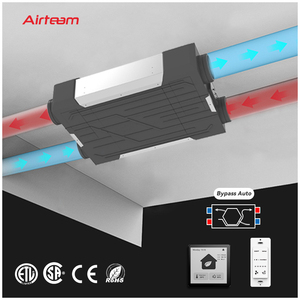
Ceiling Mounted HVAC Fresh Air Heat Recovery Ventilation System

Ceiling Mounted HVAC Fresh Air Heat Recovery Ventilation System with Smart WIFI Controller

Ultra-slim ceiling ERV unit with high latent heat exchange efficiency, multi-stage HEPA filtration, and IoT-enabled climate management.

Contact Us
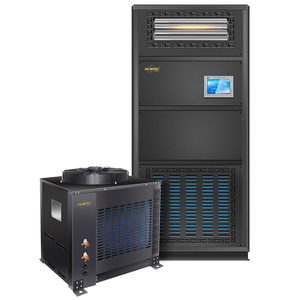
Constant Temperature And Humidity Control Air Conditioner For Laboratory

Constant Temperature And Humidity Control Air Conditioner For Laboratory

Precision environmental control unit (+/-0.5°C, +/-3% RH accuracy) tailored for pharmaceutical laboratories, cleanrooms, and testing facilities.

Contact Us
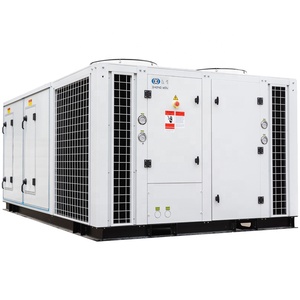
3 Ton Central Air Conditioner Rooftop Ducted AC 380V

3 Ton Central Air Conditioner Rooftop Ducted AC 380V Hitachi Compressor Commercial

Heavy-duty commercial rooftop package AC featuring Hitachi scroll compressor technology for high static pressure office and hotel ductwork.

Contact Us
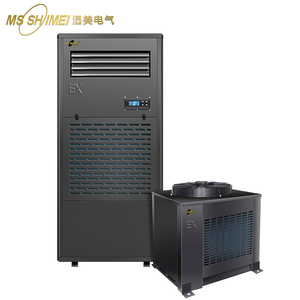
Industrial Floor Standing Air Conditioner

17060BTU Floor Standing Industrial Air Conditioner (1P-10HP Modular Configurations)

High-capacity vertical packaged air conditioner engineered for industrial workshops, server rooms, and large venue zone cooling.

Contact Us
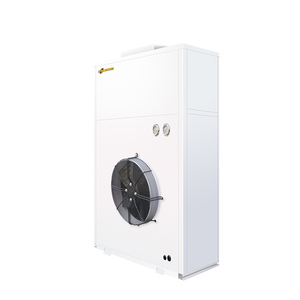
Commercial Kitchen Air Conditioner

2P 17060BTU Commercial Kitchen Air Conditioner with Heavy Grease Filtration

Corrosion-resistant localized cooling system built to withstand high heat, moisture, and airborne oil vapor in commercial restaurant kitchens.

Contact Us
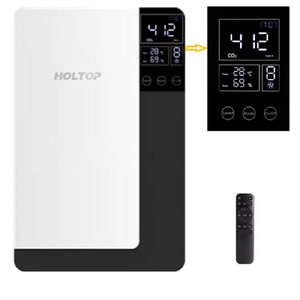
Wall Mounted Single Room ERV Ventilation System

Single Room Wall Mounted ERV with HEPA Filter, WiFi & Integrated CO2 Sensor

Ductless wall-mount energy recovery ventilator featuring real-time carbon dioxide monitoring and dynamic fan speed regulation.

Contact Us
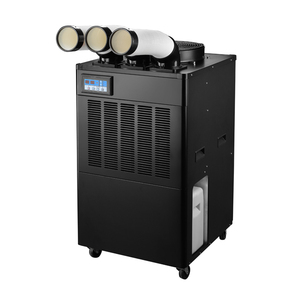
Floor Standing Noiseless Refrigeration Air Cooler

Floor Standing Noiseless Refrigeration Device & Standalone Evaporative Air Cooler

Acoustically insulated standalone refrigeration unit with digital micro-step controller and low-power ECM blower for low-noise environments.

Contact Us
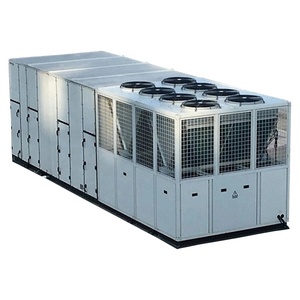
60 Ton Eco-Friendly Rooftop HVAC Package Unit

60 Ton Eco-Friendly R-410A Rooftop HVAC Package Unit with Hermetic Scroll Compressors

High-tonnage central climate conditioning plant equipped with dual-circuit hermetic scrolls, axial condenser fans, and programmable PLC control.

Contact Us
50+
Years Manufacturing Excellence
100%
In-House Quality Testing
45+
Global Export Markets
IE4/IE5
EC Motor Efficiency Compliance
Manufacturing Rigor & E-E-A-T Compliance

Why Top Global Buyers Partner With Established HVAC Manufacturers

Selecting a top-tier HVAC manufacturer requires evaluating operational depth, engineering capabilities, and component-level control rather than simple assembly operations.

5 Decades of Shop-Floor Heritage

Founded with a focus on precision air movement, our engineering workflow stems from over 50 years of continuous manufacturing experience. Every airflow profile, torque rating, and coil configuration is validated against real-world static pressure curves.

In-House Tooling & Winding

Unlike third-party packagers, we maintain total quality control over stator winding, dynamic rotor balancing, impeller pressing, and sheet-metal enclosure fabrication, eliminating supply chain friction and ensuring tight tolerances.

OEM Application Sizing

We work directly from mechanical engineer schedules. Whether you require specific external static pressure (ESP), customized coil anti-corrosion coatings (Blygold/E-coat), or dual-circuit variable capacity scroll configurations, our team customizes solutions to exact spec sheets.

Strategic Evaluation of Global HVAC Manufacturing Standards (2025–2030)

The commercial and industrial HVAC landscape is undergoing a structural paradigm shift driven by stringent decarbonization mandates, rising energy costs, and advanced indoor air quality (IAQ) requirements. For procurement directors, mechanical consultants, and enterprise facility managers, evaluating the top 10 HVAC system manufacturers and suppliers requires moving beyond baseline initial equipment cost (CapEx) to analyze lifetime operating expense (OpEx), refrigerant compliance timelines, and component repairability.

Key Procurement Takeaway: According to ASHRAE Guideline 36, selecting equipment with advanced Electronically Commutated (EC) blowers and variable refrigerant flow controls reduces life-cycle operational energy consumption by up to 34% compared to conventional fixed-speed induction drive systems.

1. Future Procurement Trends in Commercial Air Movement & Cooling

When procuring industrial HVAC units, packaged rooftops, or specialized fresh air heat recovery systems, global procurement heads are prioritizing four critical technological vectors:

  • Low GWP Refrigerant Transition: Global environmental regulations (such as the EU F-Gas Regulation and the US AIM Act) mandate a rapid phase-down of legacy hydrofluorocarbons like R-410A. Top HVAC suppliers are rapidly migrating to lower-GWP alternatives including R-32, R-454B, and natural refrigerants like R-290 (Propane) and R-744 (CO2) for heat pump circuits.
  • Total Energy Recovery Optimization (ERV/HRV): Modern fresh air handling units must incorporate cross-flow or rotary enthalpy exchangers capable of recovering sensible and latent heat. High-performance ERV units achieve thermal recovery rates exceeding 80%, substantially reducing the thermal load on primary chillers and compressors.
  • Direct-Drive EC Fan Integration: Belt-driven centrifugal fans are increasingly obsolete due to friction losses and particulate shedding from belt wear. Direct-drive backward-curved motorized impellers powered by EC motors deliver precise CFM control against dynamic static pressure fluctuations caused by loading HEPA filters.
  • Predictive Diagnostics & Building Automation Protocol (BACnet/Modbus): Integrated PLC microcontrollers are no longer optional. Modern rooftop units and precision laboratory AC systems require native BACnet MS/TP or IP communication to stream real-time compressor suction/discharge pressures, electrical current draw, and filter pressure drop metrics directly to central BMS dashboards.

2. Key Engineering Criteria for Top 10 HVAC Manufacturers

Identifying tier-1 HVAC suppliers involves auditing manufacturing facilities for standardized quality assurance protocols. Below is a structural matrix comparing critical performance metrics across primary commercial HVAC equipment categories:

Equipment Category Primary Efficiency Metric Critical Component Spec Typical Industrial Target Application
Rooftop Packaged Units (3 - 60 Ton) IEER ≥ 18.0 / SEER2 Multi-stage or Inverter Scroll Compressors + Aluminum Microchannel Coils Commercial Logistics Hubs, Retail Malls, Large Manufacturing Plants
Heat Recovery Ventilators (ERV) Sensible Recovery > 78% Hydrophilic Aluminum or Polymer Enthalpy Core + Dual EC Blowers Schools, High-Occupancy Offices, Green Building (LEED) Projects
Precision Lab Air Conditioners ±0.5°C Temp / ±3% RH Control Modulating Hot-Gas Reheat + Electrode Steam Humidifier + EC Fan Pharma Cleanrooms, Metrology Labs, Semiconductor Facilities
Floor Standing Industrial AC COP ≥ 3.6 / High Sensible Heat Ratio Heavy-Duty Hermetic Compressor + Washable Metallic Mesh Filters High-Heat Steel Mills, Automotive Assembly, Server Enclosures

3. Structural Analysis: ERV Ventilation vs. Conventional Air Conditioners

A common mistake in commercial facility engineering is treating Fresh Air Energy Recovery Ventilation (ERV) and standard Air Conditioning as interchangeable solutions. In modern high-efficiency HVAC design, these systems perform complementary thermodynamic duties:

Standard packaged air conditioners or split units primarily circulate internal building air to offset internal heat gains (people, lighting, solar radiation, machinery). However, without controlled outdoor air induction, indoor pollutants, VOCs, and CO2 levels quickly rise, violating building codes (such as EN 16798 or ASHRAE 62.1).

In contrast, ceiling-mounted or wall-mounted ERV systems introduce continuously filtered outside air while exhausting stale room air. The enthalpy exchanger transfers temperature (sensible energy) and moisture (latent energy) between the incoming and outgoing airstreams without mixing the air flows. This conditions the fresh incoming air before it reaches the primary AC coil, preventing thermal shock and drastically lowering compressor power consumption.

Technical Knowledge Base

Frequently Asked Questions for HVAC Equipment Buyers

Direct insights from our senior application engineering team regarding selection, lead times, and custom OEM manufacturing parameters.

What core technical parameters are required to generate an accurate quotation for commercial HVAC package units?

To provide a precise technical proposal and price schedule, our application engineers require: (1) Total cooling and heating capacity requirements in kW or Tons/BTU, (2) Desired airflow volume expressed in CFM or m³/h, (3) External static pressure (ESP) in Pascals or inches W.G., (4) Available power supply specifications (e.g., 380V/3Ph/50Hz or 460V/3Ph/60Hz), (5) Preferred refrigerant type (R-410A, R-32, R-454B), and (6) Installation space envelope constraints (rooftop footings, ceiling cavity height, or floor space).

How does an Energy Recovery Ventilation (ERV) system maintain indoor air quality while reducing energy consumption?

An ERV system utilizes a specialized enthalpy heat exchanger core through which incoming fresh air and outgoing exhaust air pass in opposite channels without directly mixing. During summer operation, warm, humid incoming outdoor air transfers its heat and moisture to the cooler, drier exhaust air, pre-cooling and dehumidifying the fresh air intake. In winter, the process reverses. This reduces the mechanical load on your primary air conditioning compressor by 20% to 40%, significantly cutting peak electrical demand.

Can your commercial HVAC equipment be customized for specialized environments like laboratories or high-grease commercial kitchens?

Yes. We specialize in custom OEM/ODM manufacturing. For laboratory precision climate control systems, we incorporate modulating hot-gas reheat coils, electrode humidifiers, micro-step inverter compressors, and HEPA filter plenums capable of maintaining strict temperature and humidity tolerances. For kitchen environment cooling, we utilize heavy-gauge anti-corrosion cabinet treatments, washable aluminum oil-separator filters, high-torque IP55-rated fan motors, and easily accessible coil cleaning ports.

What is the advantage of using EC (Electronically Commutated) fans over standard AC motors in industrial blowers and HVAC systems?

EC motors feature integrated electronics that convert AC input to DC, driving a brushless permanent-magnet rotor. This delivers three primary engineering advantages: (1) Energy savings up to 30-50% higher than traditional AC induction motors under partial load conditions, (2) Stepless speed modulation via standard 0-10V or Modbus control without requiring external Variable Frequency Drives (VFDs), and (3) Significantly reduced operating sound levels and thermal dissipation, increasing overall bearing and component service life.

What quality assurance and performance testing standards do your HVAC products undergo prior to export dispatch?

Every manufactured HVAC unit undergoes rigorous multi-stage testing at our facility, including: dynamic rotor and fan wheel balancing, high-voltage electrical safety and insulation resistance testing, helium mass-spectrometer refrigerant leak detection, locked-rotor amp checks, dynamic airflow CFM vs. static pressure curve verification in our calibrated wind tunnel, and full operational run-tests under simulated load conditions.

Require Custom HVAC Equipment or Engineering Support?

Connect with our technical application desk to request detailed CAD drawings, psychrometric performance calculations, or customized factory pricing schedules.

Contact Us