

+91 98209 33660
Precision-engineered thermal transfer systems built for HVAC/R, heavy industry, power generation, and sanitary fluid applications.
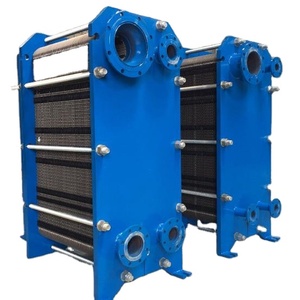
Engineered for extreme thermal duties, compact footprints, and maximum heat transfer coefficients in heavy industrial fluid processes.
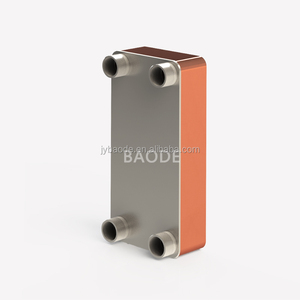
Delivers superior durability, maximum thermal transfer, and resistance to aggressive media like deionized water and chemicals.
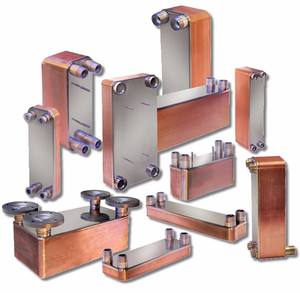
Designed specifically for heat pump evaporators/condensers operating under high operating pressures with eco-refrigerants like R410A & CO2.

Flexible air-to-air energy recovery ventilator engineered for hospital cleanrooms, residential airflow control, and commercial HVAC systems.
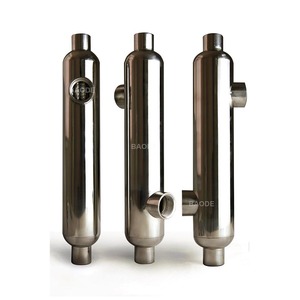
High-flow rate shell and tube configuration tailored for swimming pools, spas, solar heating loops, and boiler heat isolation.
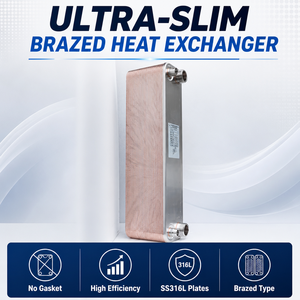
Ultra-compact plate geometry engineered for OEM boilers, chiller circuits, hydraulic oil cooling, and precision HVAC thermal units.
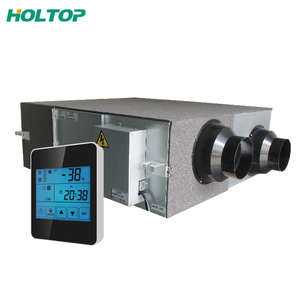
Cross-flow plate exchanger constructed from high-grade aluminum plates for commercial fresh-air pre-cooling and heating recovery modules.
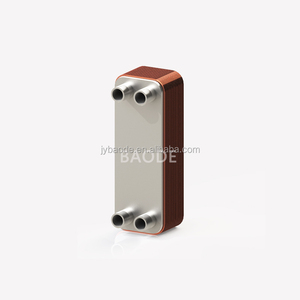
Heavy-duty water-cooled condenser designed for industrial chillers, marine refrigeration, and closed-loop process cooling circuits.
Combining five decades of precision metalworking, thermodynamic simulation, and automated assembly to deliver fail-safe heat exchangers worldwide.
Utilizing high-vacuum computer-controlled sintering furnaces, our copper and nickel brazed plate exchangers deliver 100% molecular bond integrity, eliminating internal fluid cross-leakage under heavy thermal cycling.
Every single unit undergoes automated mass-spectrometer helium leak detection, hydrostatic proof testing up to 1.5x design pressure, and ultrasonic weld thickness verification prior to dispatch.
Our thermal engineering team works directly from your duty point specifications: entering/leaving temperature differentials ($\Delta T$), pressure drop budget ($\Delta P$), fluid viscosity, and volumetric flow rates.
Heat exchangers serve as the invisible backbone of modern industrial infrastructure. From HVAC climate control, food processing pasteurization, and chemical refining to emerging applications in green hydrogen cooling, data center liquid immersion chilling, and heat pump electrification, selecting the right manufacturer directly impacts both operational expenditure (OpEx) and energy performance coefficients (COP).
This industry whitepaper outlines key technical metrics, material selection standards, dynamic market forces, and manufacturing evaluation criteria essential for technical buyers, EPC contractors, and OEM design engineers seeking high-gain procurement decisions.
When specifying heat exchangers, upfront unit cost accounts for less than 12% of total lifecycle cost (TCO). Pumping energy losses driven by excessive fluid pressure drops ($\Delta P$) and downtime from fouling or brazing fatigue represent over 88% of lifetime expenditure. Modern micro-channel chevron plate geometries can reduce pumping energy demand by up to 22% compared to traditional flat-plate or unoptimized designs.
As global industries align with decarbonization mandates and Net-Zero energy targets, heat exchange technology is experiencing rapid technological evolution across several key vector fronts:
With global environmental regulations phasing out high-GWP synthetic refrigerants (F-gases), the industry is pivoting toward natural working fluids including R744 ($\text{CO}_2$), R290 (Propane), and R717 (Ammonia). Transcritical $\text{CO}_2$ systems operate under extreme working pressures exceeding 130 bar, demanding specialized ultra-high-pressure Brazed Plate Heat Exchangers (BPHE) manufactured with reinforced stainless steel plate profiles and proprietary brazing alloys.
The rise of high-density AI compute clusters has rendered traditional air cooling obsolete. Direct-to-chip liquid cold plates and server tank immersion cooling loops require compact, highly efficient liquid-to-liquid heat exchangers. Stainless steel 316L and pure nickel brazed units are rapidly replacing standard copper units to prevent dielectric fluid contamination and chemical leaching.
Traditional symmetric plate designs apply equal channel spacing to both fluid sides. Asymmetric plate technology optimizes thermal exchange when media have unequal volumetric flow rates—such as liquid refrigerant evaporating into high-volume gas—enabling up to a 30% reduction in heat exchanger internal volume and refrigerant charge.
Selecting the optimal equipment architecture requires balancing thermal efficiency against cleanability, operating pressure ratings, and fluid chemical compatibility. Below is an engineering trade-off analysis across primary market configurations:
| Heat Exchanger Type | Thermal Efficiency (%) | Max Pressure (Bar) | Fouling Risk & Cleanability | Best Fit Applications |
|---|---|---|---|---|
| Brazed Plate (BPHE) | 90% – 98% | 45 – 140 Bar | Compact; Clean-in-Place (CIP) required | HVAC, Heat Pumps, Refrigeration, Hydronic Heating |
| Shell & Tube | 60% – 75% | 300+ Bar | Low risk; Mechanically cleanable tube bundle | Swimming Pools, Heavy Chemical Processing, Marine Boilers |
| Gasketed Plate (PHE) | 85% – 95% | 25 Bar | Easy maintenance; Plates expandable/replaceable | Dairy Pasteurization, Sanitary Food & Beverage, District Cooling |
| Air-to-Air Plate (Recuperator) | 70% – 88% | Atmospheric | Low risk; Continuous smooth airflow paths | Hospital Cleanrooms, Building Heat Recovery Ventilation (HRV) |
When selecting a top-tier heat exchanger factory or OEM partner, procurement audit teams should evaluate suppliers against five non-negotiable manufacturing competencies:
Direct technical answers from our senior engineering team regarding thermal design, sizing, anti-corrosion, and OEM ordering procedures.
Copper brazed exchangers are the industry standard for HVAC, refrigeration, and clean water circuits due to excellent thermal conductivity and cost effectiveness. However, if your medium contains ammonia, aggressive chemicals, deionized water, or marine saltwater, Nickel brazing (such as our BL120 series) is required to prevent copper leaching and chemical degradation.
To calculate the exact plate count and channel arrangement, our engineers require: (1) Media types for both hot and cold sides, (2) Inlet and outlet fluid temperatures ($\text{T}_{\text{in}}$, $\text{T}_{\text{out}}$), (3) Mass or volumetric flow rates, (4) Maximum allowable pressure drop ($\Delta P$), and (5) Design operating pressure and temperature limits.
High chevron angles ("hard" plates) create intense fluid turbulence, maximizing heat transfer coefficients ($U$-value) and reducing equipment size. However, this increases fluid friction and pressure drop. Low chevron angles ("soft" plates) produce lower pressure drops at the expense of lower heat transfer. We often mix chevron geometries within a single unit to optimize the precise heat transfer-to-pressure drop balance.
Yes. As a direct-to-OEM manufacturer, we offer full customization on thread types (NPT, BSPP, Victaulic, Soldering connections, or SAE Flanges), port sizing, mounting bracket dimensions, and custom plate stacking counts for series production orders.
Submit your system parameters today. Our thermodynamic application engineers will calculate your optimum duty point, provide CAD models, and deliver a competitive direct-factory quotation within 24 hours.