

+91 98209 33660
Engineered for high static pressure, low acoustic signature, and continuous OEM operation.
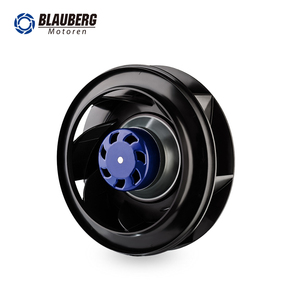
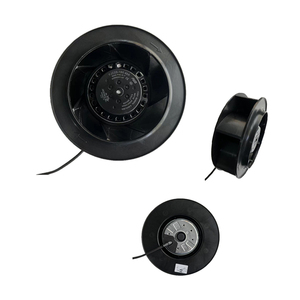
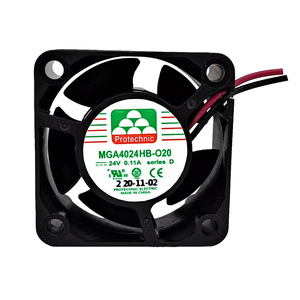
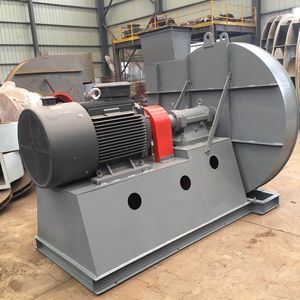
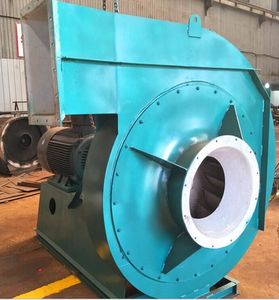
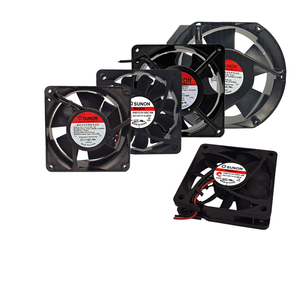
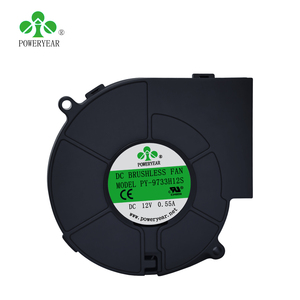
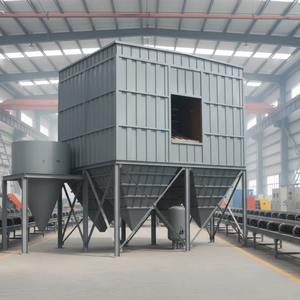
Centrifugal fans (also designated as radial blowers) represent the aerodynamic cornerstone of modern HVAC systems, industrial process ventilation, thermal management enclosures, and cleanroom air handling units (AHUs). Unlike axial flow fans—which displace fluid parallel to the rotational shaft—centrifugal fans accelerate fluid radially utilizing centrifugal forces generated by an impeller wheel. This fluid dynamic transformation converts kinetic velocity energy into static pressure head, enabling air delivery through complex ducting networks, high-efficiency particulate air (HEPA) filters, heat exchangers, and restrictive industrial process chambers.
In the contemporary industrial supply chain, specifying the optimal centrifugal fan manufacturer and supplier requires a rigorous evaluation going beyond basic volumetric flow rate (CFM or m³/h). Global procurement leaders and chief mechanical engineers evaluate suppliers based on aerodynamic efficiency curves, total cost of ownership (TCO), motor system integration (EC vs. AC AC shaded pole or external rotor motors), dynamic balance precision (ISO 1940 Grade G2.5), and manufacturing reliability under severe duty cycles.
Key Engineering Takeaway: Selecting an industrial centrifugal fan supplier is fundamentally an exercise in system curve matching. A fan operated away from its Best Efficiency Point (BEP) suffers from turbulent recirculation, elevated acoustic emissions, premature bearing failure, and excessive electrical consumption.
To assist procurement directors and OEM project engineers in identifying world-class manufacturing partners, our technical research team has compiled a global evaluation matrix. Suppliers are benchmarked against engineering capability, product customization breadth, aerodynamic efficiency, and manufacturing footprint.
Headquarters: Thane, India (Est. 1974)
Core Competency: Custom OEM FHP electric motors, backward curved fans, single/double inlet centrifugal blowers, and shaded pole geared motor integrations. Comprehensive in-house winding, dynamic balancing, and routine thermal testing.
Headquarters: Mulfingen, Germany
Core Competency: Pioneer in Electronically Commutated (EC) external rotor motor technology, premium backward curved radial impellers, and intelligent IoT-networked HVAC ventilation blowers.
Headquarters: Wisconsin, USA
Core Competency: Commercial building air handling, heavy-duty industrial centrifugal exhausters, AMCA-certified laboratory fume exhaust systems, and inline draft blowers.
Headquarters: Skinnskatteberg, Sweden
Core Competency: High-efficiency inline centrifugal duct fans, explosion-proof ATEX blowers, and modular ventilation systems for commercial transport infrastructure.
Headquarters: Künzelsau, Germany
Core Competency: Bionic impeller blade designs inspired by nature, high-performance backward-curved centrifugal wheels, and precision elevation/elevator ventilation units.
Headquarters: Minnesota, USA
Core Competency: Custom industrial process blowers, heavy-duty induced draft fans, high-pressure utility sets, and corrosion-resistant fiberglass/stainless steel impellers.
Headquarters: Munich, Germany
Core Competency: Radial plastic blade fans, Fan Filter Units (FFU) for cleanroom technology, IP55/IP68 OEM centrifugal modules for industrial air purification.
Headquarters: Kaohsiung, Taiwan
Core Competency: Micro centrifugal DC blowers, server rack precision cooling solutions, ultra-quiet thermal management fans for embedded electronics.
Headquarters: Renfrew, United Kingdom
Core Competency: Ultra-heavy power generation draft fans, mining shaft ventilation, high-pressure petrochemical centrifugal gas compressors.
Headquarters: Taipei, Taiwan
Core Competency: High-speed miniature centrifugal blowers, IP-rated industrial enclosures, and ball-bearing long-lifespan cooling systems.
Understanding the mechanical differences between centrifugal blade configurations is critical for matching fan performance to specific system resistance curves. Below is an engineering evaluation comparing the primary impeller geometry classifications:
| Impeller Blade Type | Static Pressure Capability | Peak Mechanical Efficiency | Noise Characteristics | Primary Industrial Application |
|---|---|---|---|---|
| Backward Curved (BC) | Medium to High Head | 78% – 85% (Non-overloading) | Low acoustic spectrum | HVAC AHUs, Cleanroom FFUs, Plenum Chambers |
| Forward Curved (FC) | Low to Medium Head | 60% – 68% (Overloading potential) | Low noise at low speed | Residential furnaces, compact FCUs, OEM blowers |
| Radial Blade (Straight) | Very High Head | 50% – 60% | Moderate to High | Industrial dust collection, pneumatic conveying, particulate gas |
| Airfoil Blade (AF) | Medium to High Head | 82% – 88% (Highest efficiency) | Lowest broadband noise | Large scale commercial HVAC, power plant ventilation |
The global centrifugal fan industry is undergoing a paradigm shift driven by stringent decarbonization mandates, ErP energy efficiency directives, and smart factory digitizations. Procurement strategies must align with these four key technology vectors:
Traditional AC induction motors operated via Variable Frequency Drives (VFDs) incur parasitic inverter losses and rotor heat generation. Modern EC centrifugal fans integrate brushless DC permanent-magnet motors with built-in electronic commutation control. This architecture achieves IE4/IE5 efficiency levels, reduces motor volume by up to 50%, and delivers smooth speed modulation (0-10V / PWM / Modbus) across the full performance curve without hum or resonance.
Leading manufacturers utilize 3D CFD modeling to eliminate blade stall separation zones and dynamic flow recirculation. Bionic trailing-edge serrations and optimized scroll housing diffuser angles reduce tonal noise frequencies (blade passing frequency) by 3 to 7 dBA while improving static pressure conversion efficiency.
Where traditional painted mild steel succumbs to chemical attack or moisture degradation, advanced suppliers deploy glass-reinforced polyamides (PA66-GF30), 316L stainless steel, titanium alloys, and fluoropolymer (PTFE/PVDF) anti-corrosion coatings. Lightweight composite impellers reduce rotational moment of inertia ($J = m \cdot r^2$), accelerating soft-start cycles and lowering bearing loads.
Smart centrifugal blowers now incorporate embedded tri-axial vibration accelerometers, winding temperature probes (PT100/NTC), and optical tachometers. Communicating over RS485 Modbus RTU or wireless IO-Link networks, these units alert maintenance teams to rotor imbalance, bearing race pitting, or duct blockage long before catastrophic failure occurs.
With a continuous manufacturing legacy dating back to 1974 at Wagle Industrial Estate, Thane, India, Delco Fans Pvt. Ltd. delivers an unmatched combination of engineering experience, precision manufacturing, and customizable air movement solutions.
Over 50 years of shop-floor experience in electric motor winding, rotor dynamic balancing, and blower scroll housing fabrication.
Custom shaft profiles, mounting flanges, specific winding turns, and specialized duty-cycle insulation (Class F/H available).
Every single centrifugal blower undergoes electrical safety, no-load vibration, static pressure validation, and thermal rise verification.
Direct manufacturer pricing without intermediary markups, backed by long-term spares availability and rapid prototype lead times.
When establishing multi-year supply contracts for centrifugal blowers and electric motors, international procurement executives must navigate changing trade regulations, carbon footprint reporting, and supply chain vulnerability. Key procurement criteria include:
An axial fan moves air parallel to the fan shaft, making it ideal for high volumetric flow rate (CFM) applications with low static resistance (e.g., free-air ventilation). A centrifugal blower changes air direction by 90 degrees, converting velocity pressure into static pressure head. This enables centrifugal blowers to overcome high static resistance caused by ducting, HEPA filters, heat exchangers, and restrictive cabinets.
Backward curved (BC) fans offer higher mechanical efficiency (up to 85%), non-overloading horsepower characteristics, and superior performance in medium-to-high pressure applications. Forward curved (FC) blowers deliver higher volume at lower rotational speeds within compact scroll housings, making them cost-effective for space-constrained residential or light commercial equipment, though they require thermal overload protection against motor burnout if static resistance drops.
Delco Fans engineers application-specific variants directly from customer drawings or physical target parameters. Customization parameters include voltage/frequency ratings (110V AC, 220V AC, 24V DC, EC), shaft extensions, custom mounting brackets, specific static pressure impellers, lead wire terminations, and integrated thermal protectors (TOP).
Every production batch undergoes 100% routine testing including high-voltage insulation dielectric checks, no-load current/power consumption verification, dynamic balance verification (ISO 1940 Grade G2.5), acoustic noise testing, and static pressure head validation against established baseline curves.
Submit your required airflow (CFM/m³/h), static pressure (Pa/mmWC), operating voltage, and envelope dimensions. Our engineering team will deliver a calibrated quotation within 24 hours.