

Industrial Whitepaper: Engineering Criteria for Tubular Motors & Specialized Motion Assemblies
In modern industrial automation, architectural shading, rolling security shutters, and heavy-duty equipment design, selecting the optimal electro-mechanical drive is a critical decision. A tubular motor functions as a self-contained linear cylindrical actuator consisting of an internal electric drive (AC induction or Brushless DC), an integrated planetary speed-reduction gearbox, an electromagnetic disc brake assembly, and an automatic limit-switch position controller.
Choosing an experienced OEM/ODM factory supplier ensures that structural tolerances, thermal dissipation coefficients, and acoustic operational profiles strictly match your end-use duty cycle requirements.
1. Anatomy & Mechanical Efficiency of Industrial Tubular Motors
Tubular motors are categorized primarily by tube diameter—most commonly 35mm (diameter 35), 45mm (diameter 45), 59mm (diameter 59), and heavy-duty 92mm variants. The power output, mechanical torque (expressed in Newton-meters, Nm), and rotational speed (RPM) are precisely calculated based on the internal stator dimensions and planetary gear ratio stages.
- Precision Planetary Gear Stages: Multi-stage planetary gearing made of alloy steel or high-tensile engineered polymers ensures maximal torque conversion within compact outer dimensions while maintaining minimal mechanical backlash.
- Electromagnetic Braking System: Ensures immediate locking when power is cut, preventing back-driving in vertical loads such as security shutters, heavy projection screens, and industrial pergolas.
- Limit Switch Systems: Available in classic mechanical limit configurations (adjusted via physical hex screws) and electronic limit setups (set remotely via microprocessors or RS485/Zigbee protocols).
- Thermal Overload Protection: Class F or Class H copper winding insulation paired with automatic thermal cut-offs prevents coil damage during prolonged duty cycles or extreme ambient temperature operations.
2. Comparative Analysis: Motion Systems & Motor Technologies
Procurement officers and chief engineers must balance torque performance, rotational velocity, physical enclosure constraints, and energy efficiency. Below is an engineering comparison matrix across common industrial motor drive types offered by our OEM facility:
| Motor Type / Architecture | Typical Power Range | Torque Character | Efficiency & Energy Profile | Best-Fit Application |
|---|---|---|---|---|
| Tubular AC / BLDC Motors | 6W - 500W | High Holding & Stall Torque (3Nm - 300Nm) | High power-to-diameter ratio, optimized intermittent S3 duty | Roller shutters, motorized blinds, pergolas, solar trackers |
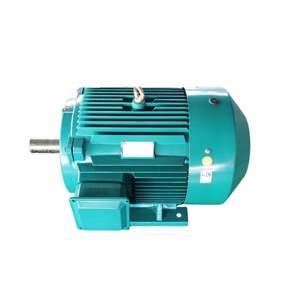
| IE2/IE3 Asynchronous Motors | 0.75kW - 15kW+ | Continuous rated speed, high torque shaft output | IE2 / IE3 premium energy saving standards, continuous S1 duty | Pumps, industrial blowers, fluid equipment, heavy machinery |
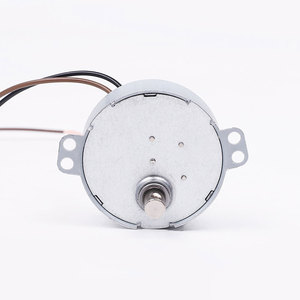
| Synchronous Gear Motors (50KTYZ) | 2W - 25W | Low RPM, fixed synchronous speed, moderate torque | Ultra-low current draw, constant speed regardless of load | HVAC dampers, rotating displays, micro-fans, cold air devices |
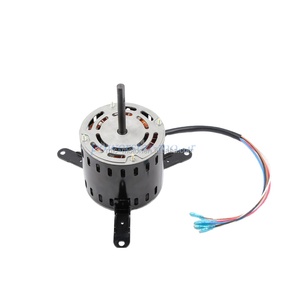
| Single-Phase Induction Motors | 120W - 2.2kW | High starting torque via capacitor start/run design | Standard industrial efficiency, robust thermal tolerance | Household electric drives, light machinery, commercial coolers |
Future Procurement Trends in Smart Motion Control (2025–2030)
As global industries transition toward smart manufacturing, green building standards, and decentralized automation, the procurement landscape for tubular motors and fractional horsepower drives is undergoing a fundamental technical shift. B2B buyers must align their supply chains with several key technological developments:
Trend 1: Migration to Brushless DC (BLDC) & Electronically Commutated (EC) Motors
Traditional AC induction tubular drives are increasingly being replaced by BLDC and EC motor architectures. BLDC tubular drives offer up to 30% higher energy efficiency, significantly lower operating heat generation, variable speed control capabilities, and extremely low acoustic signatures (under 32 decibels). This makes them indispensable for premium residential automation, green-certified commercial buildings, and medical ventilation units.
Trend 2: IoT Protocol Integration & Bidirectional Feedback Systems
Modern tubular motor buyers no longer request simple open-loop motor operation. Sourcing requirements now mandate multi-protocol connectivity including Zigbee 3.0, Matter, RS485 Modbus, CANbus, and Wi-Fi. Micro-controller units integrated directly onto the motor's internal PCB enable real-time telemetry feed back to Centralized Building Management Systems (BMS)—delivering instant diagnostics on motor temperature, exact percentage open/close position, operational cycle counts, and predictive maintenance alerts.
Trend 3: Solar-Powered Low-Voltage DC Actuators
Sustainable architectural designs and remote agricultural automation (such as solar greenhouse shade curtains and off-grid ventilation dampers) are driving surging demand for 12V DC and 24V DC battery-backed tubular motors. These systems draw zero grid power, leveraging localized solar panels and energy-efficient MPPT charge controllers for total energy autonomy.
Trend 4: Stringent Noise Control & Vibration Damping Standards
Acoustic comfort has moved from a secondary luxury feature to a primary procurement specification. Luxury hospitality environments, hospitals, and high-end residential towers demand tubular motors operating below 35dB(A). Achieving this performance requires precision planetary gear tooth grinding, synthetic acoustic damping grease, helical tooth profiles, and dynamic rotor balancing on dynamic micro-balancing rigs.
Industry Development & Global Sourcing Market Dynamics
The worldwide market for tubular motors and specialized gear motors is being shaped by stringent international energy regulations (such as Europe's ErP Directive and US DOE energy efficiency standards). Industrial buyers must evaluate their manufacturing partners based on three crucial operational pillars:
- Material Integrity & Pure Copper Conductors: Fluctuating raw copper prices lead low-tier manufacturers to substitute copper-clad aluminum (CCA) wiring. OEM buyers must demand 100% pure enamelled copper coils (Class 180/Class 200 rating) to prevent resistive power loss, premature insulation breakdown, and thermal failure.
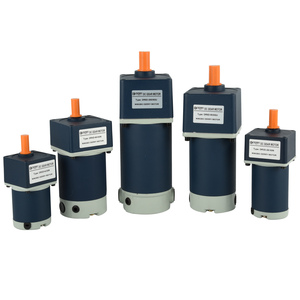
- Modular Planetary Reducer Customization: Standardized off-the-shelf speed ratios are frequently inadequate for customized automation equipment. Leading ODM factories supply customizable gear stage ratios (e.g., 1:26 down to 1:280) to deliver exact output RPM and stall-torque margins tailored to specific load profiles.
- Supply Chain Traceability & Batch Consistency: Long-term B2B partnerships rely on zero-defect manufacturing. Implementing statistical process control (SPC), fully automated winding stations, and computerized load-bench testing ensures that unit 1,000 displays identical electrical and torque parameters to unit #1.