
+91 98209 33660
Engineered to exact OEM specifications, featuring pure copper coils, optimized thermal dissipation, high torque density, and robust enclosure ratings.
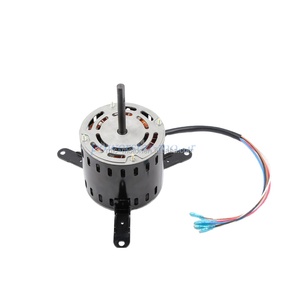
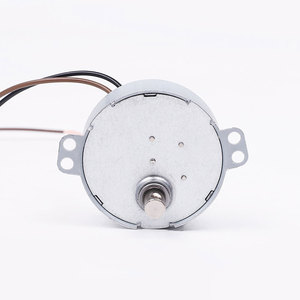
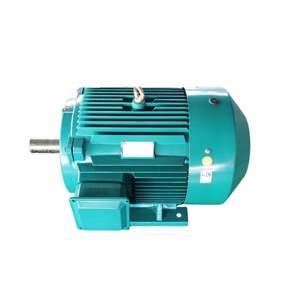
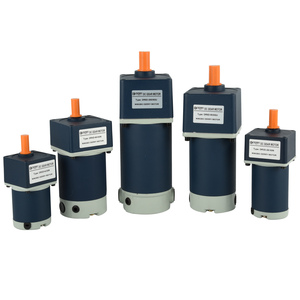
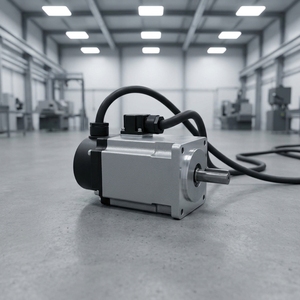
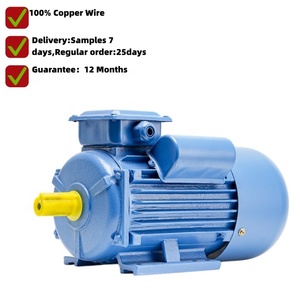
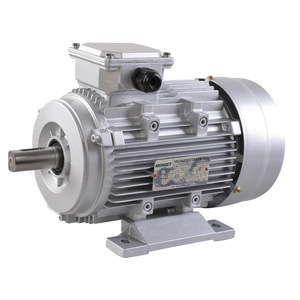
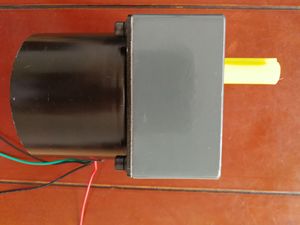
Founded in 1974, our manufacturing plant located in Wagle Industrial Estate, Thane (Maharashtra, India) has grown from a specialized electric motor workshop into a premier global OEM gear reducer manufacturer and exporter. Over five decades of continuous industrial experience provides us with unmatched insight into electro-mechanical stress dynamics, thermal rise limitations, and torque transmission efficiency.
Unlike catalogue distributors who simply reship mass-produced units, we operate as a full-funnel engineering partner. From initial torque-speed curve mapping to dynamic balancing, tooth profile hobbing, custom shaft machining, and vacuum pressure impregnation (VPI) of copper coils, every process is handled within our ISO-certified facilities.
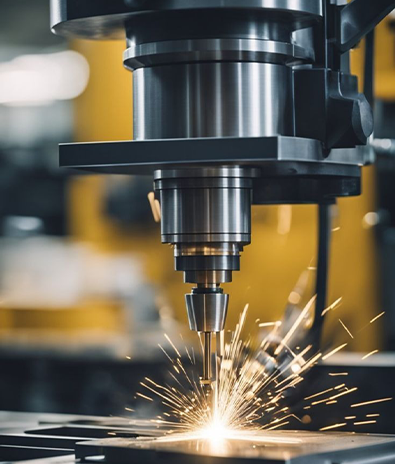
Choosing the correct gear reduction architecture is paramount for maximizing mechanical efficiency, minimizing heat accumulation, and optimizing system footprint. Below is a comparative technical synthesis compiled by our senior powertrain engineers:
| Gear Reducer Topology | Efficiency Range | Backlash (Arcmin) | Torque Density | Best Fit OEM Applications |
|---|---|---|---|---|
| Inline Helical Geared Motors | 94% - 98% | 10 - 20 Arcmin | High | Conveyors, Agitators, Heavy Automation Lines |
| Worm Geared Electric Motors | 60% - 85% | 20 - 45 Arcmin | Moderate (Self-locking available) | Packaging Machinery, Hoists, Access Gates |
| Shaded Pole Geared Motors | 45% - 65% | 30 - 60 Arcmin | Low to Moderate | Vending Machines, Medical Pumps, HVAC Dampers |
| Planetary Gear Reducers | 95% - 98% | < 3 - 8 Arcmin | Ultra-High | Robotic Arms, Precision Servo Positioning, CNC Systems |
Our OEM engineering service allows hybrid combinations—such as coupling shaded pole or brushless motors with multi-stage helical reduction units—to meet niche operating constraints where space and power consumption are severely throttled.
Strategic purchasing insights for industrial procurement directors, supply chain strategists, and original equipment manufacturers (2025–2030 forecast).
Global OEMs are moving away from passive gear reducers. Future procurement contracts increasingly mandate embedded IoT sensor ports for real-time vibration analysis, lubricant thermal telemetry, and predictive maintenance analytics.
Rising energy prices worldwide have refocused purchasing criteria on overall operational costs. Specifying IE3/IE4 asynchronous motors paired with high-efficiency gear sets yields energy savings that offset initial procurement cost within 14 months of continuous operation.
To avoid supply chain bottlenecks, European and North American buyers are diversifying sourcing out of single-market concentration. Indian manufacturing hubs, offering robust metallurgy and mature engineering talents, are receiving major OEM allocations.
Modern equipment designs demand gearboxes with modular mounting flanges (IEC/NEMA combinations) and universal shaft dimensions, enabling a single base machine design to be adapted effortlessly for diverse global export territories.
Commercial HVAC, medical laboratory automation, and indoor food service environments now enforce strict decibel limits (< 45 dB(A) at 1 meter). Gear manufacturers must employ ground gear tooth geometry and quiet synthetic greases to comply.
Environmental standards such as RoHS3, REACH, and NSF H1 food-grade lubrication compliance are evolving from option items into mandatory baseline requirements across European and North American purchasing specs.
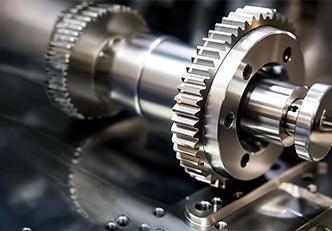
Modern power transmission engineering has transitioned from simple mechanical speed reduction to holistic electro-mechanical integration. Key technical focus areas in our R&D roadmap include:
Complete end-to-end manufacturing capability, flexible engineering co-development, and international quality compliance.
From pressure die casting and precision gear hobbing to CNC turning, automated copper coil winding, dynamic balance testing, and custom assembly line setup—we retain total control over production quality and lead times.
Our engineering desk works directly from your CAD envelope files (.STEP/.IGES) and specified performance duty points (torque, speed, radial forces) to engineer drop-in customized drive units.
Every gear motor unit undergoes 100% automated end-of-line testing: no-load current verification, locked-rotor torque testing, high-potential insulation checks, noise spectrum testing, and leak testing.
Products are engineered to meet global industrial standards including CE, UL, RoHS, REACH, ISO 9001:2015 quality management benchmarks, and custom IP ratings up to IP66/IP67.
Decades of exporting experience guarantee flawless international compliance, including fumigated ISPM-15 wooden crates, anti-corrosive VCI foil wrapping, and organized batch traceability labelling.
We document every custom Bill of Materials (BOM) and tooling die to guarantee exact interchangeability for replacement parts and spare units decades after initial production runs.
We customize shaft configurations (D-cut, keyed, splined, hollow shaft, threaded), mounting flange geometry (IEC, NEMA, or custom bolt circles), operating voltages (12V AC/DC to 415V 3-Phase), gear ratios (from 3:1 to over 1000:1), winding insulation class (Class B, F, H), thermal overload cutoffs, lead wire terminations, and housing coatings.
Our engineers perform rigorous overhung load (OHL) calculations. Based on specified external sprocket or gear force vectors, we select deep-groove heavy-duty ball bearings or tapered roller bearings and utilize reinforced cast iron or high-tensile aluminum alloy end-bells to prevent shaft deflection.
Initial engineering CAD verification takes 3 to 5 working days. Rapid prototyping using custom CNC machined gear housings and sample windings typically delivers physical units in 3 to 4 weeks. Once sample approval is granted, series production runs are delivered within 4 to 6 weeks depending on batch volume.
Quality assurance follows a strict three-tier protocol: Incoming Material Inspection (spectro analysis of copper purity and aluminum alloys), In-Process Checks (rotor balance testing, stator surge testing, gear backlash verification), and 100% End-of-Line Automated Testing covering dielectric strength, thermal rise, vibration, and acoustic levels.
Yes. Our inverter-duty AC motors feature Class H or Class F magnet wire with spike-resistant insulation and vacuum pressure impregnation (VPI) to withstand voltage transients (dV/dt) associated with VFD operation without insulation breakdown.
Choose Helical Reducers when energy efficiency (>95%), quiet operation, and continuous duty (S1) are critical. Choose Worm Reducers when compact right-angle output, high reduction in a single stage, lower upfront capital cost, or mechanical self-locking (preventing back-driving) is required.
Share your operational parameters—required speed, torque, mounting space, voltage, and target annual volume—and our engineering team will provide detailed CAD drawings and competitive quotation packages within 24 hours.
Send an Inquiry