

+91 98209 33660
Engineered for continuous-duty applications, enclosed control panels, fluid equipment, and heavy industrial machinery.
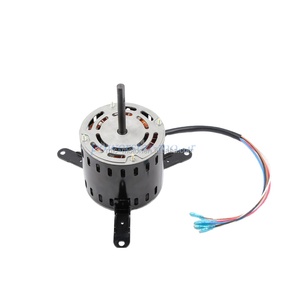
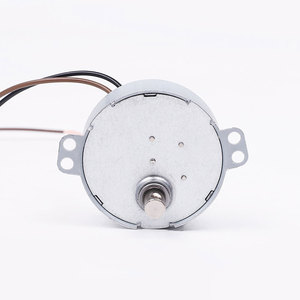
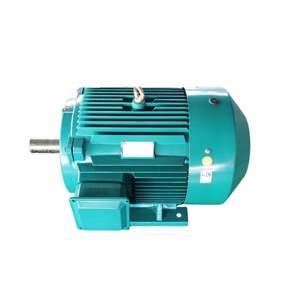
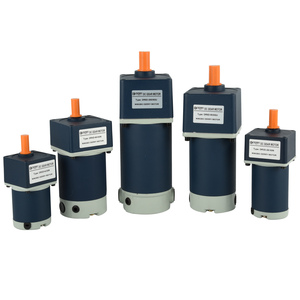
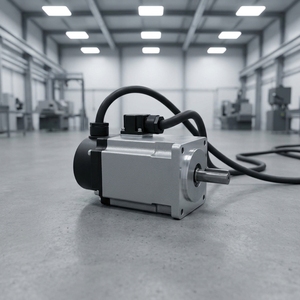
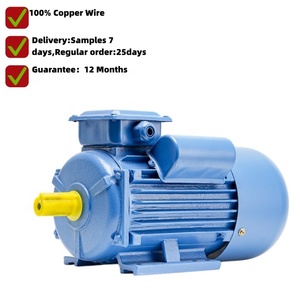
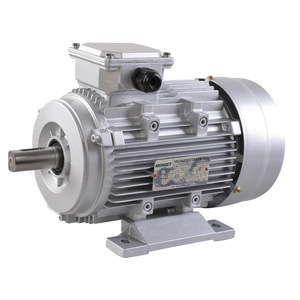
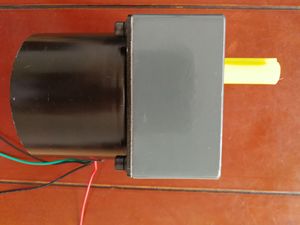
Founded in 1974 at Wagle Industrial Estate, Thane, India, Delco Fans Pvt. Ltd. has delivered continuous thermal management and motion engineering innovations for international OEM clients.
Unlike sourcing intermediaries, every aspect of our motor and enclosure cooler manufacturing—from stator lamination, automated copper wire winding, precision CNC rotor balancing, to housing assembly—is completed strictly in-house to preserve tight dimensional tolerances.
We build custom OEM variants tailored precisely to your application requirements. Parameters such as operating voltage, static pressure profile, airflow velocity curves, mounting dimensions, custom shaft extensions, and Class H insulation can be specified for high-volume series production.
Every enclosure cooler motor and blower undergoes rigorous routine electrical testing, winding resistance verification, insulation breakdown testing, locked-rotor torque evaluation, and temperature-rise validation to guarantee zero field failures.
Industrial control cabinets, automation panels, variable frequency drive (VFD) enclosures, and telecommunications housings generate considerable heat during operation. As electronic components become more compact and power-dense, managing interior thermal loads becomes vital to prevent system derating, nuisance tripping, and component degradation. A custom OEM enclosure cooler acts as the thermal barrier guarding critical control logic against thermal stress and environmental contaminants.
Core Rule of Industrial Enclosure Thermal Management: The internal temperature of a sealed control enclosure must be maintained below the maximum operating limit of the most sensitive silicon component (typically 35°C to 40°C), while preventing ambient moisture, airborne oil mist, and particulate matter from breaching the IP rating of the housing.
To correctly specify an OEM enclosure cooler, mechanical design engineers must calculate the total heat load ($Q_{Total}$), which consists of internal heat dissipation ($Q_{Internal}$) generated by electrical devices and external radiant thermal gains ($Q_{Radiant}$) transferred through cabinet surfaces.
The internal heat generation ($Q_{Internal}$) is computed by summing the power losses (dissipated as heat) of all enclosed equipment:
Where PIn is rated power input and η is mechanical efficiency. For instance, modern VFDs dissipate approximately 3% to 5% of their rated power rating as pure heat into the cabinet interior.
External heat transfer across the cabinet skin ($Q_{Radiant}$) depends on the surface area ($A$), thermal transmittance of the enclosure material ($k$), and the differential between indoor/outdoor ambient temperature ($\Delta T$):
If the ambient outdoor temperature exceeds the desired internal cabinet temperature, $Q_{Radiant}$ is positive (heat flows into the enclosure). If the cabinet is hotter than ambient, heat naturally dissipates outward.
A common engineering oversight during OEM cooler procurement is selecting a cooling fan based solely on free-air volumetric displacement (CFM). Industrial enclosures present significant static pressure resistance due to air filters, louvers, high-density wire bundles, and tightly spaced circuit boards.
| Fan / Blower Type | Static Pressure Capability | Airflow Direction | Ideal Enclosure Application |
|---|---|---|---|
| Axial Flow Fans | Low to Medium (0.1 - 0.4 in. H2O) | Parallel to Fan Shaft | Free-vented enclosures, cabinet door extraction, low-density panels. |
| Single/Double Inlet Centrifugal Blowers | High (0.5 - 2.5 in. H2O) | 90° Radial Discharge | High-density control racks, ducted cooling paths, particulate-filtered systems. |
| Backward Curved Impellers | Medium to Very High | Radial 360° Discharge | Plenum cooling, compact roof-mount coolers, high-efficiency EC cabinets. |
| Tangential / Cross-Flow Blowers | Low (0.05 - 0.2 in. H2O) | Wide Uniform Air Curtain | Slim-line enclosures, door air curtains, narrow rack spaces. |
Continuous-duty enclosure coolers rely heavily on motor winding integrity. At our factory, we employ 100% pure copper magnet wire paired with high-grade cold-rolled silicon steel laminations. This reduces hysteresis losses and eddy current heating within the motor core, yielding substantial energy efficiency gains.
Motors deployed inside sealed industrial coolers are subjected to elevated operating temperatures. Therefore, specifying the correct insulation class ensures long-term operational lifespan without dielectric breakdown:
Key shifts transforming the engineering and sourcing landscapes for industrial enclosure thermal equipment.
Procurement managers are increasingly demanding EC motor technology for enclosure coolers. EC motors combine AC mains power supply with internal DC brushless motor drive electronics. This architecture yields up to 30%–50% energy savings, offers precise speed control via 0-10V/PWM signals, and reduces thermal heat output generated by the fan motor itself.
Modern industrial enclosure cooling units are evolving into intelligent IoT edge nodes. Integrated tachometer outputs, hall sensor feedback, and temperature transducers stream operational telemetry into industrial Modbus or IO-Link networks. Maintenance teams receive early warnings prior to bearing wear or filter clogging, eliminating costly assembly line downtime.
Global equipment builders are shifting away from off-the-shelf standard catalog items toward customized OEM cooling modules. Custom mounting brackets, factory-installed quick-connect wiring harnesses, custom sheet metal housings, and tailored paint finishes enable OEMs to streamline their own factory assembly operations and lower overall labor costs.
Detailed technical answers for industrial buyers, design engineers, and global OEM sourcing agents.
Contact our engineering desk today to discuss custom thermal designs, request technical datasheets, or schedule a sample evaluation for your production line.
Send an Inquiry