+91 98209 33660
Explore our industrial-grade electric motors, high-torque geared units, and BLDC/AC specialized drive architectures manufactured to rigorous global specifications.
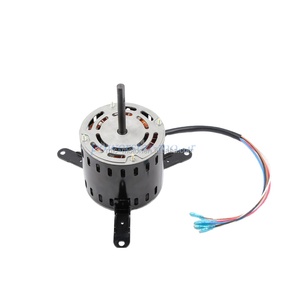
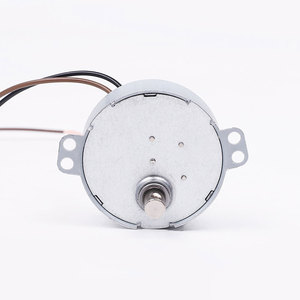
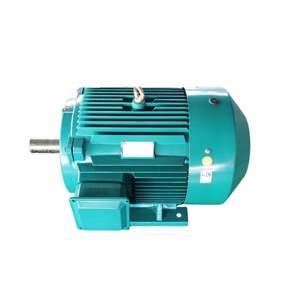
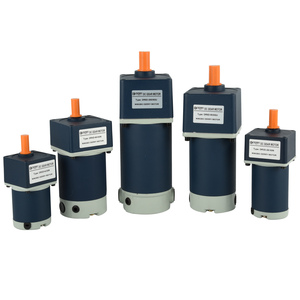
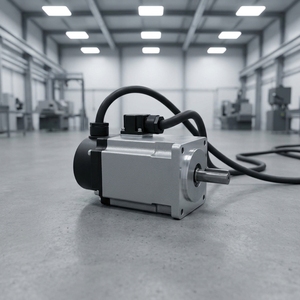
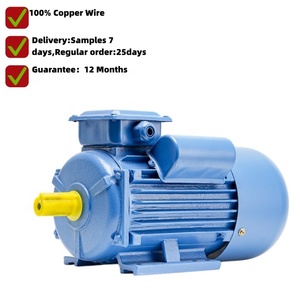
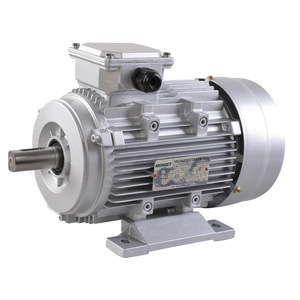
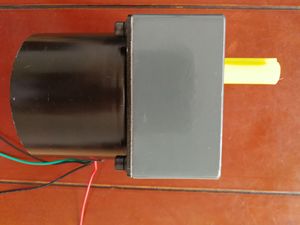
Modern industrial automation, precision medical devices, commercial HVAC systems, and heavy-duty electric fluid machinery demand motion control components engineered for uncompromised reliability, thermal efficiency, and maximum volumetric power density. As a premier Custom OEM BLDC Motor Supplier & Exporter with over five decades of continuous manufacturing heritage established in 1974, our production plant operates at the intersection of electromagnetic design, automated precision tooling, and stringent operational validation.
The global transition from traditional brushed DC and shaded-pole single-phase AC architectures toward electronic commutation—specifically Brushless DC (BLDC) and Permanent Magnet Synchronous Motors (PMSM)—represents a structural shift in mechanical power conversion. BLDC motors eliminate mechanical commutators and carbon brushes, mitigating electrical noise (EMI), mechanical friction, and maintenance downtime. By integrating high-energy Neodymium-Iron-Boron (NdFeB) permanent magnets with optimized stator slot-pole geometries, our engineered BLDC solutions yield superior torque-to-weight ratios and flat torque curves across dynamic speed ranges.
Information Gain Benchmark: OEM procurement engineering is no longer simply about buying a standard off-the-shelf motor. It requires dynamic matching of winding inductances, back-EMF constants (Kv), thermal dissipation envelopes, and closed-loop field-oriented control (FOC) compatibility to eliminate field failures and minimize Total Cost of Ownership (TCO).
Our manufacturing complex maintains complete control over the core electromechanical supply chain. Unlike regional assembly operations that rely on external white-label component sourcing, our facility houses end-to-end engineering, prototyping, and serial mass-production infrastructure:
Cold-rolled non-grain-oriented (CRNGO) silicon steel stampings down to 0.2mm - 0.35mm thickness, minimizing eddy current losses and acoustic harmonics.
High-slot fill factor needle winding machines utilizing Class H (180°C) and Class R (220°C) dual-coated copper magnet wire for maximum magnetomotive force.
Dual-plane computer-controlled dynamic balancing machines ensuring residual unbalance is kept under ISO 1940 Grade G1.0 levels for ultra-quiet running.
On-board drive electronics customization including MOSFET bridge layouts, Hall sensor positioning, RS485/CANopen communication interfaces, and PWM speed feedback.
Advanced varnish resin thermal encapsulation guaranteeing moisture resistance, structural rigidity, and superior dielectrical insulation breakdown thresholds.
End-of-line (EOL) automated testing validating locked-rotor torque, continuous ambient thermal rise, cogging torque peak-to-peak amplitude, and IP protection integrity.
As corporate purchasing managers, chief technology officers, and mechanical system engineers navigate global market shifts, the criteria for selecting an OEM motor exporter have evolved rapidly. Price-per-unit is no longer the sole metric; system efficiency, thermal stability, supply chain transparency, and design-in customization speed are now the primary purchasing drivers.
Global regulatory mandates—such as Europe’s Ecodesign Directive and North American NEMA Premium standards—are continuously raising baseline efficiency requirements for electric drives. Procurement departments are actively replacing legacy induction motors with Electronically Commutated (EC) and Brushless DC solutions. BLDC motors maintain energy conversion efficiencies exceeding 90% across variable speed operations, whereas traditional AC induction units experience severe efficiency degradation when throttled down via mechanical dampers or basic voltage control.
Next-generation OEM procurement trends emphasize motor solutions with integrated sensor suites and digital communications protocols. Modern BLDC drives exported for automated industrial machinery incorporate onboard temperature monitoring, current signature analysis, and vibration telemetry. This allows real-time predictive maintenance via Modbus, CANbus, or IO-Link networks, drastically reducing unpredicted factory downtime for end-user industrial clients.
Global original equipment manufacturers require flexible motor platforms that can be quickly customized for different target regional grids (110V AC, 220V AC, 24V DC, 48V DC, or high-voltage 310V DC bus architectures) without requiring a complete redesign of the host machine frame. A reliable OEM supplier must offer modular front/rear end-shield castings, custom shaft splines, double-flat D-shaft profiles, and specialized terminal harnesses.
To assist system engineers in selecting the correct motor topology for specific industrial duty cycles, the following matrix compares BLDC drives against conventional motor architectures:
| Performance Parameter | Custom OEM BLDC Motors | AC Permanent Magnet Synchronous (PMSM) | Three-Phase AC Induction (YE3/IE3) | AC Shaded Pole Motors |
|---|---|---|---|---|
| Peak Efficiency Range | 88% – 94% | 90% – 96% | 78% – 89% | 30% – 50% |
| Torque Density (Nm/kg) | Very High | Extremely High | Moderate | Low |
| Speed Control Method | Electronic Closed-Loop (PWM / FOC) | Vector Inverter / Servo Drive | Variable Frequency Drive (VFD) | Voltage Tapping / Uncontrolled |
| Maintenance / Service Life | Maintenance-Free (>50k Hrs) | Maintenance-Free (>50k Hrs) | Bearing Service Required | Moderate (Sleeve/Ball Bearings) |
| Acoustic Noise / EMI | Ultra-Low (FOC Driven) | Ultra-Low | Low to Moderate | Moderate Hum |
| Thermal Dissipation Profile | Stator Heat dissipated through Outer Shell | Stator Heat dissipated through Frame | Rotor & Stator Heat (Requires Fan) | High Rotor Heat Generation |
| Optimal Application Target | Medical Devices, OEM HVAC, Robotics, AGVs | Industrial Servos, High-End Automation | Heavy Machinery, Industrial Pumps | Light-Duty Fans, Dampers, Appliances |
Staying at the forefront of the electric motion control industry requires ongoing investment in electromechanical research and development. Below are the pivotal technological trends shaping our current and upcoming product lines:
Cogging torque—resulting from the magnetic interaction between the permanent magnets on the rotor and the stator slots—causes unwanted speed ripple, acoustic vibration, and mechanical resonance at low speeds. Our engineering team utilizes finite element analysis (FEA) software to optimize stator tooth profiles, skew magnetic pole geometry, and utilize fractionally-slot concentrated windings (FSCW). These design enhancements reduce peak-to-peak cogging torque to less than 1.5% of rated full-load torque, delivering whisper-quiet, smooth motion critical for precision fluid pumps and medical ventilation equipment.
Continuous output torque is fundamentally constrained by the maximum allowable temperature limit of the copper winding insulation. Our next-generation BLDC motors utilize thermally conductive epoxy resin potting compounds injected directly into the stator cavities. This reduces internal thermal resistance from coil-to-housing by over 40%, allowing higher current density in smaller frame sizes (e.g., NEMA 17, 23, 34, 42, and custom metric frame profiles) without exceeding Class H thermal ceilings.
While traditional BLDC drives relied on discrete Hall effect sensors embedded in the stator, modern industrial applications increasingly demand sensorless Field-Oriented Control (FOC). By analyzing back-electromotive force (Back-EMF) signals through high-speed digital signal processors (DSP), our sensorless BLDC drive systems eliminate sensor wiring harnesses, reducing system complexity and preventing Hall sensor thermal failure in high-temperature or high-vibration operational environments.
Reliability Advantage: Eliminating physical Hall sensors reduces lead-wire bundle counts from 8+ conductors down to 3 heavy-duty phase leads, significantly simplifying automated machine assembly for our OEM global customers.
Direct technical answers from our senior engineering desk to assist global buyers, procurement specialists, and system designers during vendor evaluation.
When you select our facility as your primary Custom OEM BLDC Motor Supplier & Exporter, you gain direct access to a dedicated engineering force committed to technical precision and operational reliability:
Send us your operating specifications—required rated voltage, target RPM, continuous torque curve, physical dimensional boundaries, and duty cycle. Our engineering office will deliver a complete technical design proposal and competitive pricing structure.
Send an Inquiry