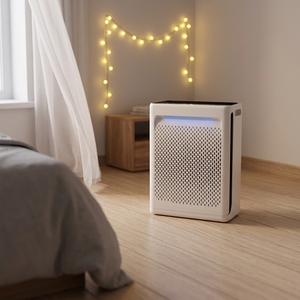
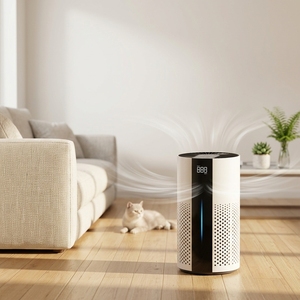
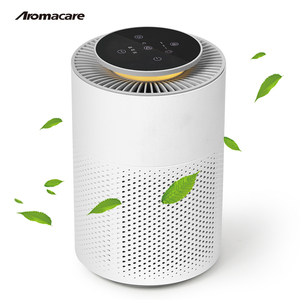
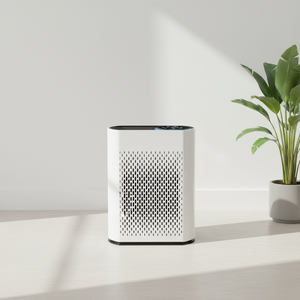
110V-120V US Standard Air Purifier For Bedroom Office 250m3/h CADR HEPA Air Cleaner With Smart Touch Control
Specs: 250 m³/h CADR | 110V-120V US Dual Voltage | Smart Touch UI | Medical-Grade HEPA


Explore our core turnkey models engineered for scalable custom private labeling, advanced HEPA filtration, smart IoT integration, and high CADR efficiency.
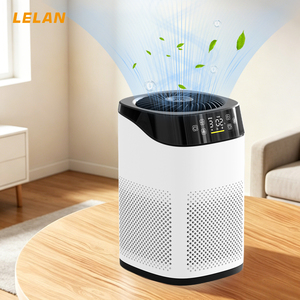
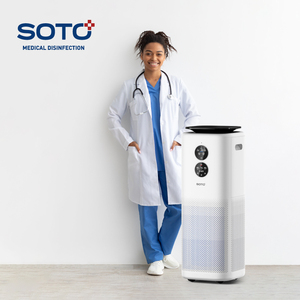
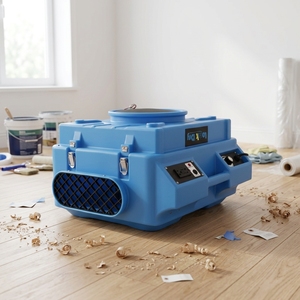
An authoritative analysis of filtration engineering, fluid dynamics, and custom contract manufacturing standardizations for global IAQ enterprise buyers.
The global indoor air quality (IAQ) sector is undergoing a profound structural shift. What was once considered a seasonal consumer appliance has evolved into an essential piece of health infrastructure across residential, commercial, and industrial built environments. For brand owners, private label distributors, and OEM buyers, choosing the right Custom OEM Air Purifier Manufacturer & Supplier is no longer merely a matter of sourcing plastic injection housings. It requires a sophisticated integration of advanced mechanical engineering, motor thermal dynamics, aerodynamic airflow optimization, and validated filtration media.
Building upon decades of core air-movement manufacturing heritage—tracing back to foundational electric motor winding, fractional horsepower (FHP) drives, and centrifugal blower balancing—modern OEM manufacturing must harmonize hardware robustness with modern electronic controls. A high-performance air cleaner is fundamentally a dynamic fluid machine: its ultimate Clean Air Delivery Rate (CADR) is dictated by how efficiently its motorized blower unit forces contaminated air through high-resistance media such as true H13/H14 HEPA filters and granular activated carbon banks without generating excessive acoustic noise or parasitic power draw.
To deliver high Information Gain for engineering procurement teams, OEM air purifier design must be scrutinized across four major subsystems:
Combining 50+ years of electro-mechanical heritage with state-of-the-art automated assembly, in-house tooling, and rigorous quality assurance.
From rapid 3D prototyping to multi-cavity injection mold tooling, our facility executes custom chassis, desktop units, and industrial tower designs with tolerances within ±0.05mm, accelerating time-to-market.
Leveraging internal expertise in AC shaded pole, FHP, and Electronically Commutated (EC) motors, we build blowers that offer up to 40% higher energy efficiency and extended operational lifespans under continuous duty.
Every custom OEM production lot undergoes zero-bypass smoke chamber testing,CADR verification (Dust, Pollen, Smoke), noise spectrum analysis, and hi-pot electrical safety testing prior to container loading.
A reference engineering framework for selecting the ideal blower assembly, filtration grade, and control architecture for targeted market segments.
| Application Segment | Typical CADR Range | Filtration Configuration | Blower/Motor Architecture | Target Acoustic Limit |
|---|---|---|---|---|
| Desktop / Personal | 120 – 180 m³/h | H12 HEPA + Carbon Sheet | Compact DC Axial / Centrifugal | < 28 dB(A) Sleep |
| Residential Bedroom/Living | 230 – 450 m³/h | H13 True HEPA + Modified Carbon | AC Shaded Pole / EC Backward Curved | < 24 – 32 dB(A) |
| Commercial Office / Clinic | 500 – 750 m³/h | H13/H14 HEPA + Cold Catalyst + UV-C | Double-Inlet EC Blower Unit | < 38 dB(A) Operational |
| Heavy Industrial Scrubber | 800 – 1,200 CFM | Multi-stage Rigid Box HEPA + Deep Bed VOC Carbon | High Static Pressure FHP Motor / Scroll Blower | Heavy Duty Industrial Standard |
Insights into breakthrough innovations in filtration chemistry, solid-state electronics, and aerodynamic engineering redefining market competitiveness.
Traditional high-grade HEPA filters (such as H13 and H14) often impose significant static pressure drops, forcing blower motors to draw more power and generate higher noise. The industry is rapidly pivoting toward electrostatic hybrid media. By imparting a permanent electret charge into melt-blown polypropylene fibers, manufacturers can achieve 99.97% efficiency at 0.3 microns while reducing air resistance by up to 30%. This allows OEM air purifiers to run quieter and use smaller, more efficient motors.
Basic timers and simple 3-color LED indicators are being replaced by multi-sensor arrays connected to cloud platforms via Matter, Tuya, or custom proprietary apps. Advanced OEM units now feature sensor fusion—simultaneously monitoring PM2.5, PM1.0, Formaldehyde (HCHO), Total Volatile Organic Compounds (TVOC), relative humidity, and temperature. Machine learning algorithms dynamically adjust fan speed curves based on historical air quality patterns, extending filter lifespans significantly.
Legacy mercury UV lamps are being phased out globally due to environmental regulations and thermal inefficiency. Modern custom OEM purifiers integrate solid-state UV-C LED modules (260-280nm) focused directly onto TiO2 (Titanium Dioxide) photocatalytic filters. This combination continuously neutralizes airborne pathogens, viruses, and mold spores while breaking down toxic gases like benzene and formaldehyde into harmless water vapor and carbon dioxide without producing ozone.
Energy efficiency standards (such as ENERGY STAR 7.0 and EU EcoDesign directives) are driving a universal shift from traditional AC shaded-pole motors to Electronically Commutated (EC) BLDC motors. EC motors operate with minimal thermal loss, offer infinitely variable speed control, and deliver high torque across the entire RPM range. This allows OEM purifiers to maintain consistent airflow even as the filter becomes clogged over months of operation.
How global buyers are adapting supply chain strategies to manage cost, compliance, sustainability, and recurring revenue models.
Leading global brands are moving away from developing bespoke internal tooling for every single product SKU. Instead, smart B2B buyers choose modular platform manufacturing. In this approach, a single engineered chassis and blower assembly can accommodate multiple front-bezel designs, control panels (touchscreen vs. physical knobs), and filter configurations (standard HEPA vs. specialized pet/allergen formulations). This drastically reduces initial tooling capital investment (CAPEX) and shortens development cycles from 12 months down to 8 weeks.
Environmental, Social, and Governance (ESG) compliance is now a decisive factor in corporate procurement. B2B buyers are demanding air purifier housings molded from Post-Consumer Recycled (PCR) ABS and Polycarbonate plastics. Furthermore, packaging specifications have shifted toward 100% plastic-free, biodegradable molded sugarcane pulp trays and soy-ink printed unbleached corrugated boxes to minimize carbon footprint and satisfy strict European plastic tax frameworks.
Experienced air purifier distributors recognize that the initial unit sale is only the beginning of customer lifetime value. Modern OEM purifiers are equipped with encrypted RFID chips or QR-code validated filter installation slots. This prevents third-party knockoff filter replacements, ensuring that end-users purchase genuine OEM replacement filters. Procurement teams actively seek OEM suppliers who offer customized filter subscription packaging and automated reorder triggers via smart home apps.
Geopolitical shifts and freight volatility have highlighted the risks of single-source procurement. Industry-leading OEMs now maintain flexible manufacturing footprints, providing dual-sourcing options for critical subcomponents (such as sensors, microcontrollers, and raw non-woven filter media). This guarantees supply chain resilience, allowing brands to maintain continuous retail stocking during peak allergy or wildfire seasons.
Clear, direct answers from our engineering and export team regarding manufacturing specifications, order workflows, and quality standards.
For standard turnkey models with custom branding and packaging, our standard MOQ starts at 500 to 1,000 units per batch. For fully customized industrial tools or unique aesthetic chassis molds, MOQ depends on tooling amortization but typically starts at 2,000 units. We also support lower trial order quantities for initial market testing.
Yes. Our electro-mechanical engineering team can adapt the motor winding (110V/60Hz for North America, 220-240V/50Hz for Europe/Asia, or universal 100-240V DC power adapters) and recalibrate impeller aerodynamics to achieve your target CADR ratings under AHAM AC-1 testing protocols.
We offer full flexibility across filter grades, including pre-filters, H11, H12, H13, and H14 EN 1822 True HEPA media. Additionally, we provide custom activated carbon media options—such as coconut shell carbon pellets, columnar carbon, and catalytic carbon treated for formaldehyde, ammonia, or wildfire smoke absorption.
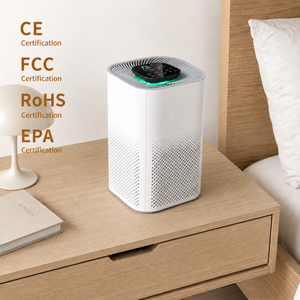
Our OEM products are designed and manufactured to comply with major global regulatory standards. Standard models are ready for CE, RoHS, CB, ETL, FCC, CARB (California Air Resources Board), and ENERGY STAR certification. We handle full laboratory testing support for your brand’s compliance filing.
Air bypass severely degrades real-world filtration efficiency. We engineer precision injection-molded filter tracks fitted with continuous closed-cell EVA or silicone gaskets. Every unit is tested under positive static pressure to guarantee that 100% of drawn air is forced directly through the HEPA filter media.
For standard OEM units requiring private label branding, packaging design, and minor firmware updates, lead time is 30 to 35 days post-sample approval. For customized tooling projects, mold fabrication takes 35 to 45 days, followed by 15 days for golden sample verification and 30 days for initial mass production run.
Whether you are expanding your existing floor-care brand, developing a commercial medical-grade air scrubber, or building a smart home product line, our engineering team is ready to deliver.
Get Catalog