
+91 98209 33660
Engineered for continuous-duty OEM applications, extreme ambient temperatures, and strict power efficiency metrics.
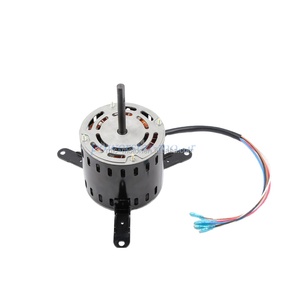
Designed for evaporative air coolers and heat exchangers. Features high-purity copper windings, thermal overload protection, and low-vibration operation under high humidity environments.
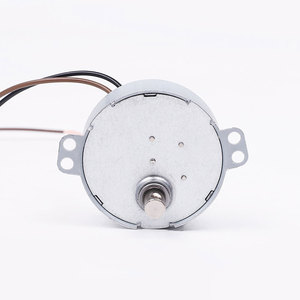
Micro permanent magnet low-RPM synchronous motor offering steady continuous torque, quiet gear reduction, and zero slip performance for specialized HVAC dampers and cold storage valves.
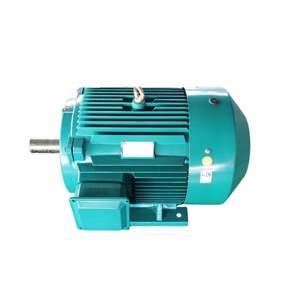
IE3 ultra-premium efficiency standard AC squirrel cage induction motor. Robust cast-iron frame engineered for severe duty heavy industrial blower systems and cooling towers.
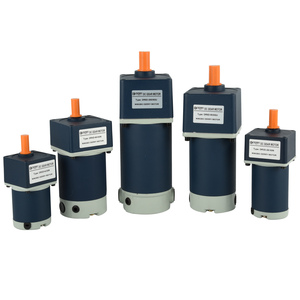
Modular fractional horsepower (FHP) gear motor series supporting wide reduction ratios. Ideal for automated thermal processing equipment, conveyorized ovens, and lab chillers.
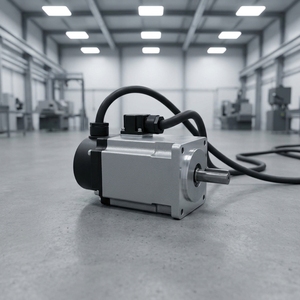
High-efficiency single-phase AC drive for industrial fluid equipment, hydraulic power packs, and heavy-duty centrifugal thermal dissipation fans requiring reliable startup under load.
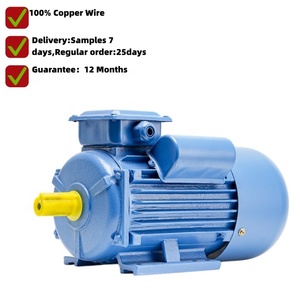
Capacitor-start heavy-duty motor line offering high starting torque, low thermal rise (Class F/H insulation options), and extreme endurance in commercial air handling systems.
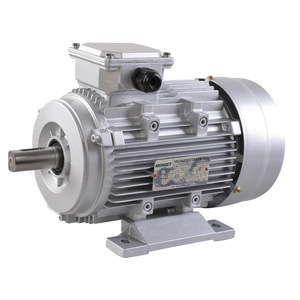
Lightweight aluminum housing optimized for heat dissipation. Designed for variable frequency drive (VFD) inverter control in dynamic airflow and HVAC refrigeration loops.
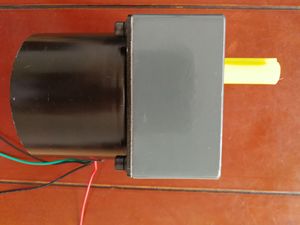
Precision low-speed synchronous drive for micro-adjustment dampers, motorized thermal valves, and precise airflow control mechanisms in environmental chambers.
For more than five decades, our partner manufacturing facilities have led the thermal management and fractional horsepower (FHP) motor industry. We bridge fundamental heat dissipation physics with precision electro-mechanical engineering to produce electric motors, centrifugal blowers, and cross-flow fan assemblies that withstand continuous S1 duty cycles under demanding industrial environments.
Unlike standard catalogue distributors, our engineering desk collaborates directly with OEM procurement leaders and thermal design specialists. From custom torque-speed curve matching to specialized Class H ($180^\circ\text{C}$) insulation systems, every unit is verified on physical test benches under real-world static pressure, load curves, and thermal rise ($T_{\Delta}$) envelopes.
Core OEM Assurance: Every production run undergoes 100% dynamic rotor balancing, dielectric withstand testing (Hi-Pot), locked-rotor current checks, and acoustic noise spectrum analysis to eliminate field failures and operational downtime.
As industrial automation, data center cooling, electric vehicle (EV) battery conditioning, and commercial HVAC equipment push for higher power densities, thermal management has evolved from a secondary component consideration to a critical design bottleneck. Achieving optimal heat transfer efficiency requires total synergy between active air movement drivers—such as centrifugal blowers, axial fans, and shaded pole/induction motors—and heat exchange surfaces.
Global original equipment manufacturers (OEMs) are fundamentally altering their procurement criteria when sourcing thermal control systems and electric motor drives from China and global hubs. Key strategic shifts include:
The core technological battleground in thermal management lies in maximizing airflow (CFM) against high system impedance (Static Pressure $P_s$) while minimizing heat generated by the motor itself (internal copper/iron losses):
Automated precision needle-winding technology maximizes slot fill factors up to 78%, reducing internal stator resistance, copper thermal dissipation, and overall temperature rise.
Backward-curved and double-inlet centrifugal impellers simulated via computational fluid dynamics to suppress vortex formation, optimizing pressure-to-flow curves.
Utilization of Class H ($180^\circ\text{C}$) insulation systems, self-resetting thermal protectors, and ball bearings with synthetic high-temperature grease ($L_{10}\ge 50,000\text{ hours}$).
By optimizing the magnetic circuit design and silicon steel lamination grades (Cold-Rolled Non-Oriented Silicon Steel), modern factories in China have successfully reduced iron losses ($P_{fe}$), allowing motors to run cooler even under continuous heavy-duty cycles.
Select the optimal motor architecture based on your operational duty point, system static pressure, and cost targets:
| Motor Architecture | Efficiency Class | Typical Torque Range | Speed Control | Acoustic Profile | Best Thermal Application |
|---|---|---|---|---|---|
| AC Shaded Pole Motor | Standard (20-30%) | 0.05 - 0.8 Nm | Fixed / Multi-tap | Very Quiet (<42 dBA) | Evaporators, Small Condensers, Air Curtains |
| AC Single-Phase Induction | IE1 / IE2 (60-75%) | 0.5 - 5.0 Nm | VFD / Voltage Cut | Moderate (45-55 dBA) | Centrifugal Blowers, Fluid Pumps, Machinery |
| 3-Phase Asynchronous (YE3) | IE3 Ultra-Premium (>88%) | 10 - 150+ Nm | VFD Inverter | Industrial Standard | Heavy Cooling Towers, Industrial Air Handling |
| Synchronous Geared Motor | High Efficiency (>80%) | 1.0 - 25.0 Nm | Exact RPM Sync | Ultra Low Noise | Dampers, Motorized Valves, Vending Controls |
| EC / BLDC Motors | IE4 / IE5 Peak (>85%) | 0.2 - 12.0 Nm | 0-10V / PWM / Modbus | Ultra Quiet (<40 dBA) | Cleanrooms, Precision Data Center CRAC Units |
From initial thermal envelope prototyping to multi-container series dispatch, we offer total end-to-end manufacturing reliability.
In-house stamping, automatic winding, aluminum die-casting, rotor dynamic balancing, and plastic impeller injection ensure tight dimensional tolerances and complete quality control.
Custom shaft extensions, specific mounting flange patterns, lead wire terminations, IP54/IP65 ingress sealing, and custom winding turns engineered within 10-15 business days.
Fully compliant with CE, UL, RoHS, ISO 9001:2015, and CCC requirements. Routine batch testing includes thermal shock, insulation breakdown, continuous endurance, and noise sweeps.
Expert engineering answers to common thermal management, motor selection, and custom order inquiries.
To deliver an optimal engineering proposal, our desk requires: required airflow volume (CFM or $m^3/h$), system static pressure resistance (Pa or in.WG), supply voltage & frequency (e.g., 115V/60Hz or 230V/50Hz), operating duty cycle (S1 continuous vs. S2 intermittent), maximum ambient temperature, target acoustic limits (dBA), and dimensional mounting constraints.
Axial fans excel at high volume air displacement against very low system impedance (open-path ventilation). However, when air must be pushed through restricted pathways—such as heat exchangers, HEPA filters, dense heat sinks, or narrow ducting—centrifugal blowers are necessary because their radial impeller design generates substantially higher static pressure to maintain consistent airflow.
We supply electric motors and blowers with Class B ($130^\circ\text{C}$), Class F ($155^\circ\text{C}$), and Class H ($180^\circ\text{C}$) insulation systems. For extreme thermal applications, we incorporate thermal cut-offs (TCO), automatic resetting bimetallic thermal protectors, and high-temperature synthetic bearing greases rated up to $200^\circ\text{C}$.
Standard functional engineering samples are typically prepared within 7 to 12 working days. Custom tooling modifications or specialized winding configurations require 15 to 20 days. Full-scale series production orders are completed within 25 to 30 days, supported by stable monthly capacity reserve agreements for long-term contract buyers.
Yes. All manufacturing facilities operate under strict ISO 9001:2015 quality management systems. Our product lines meet CE, RoHS, and CCC certifications. For North American export markets, UL-recognized component insulation systems and high-efficiency IE2/IE3 designs are available upon specification.
Require specialized motor specifications, customized airflow curves, or direct factory quotation? Our engineering support desk is ready to review your project blueprints.