
+91 98209 33660
Engineered for continuous-duty industrial automation, medical robotics, HVAC systems, and heavy equipment. Browse our flagship electric motion catalog.
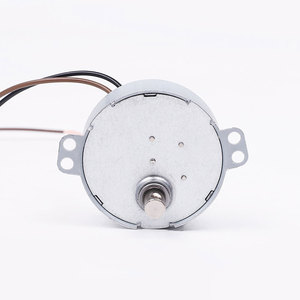
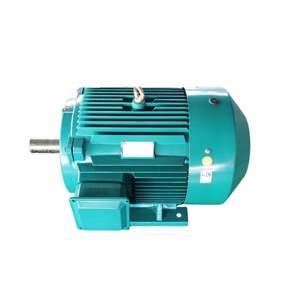
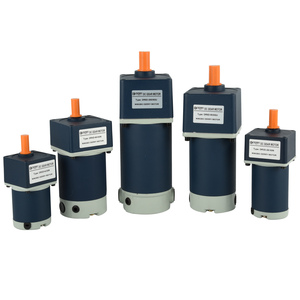
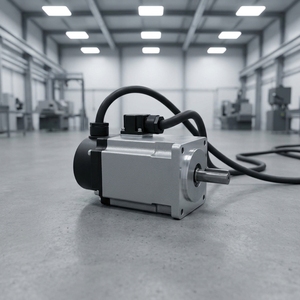
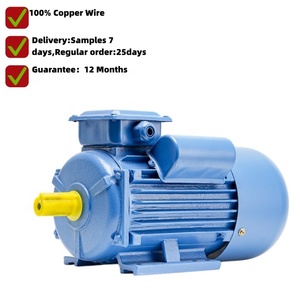
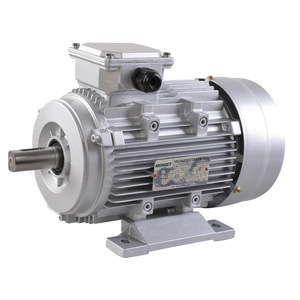
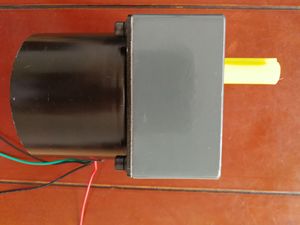
When procurement managers evaluate China stepper motor manufacturers & factories, they are looking beyond catalogue pricing. They are examining the depth of China's electromechanical supply chain, raw material quality, tooling precision, and engineering agility. Over the last two decades, China has evolved from a low-cost high-volume assembly hub into the global epicenter for precision motion control manufacturing, producing over 65% of the world's open-loop and closed-loop hybrid stepper motors.
Understanding regional industrial clusters is critical for international buyers performing strategic factory audits and supply chain risk mitigation:
Renowned for high-precision hybrid stepper motors (NEMA 08 to NEMA 34), linear actuators, and integrated closed-loop motion units. Home to world-class automated winding facilities and magnetic rotor grinding workshops.
Specializes in integrated smart stepper drivers, EtherCAT/CANopen bus control interfaces, brushless DC motor integration, and miniature precision motion systems for medical and robotic automation.
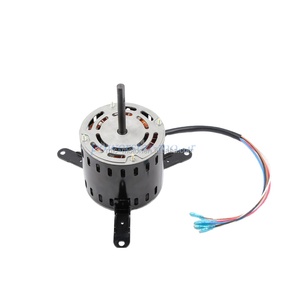
Extensive capabilities in high-volume fractional horsepower (FHP) motors, shaded pole gear motors, die-cast aluminum enclosures, and heavy-duty industrial induction drive assemblies.
Selecting the correct motion architecture requires balancing holding torque, dynamic torque at speed, thermal dissipation, positioning accuracy, and bill-of-materials (BOM) cost. Below is an engineering benchmark comparison commonly used by motion control systems designers.
| Motor Technology | Positional Accuracy | Holding Torque @ Low Speed | High Speed Performance | System Complexity & Cost |
|---|---|---|---|---|
| Hybrid Stepper Motor (Open-Loop) | High (±5% non-cumulative) | Exceptional | Moderate (Torque drops off >1000 RPM) | Low / Extremely Cost-Effective |
| Closed-Loop Stepper (Encoder Feedback) | Ultra-High (No stall / Step loss) | Exceptional | High (Up to 2000 RPM active control) | Medium / High Reliability |
| Brushless DC (BLDC) Motor | Requires Encoder Control | Moderate | Very High (up to 10,000+ RPM) | Medium to High |
| AC Induction / Shaded Pole Motor | Continuous Velocity Only | Low Starting Torque | Fixed Line Speed (1500/3000 RPM) | Ultra-Low / Rugged Industrial |
As global OEMs transition toward Industry 4.0 standards, smart manufacturing, and green energy compliance, purchasing requirements for Chinese motor suppliers have shifted significantly. The modern B2B buyer demands far more than basic step angle resolution.
Traditional open-loop steppers suffer from resonance and potential stall under unexpected load spikes. Modern OEMs are migrating toward closed-loop drives operating on Field Oriented Control (FOC). Integrated 12-bit to 16-bit magnetic or optical encoders allow the motor to operate as a high-pole servo, dramatically reducing heat generation and acoustic noise while maintaining absolute position lock.
Separating the drive electronics from the motor chassis creates wire harness complexity and increases EMI susceptibility. Top Chinese motor factories now offer fully integrated drive-motor packages with dual RJ45 EtherCAT connectors, enabling daisy-chained motion networks with microsecond synchronization times.
With global energy regulations targeting higher system efficiency (IE3/IE4 standard equivalents), Chinese manufacturers are leveraging domestic NdFeB (Neodymium-Iron-Boron) magnet supplies to optimize stator slot fill ratios and flux density. High-grade N45H/N48H magnets ensure thermal stability up to 180°C without demagnetization risks.
Standard rotary shafts are rapidly giving way to custom-engineered mechanical interfaces. Ball screw integrated steppers, captive and non-captive lead screws, hollow-shaft designs for optics/wiring passage, and custom IP67 double-sealed housings are becoming standard requirements for medical OEM projects.
For international supply chain managers, identifying a reliable OEM partner requires evaluating factory equipment, quality control protocols, and material traceability. Based on our 50+ years of electromechanical manufacturing experience, here are the essential non-negotiables for high-reliability motor production:
Manual coil winding leads to inconsistent phase resistance and imbalanced inductance, causing mid-frequency resonance and vibration. Leading factories utilize multi-spindle automatic winding machines that ensure tight copper packing and uniform turn distribution.
Unbalanced magnetic rotors generate micro-vibrations that degrade bearing life and create operational noise. Automatic dynamic balancing units correct eccentricities down to <0.5 grams/mm, guaranteeing whisper-quiet operation across all step frequencies.
Every motor off the production line should undergo 100% automated screening for hipot dielectric breakdown, phase-to-phase insulation resistance, detent torque, holding torque curve verification, and back-EMF symmetry before final packing.
Direct answers from our motion control engineering desk to help streamline your factory auditing and product specification process.
Quality is primarily driven by three factors: silicon steel lamination grade (low iron loss 35WW300 or better), magnet grade thermal rating (N40H or N45H rated for 120°C–180°C continuous operation), and automated coil winding/slot insulation precision. In addition, verify that the factory holds ISO 9001 or IATF 16949 quality certifications and performs 100% EOL electrical testing.
Stalling typically occurs when system load exceeds the motor's dynamic torque curve at higher operating speeds. To eliminate stall risk, design in a safety factor of 1.5x to 2.0x holding torque, utilize microstepping drives (1/16 microstep minimum or DSP sine-wave drives), or upgrade to a closed-loop stepper system with encoder feedback that dynamically adjusts drive current under load spike events.
Yes. Top-tier Chinese manufacturers specialize in OEM customization. Common mechanical modifications include D-cut shafts, keyways, helical pinion cut shafts, integrated leadscrews, custom front/rear mounting flanges, IP65 shaft seals, specialized wire harnesses with Molex/JST connectors, and custom thermal class H magnet wire insulation.
Standard catalog motor samples are typically delivered in 5 to 7 business days. Custom OEM sample builds (requiring unique shaft machining, special windings, or custom lead lengths) require approximately 12 to 18 days. Serial mass production orders (1,000 to 50,000+ units) are generally fulfilled in 3 to 4 weeks depending on raw material casting schedules.
For North America and Europe, products must comply with CE, RoHS, and REACH environmental standards. UL/cUL recognized insulation systems (Class B 130°C or Class F 155°C) are crucial for medical devices, commercial appliances, and industrial machinery. Automotive applications require compliance with IATF 16949 auditing guidelines.