
+91 98209 33660
Explore our state-of-the-art asynchronous, synchronous, single-phase, and multi-stage helical geared motor solutions rigorously tested for continuous industrial duty.
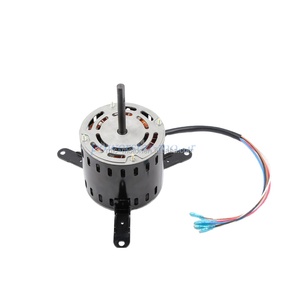
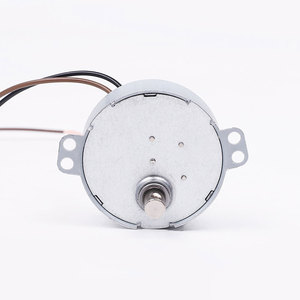
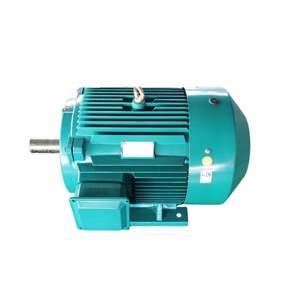
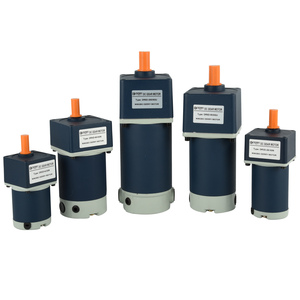
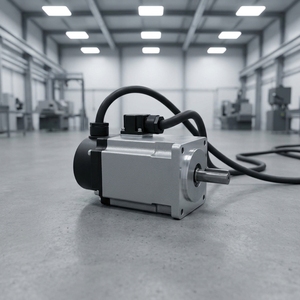
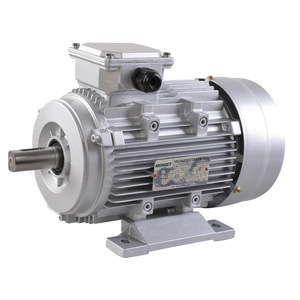
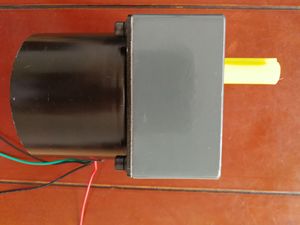
In modern industrial mechanical engineering, the selection of power transmission equipment dictates systemic thermal capacity, acoustic performance, operational longevity, and overall total cost of ownership (TCO). As global original equipment manufacturers (OEMs) shift toward high-density torque applications, China's premier helical gearbox factories have transitioned from high-volume standardized output to ultra-precision, low-backlash, modular gear systems. Helical gearboxes represent the benchmark for continuous-duty mechanical speed reduction due to their angled gear teeth engaging gradually, distributing mechanical stress evenly across dynamic pitch lines.
Unlike standard spur gears—which suffer from point-of-impact tooth engagement causing micro-vibrations and acoustic spikes exceeding 85 dBA—helical gear geometries utilize continuous contact lines across an extended face width. This structural characteristic results in up to 35% higher torque transmission density within an identical envelope while dampening harmonic resonance. Modern Chinese manufacturing facilities leverage advanced computer numerical control (CNC) gear grinding, deep carburizing heat treatment (HRC 58-62), and finite element analysis (FEA) tooth profile modification to eliminate localized contact stresses.
Utilizing high-grade 20CrMnTi alloy steel forged under strict thermal cycles, subjected to vacuum gas carburizing, carbonitriding, and shot peening for maximum root fatigue resistance.
3D flank lead modification and micro-geometry profile crowning offset deflection under dynamic torsional overload, ensuring uniform tooth contact patterns under full rating.
Synthetically lubricated housings engineered with CFD-guided internal oil flow paths, heat-dissipating cooling fins, and double-lip Viton oil seals rated for IP65/IP66 environments.
Leveraging over five decades of industrial manufacturing heritage, top-tier Chinese gear factories operate vertically integrated production ecosystems. From initial raw forging inspection to final dynamic load testing, every phase of production is monitored under rigid quality management systems certified to ISO 9001:2015, CE, UL, and ATEX standards for hazardous area operation.
Our production floor incorporates Swiss Reishauer gear grinding equipment, German Gleason gear hobbing machinery, and Zeiss 3D coordinate measuring machines (CMM). This infrastructure allows us to achieve gear accuracy grades of DIN 3962 Class 5 to 6 on production runs, ensuring pitch errors stay well below 0.003 mm. Furthermore, our state-of-the-art winding shop produces premium copper coil AC induction motors, shaded pole motors, and IE2/IE3 energy-saving asynchronous motors configured specifically for direct flange or inline gear coupling.
We offer tailor-made mechanical interfaces, including custom solid output shaft keyways, hollow shaft shrink discs, specialized NEMA/IEC motor adapter flanges, custom paint coatings for corrosive marine environments (C3-C5M), and integrated thermal protection (PTC/PT100 sensors).
Choosing the correct gearbox configuration requires evaluating input speed, mechanical gear ratio ($i$), permissible radial/axial forces ($F_{r2}, F_{a2}$), and service factors ($f_s$). Below is an engineering overview of standard industrial helical gearbox architectures produced across leading Chinese facilities:
| Gearbox Type | Gear Ratio Range ($i$) | Max Torque Output (Nm) | Efficiency Per Stage | Backlash Range | Primary Industrial Applications |
|---|---|---|---|---|---|
| Inline Helical (R Series) | 1.30 - 27001 | Up to 18,000 Nm | 96% - 98.5% | 10 - 20 Arcmin | Conveyor lines, agitators, pumps, water treatment equipment |
| Parallel Shaft Helical (F Series) | 3.81 - 28200 | Up to 20,000 Nm | 95% - 97.5% | 12 - 22 Arcmin | Crane traveling drives, material handling, packaging machinery |
| Helical-Bevel (K Series) | 5.36 - 32625 | Up to 50,000 Nm | 94% - 97.0% | 8 - 15 Arcmin | Mining conveyors, cement kilns, heavy steel rolling mills |
| Helical-Worm (S Series) | 6.80 - 33800 | Up to 4,000 Nm | 85% - 92.0% | 15 - 30 Arcmin | Food processing, bottling plants, theater stage lifts |
| Precision Planetary-Helical | 3.00 - 1000 | Up to 3,500 Nm | 97% - 98.8% | ≤ 1 - 3 Arcmin | Robotics, CNC servo axes, semiconductor handling systems |
As industrial automation accelerates globally, the demand for smart, energy-efficient, and ultra-compact gear reducers is reshaping factory procurement strategies. Procurement managers and lead system integrators must anticipate several major technological trends over the next decade:
Global environmental regulations, including the European Union's Ecodesign Directive and US DOE mandates, are forcing a shift away from standard IE1/IE2 motors toward IE4 (Super Premium Efficiency) and IE5 (Ultra-Premium Efficiency) permanent magnet synchronous drive units. China's helical gearbox factories are at the forefront of this transition, engineering lightweight aluminum alloy housing reducers that couple directly with high-frequency VFD-driven synchronous motors without dynamic resonance.
Unscheduled assembly line downtime can incur costs reaching thousands of dollars per minute. Next-generation Chinese helical gearboxes are increasingly retrofitted with embedded IoT sensor ports. These integrated vibration accelerometer probes, oil degradation optical sensors, and PT100 bearing temperature detectors feed real-time telematics into factory SCADA platforms. Predictive algorithms identify micro-pitting on gear flanks or bearing fatigue weeks before catastrophic failure occurs.
Supply chain resilience demands component flexibility. Modern industrial gear reducers feature universal foot and flange mounting patterns (compatible with SEW-Eurodrive, Nord, and Bonfiglioli drop-in footprints). This modularity allows distributors and OEMs to maintain lower safety stock while supplying multiple mechanical configurations via interchangeable output shafts, IEC adapter kits, and torque arms.
Send us your torque, gear ratio, mounting space, and radial load requirements. Our application engineering team will deliver detailed 2D/3D CAD drawings and technical proposals within 24 hours.
Contact UsTo avoid undersizing (which leads to premature gear tooth breakage) or oversizing (which increases unnecessary mass, power consumption, and equipment cost), engineering teams must evaluate their exact duty cycles according to AGMA and ISO 6336 standards.
Step 1: Determine Required Output Torque ($T_2$)
Calculate the required output torque based on machine resistance, payload mass, and pitch diameter of the drive sprocket or drum:
$$T_2 = \frac{9550 \times P_1 \times \eta}{n_2}$$
Where $P_1$ is input power in kW, $\eta$ is gearbox mechanical efficiency, and $n_2$ is target output speed in RPM.
Step 2: Establish the Application Service Factor ($f_s$)
The service factor accounts for operating hours per day, shock loading severity, and start/stop frequency. For uniform load conveyor drives operating 8 hours/day, an $f_s \ge 1.0$ is acceptable. For heavy-duty stone crushers or reciprocating compressors running 24/7 with extreme impact loads, specify an $f_s \ge 1.8 \text{ to } 2.5$.
Step 3: Verify Overhung Radial & Axial Load ($F_{r2}, F_{a2}$)
When output shafts are fitted with belt pulleys, chain sprockets, or external pinions, significant radial forces act on the support bearings. Check the factory rating tables to ensure the calculated radial load ($F_{r2}$) does not exceed the permissible bearing limit at the shaft midpoint.
Selecting the right power transmission partner is a strategic decision that directly impacts your machinery's reliability, market competitiveness, and customer satisfaction. By combining cutting-edge metallurgical engineering, strict DIN/ISO precision standards, robust mass-production capacity, and flexible OEM/ODM customization, leading Chinese gear manufacturing facilities empower global industries to drive efficiency forward.
Whether you require standard fractional horsepower AC induction gear motors, high-torque industrial triple-reduction helical units, or customized planetary servomotor reducers, our dedicated engineering team is ready to support your technical specification process from draft drawing to continuous volume production.