+91 98209 33660
Engineered for continuous heavy-duty cycles, high torque efficiency, and customized OEM airflow performance.
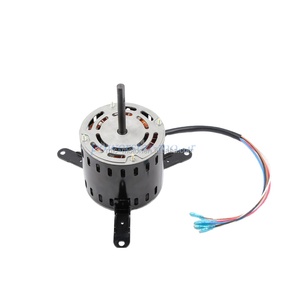
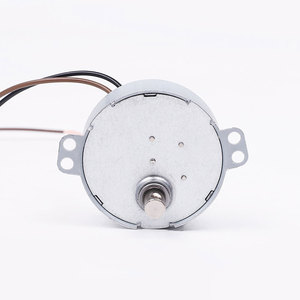
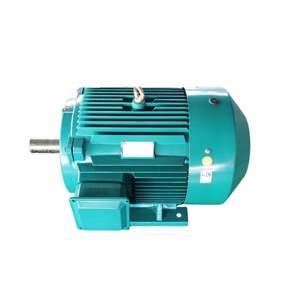
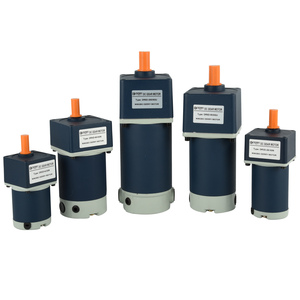
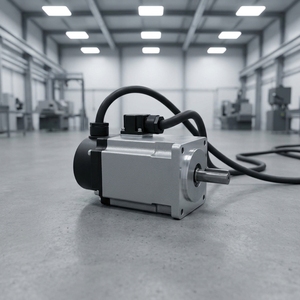
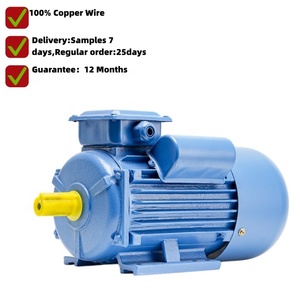
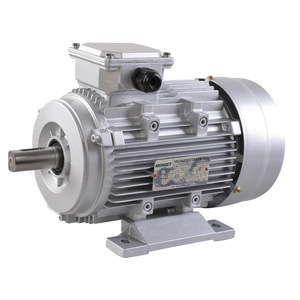
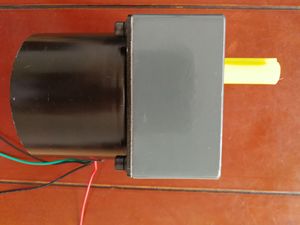
Combining rigorous electromechanical design, automated shop-floor precision, and complete customization to deliver zero-defect ventilation machinery.
From precision stator lamination stamping to 100% pure copper automated coil winding, every core component is manufactured under strict ISO 9001 internal quality gates.
We tailor torque-speed performance, static pressure tolerance, shaft profiles, insulation classes (B, F, H), and thermal overload protectors directly to your OEM envelope.
Every dynamic component undergoes 2-plane dynamic balancing to reduce operational noise below 55 dB(A) and eliminate bearing fatigue for over 50,000 continuous hours.
Our exhaust fan motor configurations fulfill CE, UL, RoHS, and ErP directives, enabling frictionless export and seamless international equipment integration.
Engineered with die-cast aluminum frames, anti-corrosion coatings, and IP54/IP55 ingress sealing designed to survive harsh agricultural, chemical, and high-humidity environments.
With multi-line production capabilities and established global freight networks, we deliver consistent batch uniformity and predictable lead times for major procurement runs.
As industrial facilities worldwide adapt to stringent air quality standards, energy conservation directives, and extreme environmental duty cycles, the role of industrial exhaust ventilation systems has transitioned from simple mechanical air movement to sophisticated thermodynamic control. Selecting the proper exhaust fan motor assembly directly dictates system efficiency, operating noise, component lifespan, and overall Total Cost of Ownership (TCO).
Information Gain Benchmark: Modern industrial exhaust ventilation requires evaluating system static pressure (Pa), volumetric airflow rate (CFM or m³/h), motor efficiency classes (IE2 vs. IE3/IE4), and duty cycle impedance to prevent premature thermal breakdown.
The core power plant of any industrial exhaust fan system relies on its electric motor drive. China's manufacturing ecosystem has pioneered advanced single-phase and three-phase motor designs optimized for fluid dynamic stability:
A common engineering pitfall during OEM fan procurement is misjudging system resistance. Axial exhaust fans deliver exceptional air volumes under low static pressure conditions (open workspace ventilation, wall-mounted heat extraction). Conversely, centrifugal exhaust blowers and backward-curved impellers generate the high static pressure required to push contaminated or hot air through extensive ducting, HEPA filters, scrubber systems, or grease traps.
| Fan / Motor Specification | Axial Exhaust Fan System | Centrifugal Exhaust Blower | Tangential / Cross-Flow Unit |
|---|---|---|---|
| Primary Airflow Vector | Parallel to Drive Shaft | Perpendicular (90° Radial) | Transverse Uniform Air Curtain |
| Static Pressure Tolerance | Low to Medium (0 – 150 Pa) | High (200 – 1500+ Pa) | Low (0 – 50 Pa) |
| Optimal Duty Application | Plant Ventilation, Livestock, Panels | Ducted Fume Exhaust, Filtration | Air Curtains, Slim Enclosure Cooling |
| Motor Coupling Type | Direct Drive / External Rotor | Direct / Helical Geared Drive | Integrated Shaded Pole Drive |
| Typical Sound Envelope | 55 – 72 dB(A) | 60 – 85 dB(A) | 40 – 55 dB(A) |
The global industrial ventilation market is undergoing rapid evolution driven by smart factory automation, green building certifications (LEED/BREEAM), and decarbonization policies. Buyers and product designers must account for four macro procurement trends when selecting OEM manufacturing partners in China:
Electronically Commutated (EC) fans integrated with intelligent micro-controllers are replacing traditional AC induction drives. EC systems allow seamless 0-10V or MODBUS speed modulation, dramatically trimming energy usage during off-peak hours.
Next-generation exhaust fans feature integrated vibration telemetry and winding thermal sensors. Real-time data streams alert plant operators to bearing wear or impeller unbalance long before catastrophic equipment failure occurs.
International equipment builders demand drop-in compatibility. Future-ready fan suppliers utilize universal mounting flanges, multi-voltage windings (115V/230V/460V 50Hz/60Hz), and modular terminal boxes to simplify multi-region product rollouts.
Direct answers from our senior engineering desk regarding customization, motor selection, and export logistics.
To deliver an optimal motor match, our engineers require your target volumetric airflow (CFM or m³/h), static pressure resistance, operating voltage/frequency (e.g., 220V 50Hz / 115V 60Hz), duty cycle (continuous S1 vs. intermittent S2/S3), ambient temperature exposure, physical dimension/mounting constraints, and required IP ingress rating (IP44, IP54, IP55).
We strictly utilize 100% pure electrolytic copper wire for high-reliability industrial motors. Pure copper offers lower electrical resistance, superior thermal dissipation, higher energy efficiency (IE2/IE3 standard compliance), and significantly extended operational life compared to CCA, which suffers from higher heat buildup and corrosion risks in humid environments.
Our standard exhaust motors are rated Class F (155°C thermal limit) with Class H (180°C) upgrades available for harsh environments such as commercial kitchens, bakeries, chemical processing plants, or foundry ventilation systems.
Every motor rotor and fan impeller undergoes dynamic computer balancing on 2-plane balancing rigs to dynamic balancing grade G2.5 or better. Combined with high-precision ball bearings (NSK/SKF or premium equivalent) pre-lubricated with wide-temperature synthetic grease, operational noise is minimized and bearing life exceeds 50,000 hours.
Our manufacturing operations operate under ISO 9001:2015 quality management systems. Product lines carry CE marking, UL compliance readiness, RoHS hazardous substance restriction, and meet European Union ErP efficiency directives for ventilation machinery.
Standard prototype samples for testing and evaluation are typically dispatched within 7–10 days. Full-scale series production runs generally require 20–30 calendar days depending on raw material customization, specialized shaft tooling, or custom housing painting specifications.
Submit your airflow specifications, duty requirements, or OEM drawings today. Our senior engineering team will evaluate your thermal dynamic criteria and provide a tailored technical proposal within 24 hours.
Contact Us