
+91 98209 33660
Explore top-rated AC, Synchronous, Permanent Magnet, and Electronically Commutated (EC) drives manufactured to rigid ISO9001 and international energy efficiency benchmarks.
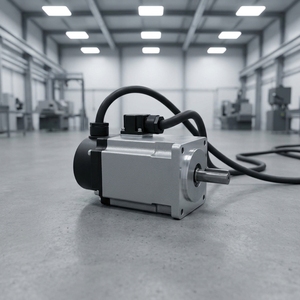
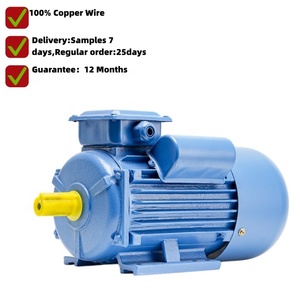
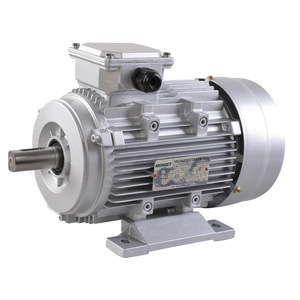
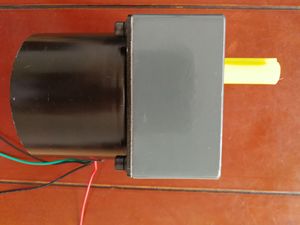
In the modern industrial motion landscape, Electronically Commutated (EC) motors represent a quantum leap over traditional AC induction drives and brush-type DC architectures. By synthesizing the electromagnetic topology of a permanent magnet synchronous motor (PMSM) with an integrated microprocessor-controlled inverter drive, EC motors eliminate the mechanical friction, electrical sparking, and maintenance overhead inherent in legacy commutator systems.
Chinese manufacturing facilities have emerged as global hubs for advanced EC motor engineering due to vertically integrated supply chains spanning rare-earth NdFeB (Neodymium Iron Boron) magnet production, automated high-density copper slot winding, and localized power electronics fabrication. Global Original Equipment Manufacturers (OEMs) across HVAC/R, medical equipment, industrial robotics, and fluid automation are rapidly replacing standard asynchronous motors with Chinese-engineered EC systems to meet stringent global energy mandates such as EU ErP 2020/2029 and US DOE Efficiency Standards.
Information Gain Benchmark: EC motors maintain over 85% to 92% system efficiency across a wide variable speed envelope (20% to 100% rated RPM), whereas standard AC shaded pole or induction motors experience drastic efficiency drop-offs under partial loads.
Unlike AC induction motors that rely on rotor slip to induce magnetic fields in the rotor bars—resulting in intrinsic rotor copper losses and thermal buildup—EC motors run at synchronous speed. The onboard electronic driver precisely tracks rotor position via sensorless Field-Oriented Control (FOC) algorithms or Hall sensors, energizing the stator phase windings at exact microsecond intervals to maintain optimal torque per ampere (MTPA).
Selecting the optimal motor topology requires a rigorous comparison of electromechanical performance, thermal dissipation, acoustic emissions, and lifecycle operational costs. The technical matrix below provides procurement executives and design engineers with definitive specification comparisons.
| Performance Parameter | Standard AC Induction Motor | Brushless DC (BLDC) Motor | Integrated EC Motor System |
|---|---|---|---|
| Peak System Efficiency | 60% - 75% (IE1 - IE2 Class) | 80% - 88% (Requires External ESC) | 88% - 94%+ (IE4 / IE5 Class) |
| Speed Regulation Range | Narrow (Fixed frequency / VFD needed) | Wide (Requires external controller) | Ultra-Wide (0 - 100% via PWM / 0-10V) |
| Thermal Generation | High (Rotor copper losses + stator heat) | Moderate (Stator heat predominant) | Low (Synchronous PM rotor, cool operation) |
| Acoustic & Harmonic Noise | VFD switching noise / Line hum | Trapezoidal switching ripple | Sinusoidal FOC (Near Silent Operation) |
| IoT & Smart Bus Integration | None (Requires discrete external sensors) | Basic tachometer output | Native Modbus RS485 / CANbus / IoT |
| Maintenance & Service Life | 20,000 - 30,000 Hours (Bearing bound) | 30,000 - 40,000 Hours | 50,000+ Hours (Thermally optimized) |
Global B2B buyers are transforming their motor sourcing strategies from initial purchase cost evaluation to a Total Cost of Ownership (TCO) methodology. Over a typical 10-year operational lifecycle in continuous-duty application (such as commercial HVAC chillers, cleanroom fan filter units, or cold-chain refrigeration), electricity consumption accounts for over 90% of a motor's lifetime costs. Chinese suppliers are pioneering key technological shifts to deliver high-ROI solutions:
Next-gen Chinese EC drives are adopting SiC and GaN MOSFET switches, reducing switching losses by 60% and enabling compact electronics operable at higher ambient temperatures up to 105°C.
Integration of RS485 Modbus RTU protocols directly onto motor onboard PCBs allows real-time telemetry extraction (winding temperature, current draw, vibration signatures) for Industry 4.0 IoT analytics.
To hedge against volatile Neodymium pricing, Chinese R&D institutes have perfected high-coercivity Ferrite-based Interior Permanent Magnet (IPM) rotors that match NdFeB performance without rare-earth reliance.
Addressing critical technical queries raised by international buyers during supplier audits and spec compliance reviews.
World-class electric motor manufacturing relies on disciplined process control, modern shop floor automation, and comprehensive testing protocols. Established Chinese production plants maintain strict quality assurance workflows at every stage of assembly:
CNC multi-spindle winders guarantee precise copper slot fill factors. Automated vacuum pressure impregnation (VPI) or trickle varnishing coats copper wire to eliminate air gaps, maximize heat dispersion, and resist electrical insulation breakdown.
To eliminate mechanical vibration and extend bearing fatigue life, all permanent magnet rotors undergo 2-plane dynamic balance calibration. Correction weights or precision milling ensures smooth rotation across full operational speeds.
100% of finished motors pass computer-controlled EOL test stations. Tests measure high-potential dielectric breakdown (Hi-Pot), surge resistance, no-load phase currents, hall sensor alignment, speed-torque points, and acoustic resonance.
Integrated EC driver electronics are manufactured in-house using high-speed Surface Mount Technology (SMT) lines. Automatic Optical Inspection (AOI) and X-ray solder testing guarantee solder joint integrity and semiconductor longevity.
Require specialized shaft modifications, custom voltage windings, or an optimized EC blower assembly for your OEM production lines? Connect with our application engineering team today for technical consultation, CAD models, and factory-direct pricing.