
+91 98209 33660
Directly recommended continuous-duty motors and fan assemblies verified for industrial equipment, HVAC units, and heavy machinery OEM applications.
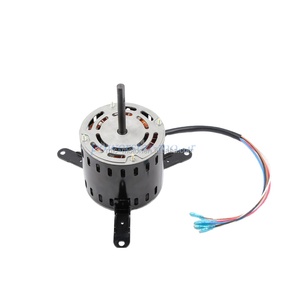
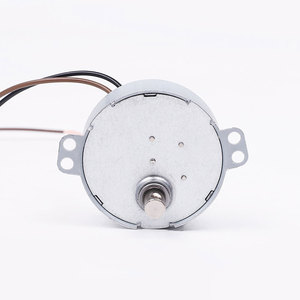
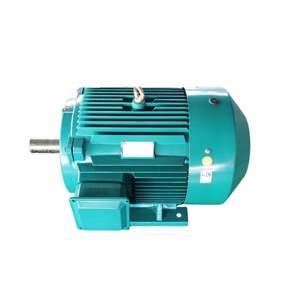
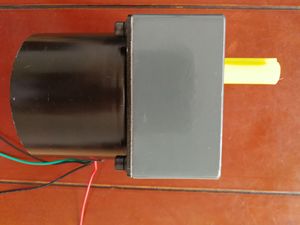
Moving beyond standard off-the-shelf supplier catalogs to deliver tailored thermal management solutions backed by five decades of specialized motor engineering.
Every stator winding ratio, stack lamination thickness, and rotor dynamic balancing pass is controlled in-house. This ensures strict adherence to electrical resistance and magnetic field symmetry requirements.
We adapt mounting flanges, shaft profiles, wire harness terminations, thermal cutoffs, and impeller aerodynamics to align precisely with your physical enclosure and operating duty cycle.
100% of production output undergoes dielectric insulation strength testing, no-load current verification, vibration amplitude analysis (ISO 10816 standard), and airflow static pressure validation.
An in-depth whitepaper analysis of structural engineering shifts redefining performance, energy efficiency, and operational lifespan in severe industrial environments.
Traditional shaded pole and single-phase AC motors are increasingly evolving toward EC (Electronically Commutated) brushless DC architecture. EC motors combine AC mains input with integrated DC inverter drives, yielding up to 70% energy efficiency improvements and continuous variable-speed modulation via 0-10V or Modbus signals.
Modern centrifugal blowers and axial impellers utilize 3D CFD modeling to eliminate blade tip vortex turbulence and boundary layer detachment. This acoustic optimization drastically reduces psychoacoustic noise (dB(A)) while elevating static pressure performance across high-impedance ducting pathways.
The adoption of Class H (180°C) and Class F (155°C) copper magnet wire combined with vacuum-pressure impregnated (VPI) epoxy resin sealing protects motor windings against moisture, dust ingress, and thermal breakdown during continuous full-load operating cycles.
| Motor / Fan Architecture | Typical Efficiency | Speed Control Flexibility | Acoustic Profile | Best Industrial Application |
|---|---|---|---|---|
| AC Shaded Pole Motors | 20% - 40% | Fixed Speed / Voltage Taps | Ultra-Low / Silent | Refrigeration, Evaporator Coils, Dampers |
| Single-Phase FHP Induction | 60% - 75% | VFD / Dual Voltage Capable | Low Noise | Fluid Equipment, Pumps, Condenser Fans |
| YE3 Three-Phase Asynchronous | 88% - 94% (IE3) | VFD Inverter Compatible | Industrial Standard | Heavy Duty Blowers, Plant Exhaust, HVAC |
| Electronically Commutated (EC) | 80% - 92% | 0-10V, PWM, Modbus RTU | Ultra-Quiet Active Modulated | Cleanrooms, Medical Equipment, Telecom |
Key strategic factors purchasing directors, OEM design engineers, and global supply chain executives must evaluate when selecting Chinese cooling fan suppliers.
International procurement teams are transitioning from unit-cost evaluation to Total Cost of Ownership (TCO). High-efficiency motors (IE2/IE3/EC) reduce electrical power consumption over a 10-year equipment operational window, offsetting initial hardware expenditure within months of continuous duty.
Global buyers demand full compliance with international standards (CE, RoHS, UL, ISO 9001). Supplier selection heavily relies on raw material verification—such as 100% pure copper coil winding, cold-rolled silicon steel laminations, and premium double-sealed NMB/SKF ball bearings.
Agile product development cycles require suppliers to offer rapid custom sampling. Leading manufacturers utilize modular frame tooling, flexible shaft machining, and customizable lead wire harnesses to provide validated samples within short lead times.
A transparent, engineering-driven workflow from initial parameter sizing to series production and global export dispatch.
Definition of volumetric airflow (CFM/m³h), static pressure (Pa), operating voltage, ambient thermal boundaries, and targeted noise thresholds.
Calculation of torque-speed curves, stack height selection, winding turn counts, and aerodynamic impeller balancing to optimize system efficiency.
Physical sample fabrication, thermal rise testing under full mechanical load, dielectric breakdown checks, and customer approval documentation.
Automated winding assembly, routine testing on 100% of units, export-grade protective packaging, and scheduled global delivery.
Clear technical guidance from our engineering desk regarding cooling fan selection, motor sizing, and international order logistics.