

+91 98209 33660
Engineered for low-noise continuous duty, linear air distribution, and long operational lifespan across HVAC, medical equipment, fireplace heating, and electronic cooling enclosures.
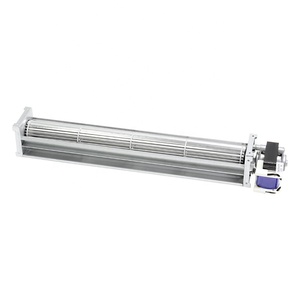
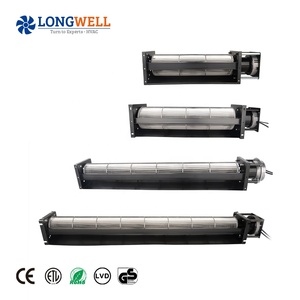
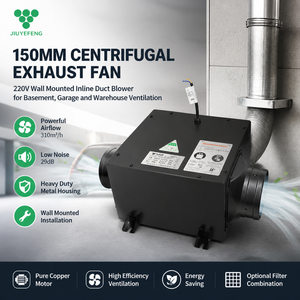
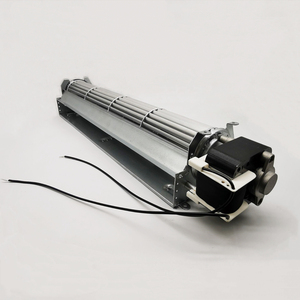
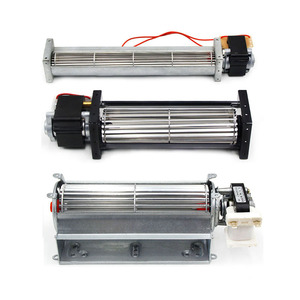
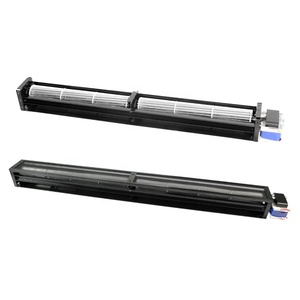
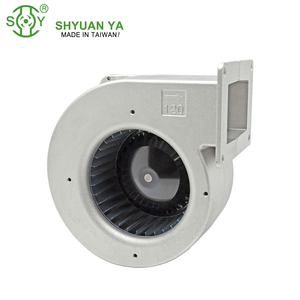
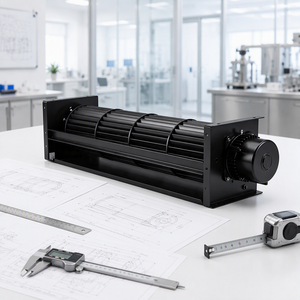
Since inception in 1974, our manufacturing infrastructure has expanded into a state-of-the-art production hub specialized in shaded pole motors, fractional horsepower (FHP) drives, tangential blowers, and custom EC thermal management units.
We maintain full sovereignty over tool fabrication, silicon steel lamination stamping, and precision aluminum alloy impeller die-casting. This eliminates supply chain variance and maintains strict dimensional tolerances within ±0.02mm.
Our automated copper winding stations utilize Class H and Class F enameled wire, featuring automated slot insulation insertion and vacuum pressure impregnation (VPI) for superior dielectric strength and thermal dissipation.
Every crossflow impeller undergoes dual-plane dynamic rotor balancing up to ISO G2.5 precision standards. This eliminates resonance vibration, extends bearing life, and achieves sub-30 dB(A) acoustic operation.
Unlike axial or radial centrifugal blowers, a tangential crossflow fan generates a uniform, two-dimensional linear airflow stream. Air enters the cylindrical impeller on one side, travels through the interior core where a localized eccentric vortex is established, and exits smoothly across the entire length of the outlet aperture.
The heart of tangential airflow efficiency lies in the stability of the eccentric vortex created between the inner blade edges and the asymmetric rear wall housing. This vortex acts as a dynamic energy transfer engine, accelerating air particles without causing high-turbulence recirculation zones. Consequently, crossflow blowers achieve an exceptionally flat airflow velocity profile, ideal for air curtains and heating elements.
When specifying blowers for high static pressure or constrained cabinet spaces, selecting correct impeller ratios (L/D) and blade pitch angles (forward-curved vs. skewed noise-dampening geometries) dictates system efficiency and thermal performance.
For high-temperature applications—such as fireplace PTC heaters or industrial baking ovens—motor longevity relies on physical thermal isolation. Our design integrates ceramic thermal barriers, heat-sink coupling plates, and dual NMB stainless steel ball bearings filled with high-temperature synthetic grease rated up to 180°C.
For budget-sensitive, low-duty applications, sintered porous bronze sleeve bearings with oil reservoirs provide ultra-silent operation, whereas dual ball bearing architectures guarantee >40,000 continuous operating hours under elevated thermal stress.
As global energy standards tighten and equipment footprints shrink, crossflow blower engineering is experiencing pivotal technology shifts driven by smart controls, material science, and acoustic physics.
Legacy AC shaded-pole motors are rapidly being replaced by high-efficiency Electronically Commutated (EC) and Brushless DC (BLDC) drives. EC crossflow blowers consume up to 65% less electrical power, provide integrated 0-10V or PWM speed control, and run cooler under continuous duty cycles.
To eliminate discrete tonal blade-pass frequencies (BPF noise), modern OEM specifications mandate continuous spiral or staggered/skewed blade configurations. This spreads aerodynamic sound energy across a broad spectrum, converting harsh whine into neutral white noise.
High-speed tangential rotors are shifting toward extruded 6063-T5 aluminum alloys with surface anodization or 304/316 stainless steel for chemical, flame-proof, and cleanroom environments, minimizing rotational inertia and mechanical strain.
International buyers and original equipment manufacturers (OEMs) are modernizing their supply chain criteria, prioritizing total cost of ownership (TCO) over initial unit cost.
Engineering procurement managers no longer settle for off-the-shelf standard sizes. Leading China factories now offer custom flange laser cutting, specialized wiring harness termination (Molex, JST, Deutsch), customized shaft extensions, and integrated PTC heating blocks. Delivering plug-and-play modules directly reduces OEM assembly line labor costs by up to 25%.
Export compliance is non-negotiable for North American and European markets. Quality exporters back their products with comprehensive certification suites—including CE, UL, RoHS, REACH, and ERP 2020 energy efficiency standards. Factory audits now prioritize automated quality traceability, where motor serial numbers link directly to winding resistance and dynamic balance test logs.
Use this engineering reference table to evaluate motor topology trade-offs for your specific application duty point.
| Motor Topology | Airflow Uniformity | Power Efficiency | Speed Control Method | Typical Noise Level | Expected Lifespan | Primary Applications |
|---|---|---|---|---|---|---|
| AC Shaded Pole | High (Linear) | Standard (20-30%) | Tapped Windings / Voltage | 35 - 45 dB(A) | 15,000 - 25,000 Hrs | Fireplace Heaters, Microwave Ovens, Vending |
| AC Capacitor Start (PSC) | High (Linear) | Medium (45-55%) | Multi-Speed Taps / TRIAC | 32 - 40 dB(A) | 25,000 - 35,000 Hrs | Commercial Air Curtains, Fan Coil Units |
| Brushless DC (BLDC) | Very High (Linear) | High (65-75%) | PWM / 0-10V Analog | 28 - 35 dB(A) | 30,000 - 40,000 Hrs | Telecom Enclosures, Medical Devices |
| Electronically Commutated (EC) | Ultra High (Linear) | Premium (>80%) | Modbus / PWM / 0-10V | 25 - 32 dB(A) | 40,000 - 50,000+ Hrs | Smart HVAC Systems, Cleanrooms, High-End Units |
Direct technical and commercial answers from our engineering desk for global buyers.
Need custom aerodynamic engineering, precise thermal management solutions, or competitive factory-direct OEM pricing? Our senior engineering team is ready to evaluate your airflow duty point.