

+91 98209 33660
Direct OEM & Factory-Grade Motor Assemblies Engineered for Continuous-Duty Dust Extraction, Air Filtration, and Process Ventilation
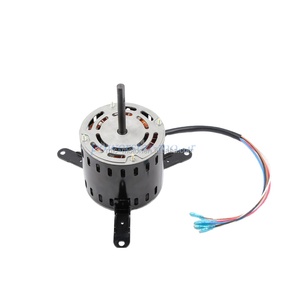
High-efficiency single-phase AC drive designed for localized air handling, auxiliary dust exhaust units, and continuous airflow systems.
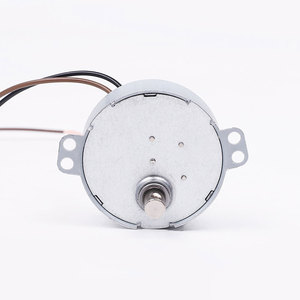
Micro permanent magnet synchronous motor with dynamic low RPM stability, optimized for precision rotary air valves and damper controls.
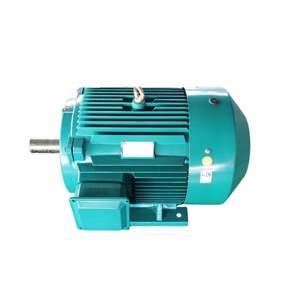
IE3 premium efficiency 100% pure copper core motor, delivering heavy-duty shaft horsepower for central pulse-jet dust collection blowers.
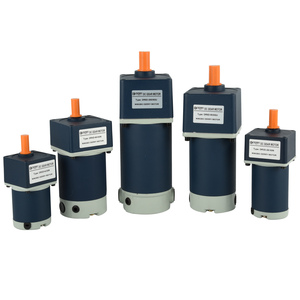
Compact induction geared motor series designed for automatic dust discharge screw conveyors, rotary airlocks, and shaker mechanisms.
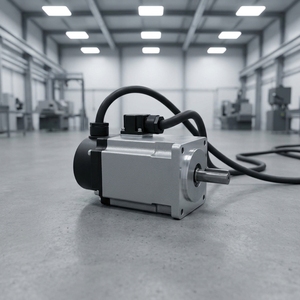
Class F insulated, continuous-duty electric drive for industrial fluid management, heavy-duty suction fans, and workshop air scrubbers.
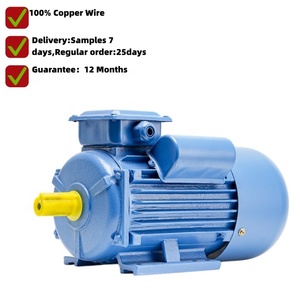
Heavy-starting torque capacitor-start motor suitable for standalone woodshop dust collectors, vacuum extractors, and air blowers.
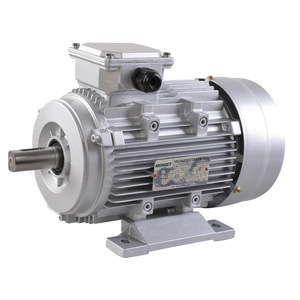
Lightweight high thermal-dissipation aluminum housing motor, coupled for variable frequency drive (VFD) air volume modulation systems.
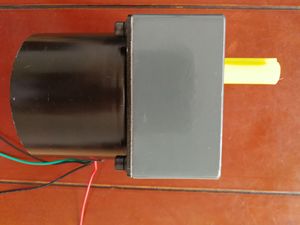
Precision low-speed synchronous drive optimized for automatic cleaning cycle controllers, particulate sampling gear, and valve drives.
Industrial dust collection systems serve as critical environmental, safety, and health infrastructure across manufacturing plants, pharmaceutical facilities, woodworking operations, and chemical processing complexes. Sourcing from certified manufacturers requires a comprehensive evaluation of engineering metrics, structural integrity, and regulatory compliance under European Economic Area (EEA) directives.
A true CE Certified Dust Collector must comply with a matrix of essential health and safety requirements defined by several core European Directives:
Factory buyers and EPC contractors must carefully audit a manufacturer's fluid dynamics calculations. Under-sizing static pressure results in rapid duct clogging, while over-sizing leads to wasted energy consumption and excessive filter fabric abrasion.
| Dust Category | Recommended Air-to-Cloth Ratio | Air Velocity Range (Ductwork) | Optimal Fan/Motor Configuration |
|---|---|---|---|
| Fine Metal Grinding & Welding Fumes | 1.0 – 1.5 m/min (3.2 – 4.9 ft/min) | 18 – 22 m/s (3500 – 4300 fpm) | High Static Pressure Centrifugal Blower, Direct Drive IE3/IE4 Motor |
| Woodworking & Sawdust Extraction | 2.0 – 2.5 m/min (6.5 – 8.2 ft/min) | 20 – 25 m/s (4000 – 4900 fpm) | Medium Pressure Radial Blade Fan with Spark-Resistant Impeller |
| Pharmaceutical Fine Powders | 0.8 – 1.2 m/min (2.6 – 3.9 ft/min) | 15 – 18 m/s (3000 – 3500 fpm) | HEPA Secondary Stage Filtered EC Blower with VFD Control |
| Sandblasting & Silica Dust | 1.2 – 1.8 m/min (3.9 – 5.9 ft/min) | 22 – 26 m/s (4300 – 5100 fpm) | Heavy-Duty Backward Curved Blower, Abrasion-Resistant Scroll Housing |
Building on Over Five Decades of Motor, Fan, and Air Handling Engineering Since 1974
Our manufacturing plant controls 100% of copper coil winding, stator lamination stamping, and rotor dynamic balancing. This eliminates reliance on third-party sub-assemblies and guarantees consistent electromagnetic efficiency across batch orders.
We supply turnkey OEM designs with customized motor shaft profiles, specialized mounting flanges, specific inlet/outlet collar dimensions, and housing orientations (top discharge, side discharge, or inline duct placement).
Every motor drive and centrifugal blower undergoes rigorous routine electrical checks, thermal rise testing under full load, dynamic vibration analysis (ISO 10816 standards), and acoustic noise testing before export dispatch.
As global environmental regulations tighten and energy costs escalate, industrial procurement managers are shifting away from standalone, low-cost dust collectors toward integrated, intelligent clean-air platforms. Key procurement trends shaping supplier selection over the next decade include:
Traditional AC induction motors running at constant speed often waste significant power during variable production cycles. Modern factory buyers specify dust collection systems integrated with EC Blowers or VFD-driven IE4/IE5 motors. These systems automatically modulate fan speed based on duct differential pressure sensors, reducing energy consumption by up to 35-50% annually.
Unplanned downtime caused by clogged filter bags or bearing failures in dust collector blowers can halt an entire manufacturing line. Tier-1 manufacturers now embed Industry 4.0 sensor suites directly into dust extraction sub-assemblies. Continuous monitoring of vibration amplitude, bearing temperature, differential pressure ($\Delta P$), and particulate emission levels allows for predictive maintenance scheduling.
Standard woven polyester bags are rapidly being replaced by spunbond media with nanofiber coatings. Nanofiber technology captures surface dust particles down to 0.3 microns, preventing deep-bed loading and enabling lower compressed-air consumption during reverse pulse-jet cleaning cycles.
Direct manufacturer capabilities have evolved beyond standard steel fabrication. Modern dust collection systems integrate sophisticated mechanical and thermodynamic enhancements designed to optimize filter life and lower noise emissions.
Leading factories utilize CFD simulation software to model dust-laden air entering the intake hopper. By engineering internal drop-out chambers and baffle plates, heavy particulate matter drops directly into the dust bin before contacting the filter media. This reduces mechanical abrasion on filter cartridges by up to 40%.
Workplace safety standards (such as OSHA and EU Directive 2003/10/EC) strictly limit noise exposure to 80-85 dB(A). Advanced CE-certified dust collectors feature aerodynamically optimized backward-curved impellers, acoustic silencer shrouds, and anti-vibration rubber isolation mounts to keep sound pressure levels well below regulatory thresholds.
To reduce international freight costs, modern dust collector factories design modular bolt-together structural frames. Modular units can be expanded by adding filter banks or upgrading blower capacity as factory production increases, providing long-term scalability for industrial end users.
Technical guidance from our engineering desk to assist procurement teams during technical evaluation and supplier auditing.
A legitimate CE certification must be accompanied by an official EU Declaration of Conformity (DoC) issued by the manufacturer, referencing relevant Harmonized Standards (e.g., EN ISO 12100 for machinery safety, EN 60204-1 for electrical safety). For ATEX environments, a Notified Body Certificate (CE with 4-digit Notified Body number) is required for Category 1 and 2 equipment.
You should provide: (1) Total required airflow volume ($m^3/h$ or CFM), (2) Estimated total static pressure drop across ducting and filters ($Pa$ or inches WG), (3) Dust type, particle size distribution, and bulk density, (4) Operating duty cycle (continuous vs. intermittent), (5) Electrical voltage/frequency ($110V/220V/380V/440V$, $50Hz$ or $60Hz$), and (6) Any explosion proof requirements (ATEX rating).
Static pressure represents the fan's ability to overcome resistance caused by duct friction, elbows, hood entries, and filter cake build-up. If the blower provides insufficient static pressure, air velocity in the ductwork will drop below dust transport speed, leading to dust settling, duct blockages, and system failure.
Yes. With over 50 years of continuous manufacturing experience, we specialize in customizing shaft dimensions, mounting brackets, winding voltages, thermal overload protection, and impeller balance specifications according to OEM drawings and application requirements.
When powered by high-grade IE2/IE3 motors with Class F insulation and sealed heavy-duty ball bearings, quality centrifugal blowers operate reliably for 10 to 15+ years under standard maintenance schedules (regular bearing lubrication and filter replacements).
Direct-drive units mount the fan impeller directly onto the motor shaft, eliminating belt wear, maintenance, and power transmission losses—making them ideal for compact, low-maintenance setups. Belt-drive units allow speed adjustments by changing pulley ratios and isolate the motor from high temperature or abrasive airstreams.
Whether you require standard CE-compliant sub-assemblies or fully customized drive motors for your dust collection product line, our engineering team is ready to evaluate your airflow, torque, and structural duty points.