

+91 98209 33660
Explore our flagship CE-certified motor drives, tangential impellers, and centrifugal blowers built for continuous heavy-duty environmental separation.
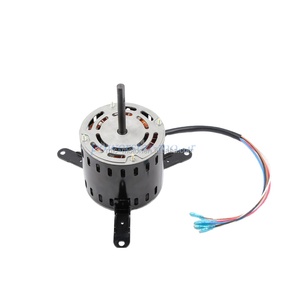
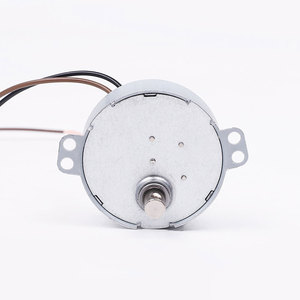
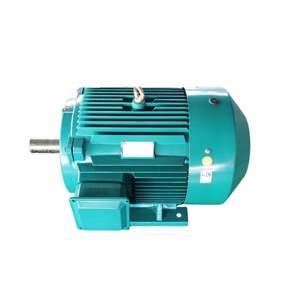
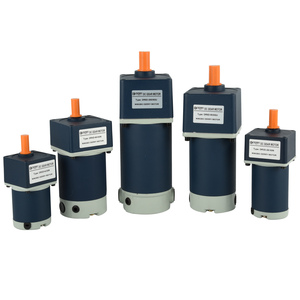
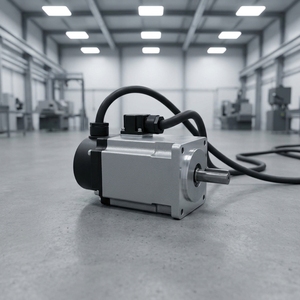
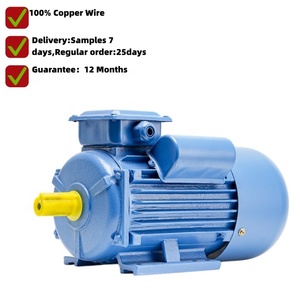
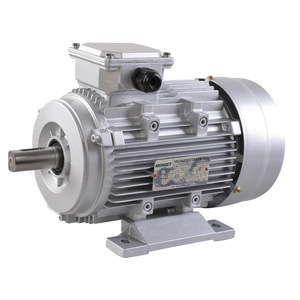

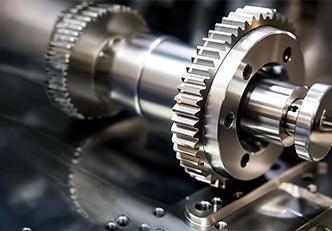
Founded over five decades ago, Delco Fans Pvt. Ltd. has evolved into an international powerhouse for fractional horsepower (FHP) motors, air curtains, tangential cross-flow blowers, and industrial centrifugal units. Operating out of our specialized facility in Wagle Industrial Estate, Thane, Maharashtra, India, we pioneer high-efficiency air motion technology.
Unlike standard catalogue distributors, our engineering desk designs solutions validated against real load curves, aggressive static pressure differentials, and extreme ambient temperature ranges. Every CE-certified air curtain motor system is engineered to protect interior thermal climates, prevent insect ingress, and dramatically cut operational energy expenditure.
A comprehensive engineering guide on laminar air velocity distribution, aerodynamic containment, and energy efficiency metrics under ISO 27327-1 testing standards.
An industrial air curtain is far more than a simple overhead fan; it is a high-momentum dynamic fluid shield engineered to seal open doorways without creating physical barriers. The core mechanism relies on delivering a continuous planar jet of air at a calculated velocity profile ($v_0$) and discharge angle ($\alpha$).
According to fluid mechanics principles, when interior conditioned air attempts to exchange with unconditioned ambient outdoor air due to wind pressure ($P_{wind}$) or stack effect pressure ($\Delta P_{thermal}$), the air blade exerts a counter-momentum flux ($M_{jet}$). The fundamental design goal is establishing a critical momentum ratio:
Core Aerodynamic Principle: $M_{jet} = \rho \cdot b \cdot v_0^2 \ge C \cdot H \cdot \Delta P_{net}$
Where $\rho$ is air density, $b$ is nozzle width, $v_0$ is discharge velocity, $H$ is doorway height, $\Delta P_{net}$ is net pressure difference across the opening, and $C$ is empirical containment coefficient.
If the discharge velocity is inadequate, the jet collapses midway down the doorway, permitting thermal infiltration. Conversely, an excessive, non-uniform velocity field causes turbulent mixing and entrainment, drawing cold or hot outside air directly into the building core. Delco’s CE-certified cross-flow tangential impellers deliver uniform, low-turbulence velocity profiles across the entire doorway span.
To evaluate the information gain of modern air curtain installations, building engineers quantify energy isolation using the Thermal Isolation Efficiency ($\eta_{barrier}$) formula:
$$\eta_{barrier} = \left( 1 - \frac{Q_{curtain\_active}}{Q_{open\_door}} \right) \times 100\%$$
In rigorous test chamber evaluations per ISO 27327-1 standards, our CE-marked air curtains maintain $\eta_{barrier} \ge 88\%$ even under wind velocities up to 4.5 m/s. This translates into immediate HVAC compressor load reductions, preventing up to 90% of energy loss through open dock doors, commercial entrances, and cold storage access points.
| Air Curtain Technology Class | Motor Drive Type | Avg. Velocity Profile ($v_0$) | Max Installation Height | Isolation Efficiency ($\eta$) | Primary Application Target |
|---|---|---|---|---|---|
| Commercial Light Series | Single-Phase AC Shaded Pole | 9.5 m/s - 11.0 m/s | 2.5 - 3.0 Meters | 82% - 85% | Retail Outlets, Restaurants, Offices |
| Industrial Heavy-Duty Series | 3-Phase IE3 Induction Motor | 18.0 m/s - 25.0 m/s | 5.0 - 8.0 Meters | 89% - 94% | Logistics Hubs, Factory Docks, Hangars |
| EC Smart Synchronous Series | Electronically Commutated (EC) | Variable (5 - 22 m/s) | Up to 6.0 Meters | 92% - 96% | Cleanrooms, Cold Storage, Green Buildings |
| Recirculating Air Barrier | Dual Centrifugal External Rotor | 14.0 m/s - 18.0 m/s | 4.0 - 5.5 Meters | 94% - 98% | Pharmaceutical Facilities, High-Wind Docks |
Stay ahead of market shifts. Key technical directions shaping global procurement decisions for commercial HVAC and industrial facility managers.
Global decarbonization mandates are pushing buyers away from legacy AC induction motors toward EC brushless technology. EC-driven air curtains reduce electrical consumption by 40-60% while providing step-less 0-10V speed modulation to automatically adapt to real-time wind sensor feedback.
Modern air curtain procurement requires Modbus or BACnet protocol integration. Facility managers monitor motor thermal rise, vibration levels, and air filter pressure drops remotely, enabling predictive maintenance schedules before operational breakdowns occur.
Noise pollution compliance in urban retail and commercial spaces has elevated acoustic standards. Future-proof air curtain designs utilize forward-curved 3D skewed aluminum impellers, maintaining high dynamic static pressure while suppressing sound pressure below 52 dBA.
Match your facility doorway parameters with the optimal motor drive topology and impeller configurations.
Challenge: Severe temperature differential ($\Delta T > 40^\circ\text{C}$), high risk of doorway icing and condensation.
Recommended Setup: Dual-jet air curtain powered by high-torque low-RPM synchronous motors or EC centrifugal blowers. Integrated electric heating elements prevent coil frosting.
Challenge: Strict airborne particle exclusion (ISO Class 5/7), positive pressure preservation.
Recommended Setup: Stainless steel 304 housing equipped with HEPA filtration and smooth-surface tangential blowers driven by vibration-balanced copper coil motors.
Challenge: Frequent door cycles, aesthetic integration, low noise threshold (< 55 dBA).
Recommended Setup: Slimline architectural air curtains with low-profile single-phase MCP motor drives and variable speed infrared door sensor activation.
Clear engineering answers regarding CE certification standards, export compliance, custom sizing, and maintenance requirements.
Delco Fans manufactures air curtain motors and blower assemblies in accordance with Low Voltage Directive (LVD) 2014/35/EU and Electromagnetic Compatibility (EMC) Directive 2014/30/EU. Safety compliance is tested under EN 60335-1 and EN 60335-2-80 standards, ensuring seamless importation into EU member states and global markets requiring CE marking.
As a rule of thumb: Doorways up to 2.5 meters require a nozzle air velocity of 10-12 m/s; doors up to 4 meters need 15-18 m/s; while industrial doors exceeding 6 meters demand heavy-duty centrifugal blowers delivering 22-28 m/s at the discharge nozzle. Our engineering team calculates exact velocity requirements based on wind pressure and door height.
Yes. Over 60% of our production consists of tailored OEM solutions. We customize motor shaft extensions, mounting brackets, dual-voltage winding setups (110V/220V/380V/460V at 50Hz or 60Hz), IP protection ratings (IP44, IP54, IP55), and thermal cutoff thresholds according to your product shell dimensions.
AC induction motors are highly cost-effective, robust, and ideal for standard constant-speed applications. EC (Electronically Commutated) motors integrate permanent magnets and onboard electronics, allowing precise speed control, 30-50% lower energy consumption, reduced heat generation, and direct connection to smart building control systems (BMS).
Maintenance is straightforward: Inspect and clean air inlet filters every 1 to 3 months depending on dust levels. Clean the cross-flow or centrifugal impellers annually to prevent dynamic imbalance. Delco air curtain motors utilize permanently lubricated sealed ball bearings, requiring zero grease replenishment during their operational service life.
Whether you require standard air barrier units, high-performance cross-flow impellers, or custom OEM motor engineering, our technical team is ready to support your global projects.
Inquire Now