0%

Top Worm Geared Electric Motors for Global Buyers? This question involves more than price, speed, or catalog size. Buyers must match torque, duty cycle, mounting position, voltage, enclosure rating, and service conditions. A compact conveyor motor may run smoothly in a clean warehouse but fail early beside dust, moisture, or frequent washdowns. Practical selection starts with the application.

The International Energy Agency reports that electric motor systems consume roughly half of global electricity. Its Energy Efficiency reports also emphasize the value of efficient motors, controls, and properly sized equipment. The U.S. Department of Energy similarly identifies motor-driven systems as a major share of industrial electricity use. These findings make efficiency a purchasing issue, not a minor specification. IEC 60034-30-1 provides a recognized framework for motor efficiency classes, while IEC 60034 standards support broader performance and testing requirements.

Market research firms, including Grand View Research and Fortune Business Insights, forecast continued growth across the global gear motor market. Their estimates vary, sometimes substantially. That difference deserves caution. Forecasts are not purchase guarantees. For global buyers, a reliable shortlist should compare rated output, gearbox ratio, backlash, thermal capacity, noise, IP protection, bearings, warranty terms, and documented compliance. Ask for test records. Verify the nameplate.

This guide examines Worm Geared Electric Motors through that practical lens. It considers common industrial uses, supplier credibility, lifecycle cost, and regional support. Some rankings may remain debatable. That is intentional. The “best” motor depends on the load, environment, and maintenance reality—not a glossy product page.
Top Worm Geared Electric Motors for Global Buyers?

Worm Geared Electric Motors: Definition and Operating Principles

Worm Geared Electric Motors: Definition and Operating Principles

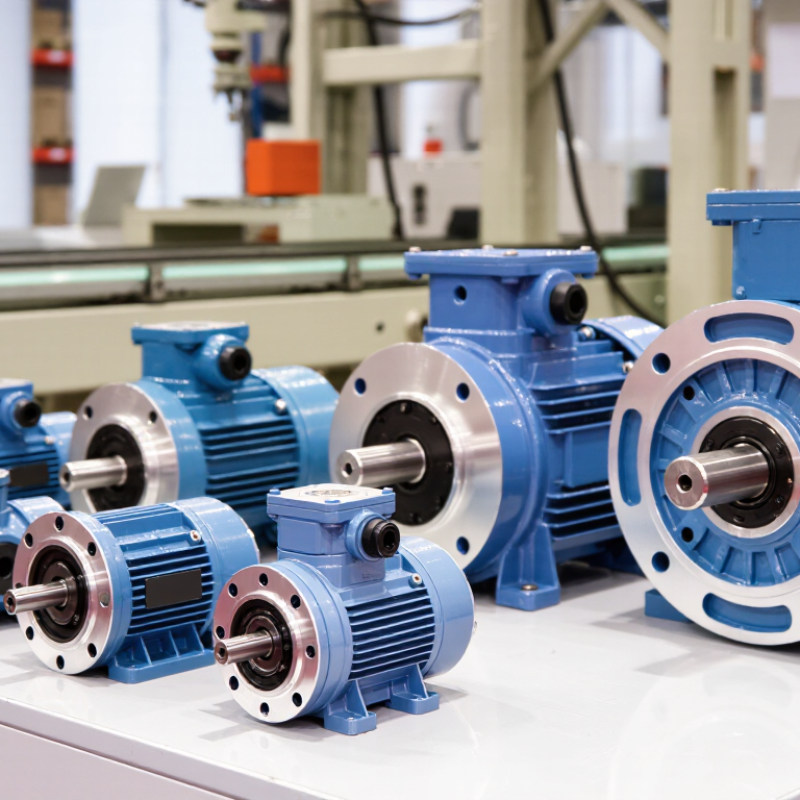
A worm geared electric motor combines an electric motor with a worm gearbox. The motor turns a hardened screw-like shaft called the worm. Its angled teeth engage with a circular worm wheel, transferring torque through a right-angle drive. This arrangement reduces speed while increasing output force, making it useful for conveyors, gates, mixers, and compact lifting equipment.

The gear ratio depends on the worm’s starts and the wheel’s tooth count. A single-start worm can provide strong speed reduction in a small housing. During operation, the sliding contact between the worm and wheel creates friction. That friction also produces heat and lowers efficiency compared with many spur or helical gear systems. Correct lubricant, alignment, and cooling matter greatly.

Real installations are less tidy than catalog diagrams. Dust, overloading, poor mounting, and repeated starts can shorten service life. The gearbox may resist back-driving, but this should not be treated as a safety brake. Vibration and wear can change that behavior. I recommend checking the rated torque, duty cycle, ambient temperature, shaft direction, and mounting position before selection. A temperature check after several hours can reveal trouble early. Small details matter.

Key Performance Factors for Comparing Worm Geared Motors

Top Worm Geared Electric Motors for Global Buyers

Comparing worm geared motors requires more than checking rated power. Output torque, speed, and duty cycle must match the actual machine load. Calculate starting torque carefully, especially when conveyors or lifting systems begin under pressure. Include acceleration, friction, and occasional overloads in the calculation. A motor that looks suitable on paper may overheat during repeated starts. Check the service factor, insulation class, and allowable ambient temperature. Catalog figures are useful, but they are not the whole story.

Efficiency and heat control also deserve close attention. Worm gearing can provide compact reduction and quiet operation, but it may lose more energy than other gear types. Inspect the transmission ratio, lubrication method, backlash, and permissible radial load. In field installations, poor alignment often creates vibration and seal wear. I have seen reliable motors fail early because mounting surfaces were uneven. That detail is easy to miss. Noise, enclosure protection, shaft size, and brake requirements should match the working environment. Verified test data and clear technical documents support safer purchasing decisions.

Tips: Compare identical duty conditions, not isolated ratings. Ask for efficiency curves and thermal limits. Confirm voltage, frequency, and mounting dimensions before ordering. Review maintenance intervals and spare-part availability. If possible, run a sample motor under the real load. One laboratory result cannot represent every factory floor.

Top Worm Geared Motor Types for Different Industrial Applications

Top Worm Geared Motor Types for Different Industrial Applications

Worm geared motors are valued for compact designs, quiet operation, and reliable torque transmission. In production lines, right-angle models fit neatly beside conveyors where floor space is limited. Single-stage units suit moderate speed reduction, such as small packaging machines and rotary tables. Their simple structure also makes routine inspection easier.

Double-stage worm geared motors provide higher reduction ratios for mixers, lifting equipment, and heavy-duty conveyors. They run more slowly but deliver stronger output torque. Hollow-shaft types connect directly to driven equipment, reducing coupling parts and alignment work. This design is practical for conveyor drums and automated gates. Flange-mounted versions help secure motors to machine frames with limited side access.

Material selection changes performance. Cast housings work well in general factories, while coated or corrosion-resistant housings suit washdown areas. However, moisture protection depends on the full motor assembly, not the housing alone. I have seen installation problems caused by poor cable sealing and incorrect mounting angles.

Check the required output speed, torque, duty cycle, and ambient temperature before choosing a model. A motor that looks powerful may overheat under frequent starts. Back-driving resistance can help with inclined conveyors, but it should not replace a properly engineered brake. Lubricant level, shaft alignment, and unusual noise deserve regular attention. Small oversights often become expensive downtime.

Global Standards, Certifications, and Buyer Requirements

Top Worm Geared Electric Motors for Global Buyers?

For global buyers, compliance starts with the motor’s working environment. Check rated voltage, frequency, duty cycle, insulation class, and enclosure protection before comparing prices. IEC-based test methods improve consistency across suppliers, while regional requirements may demand CE marking, UL recognition, or other accepted approvals. These documents should match the exact motor model, not a similar product. A certificate without traceable test data is a warning sign.

Worm gear motors also need practical verification. Ask for torque curves, gear ratio, efficiency data, noise limits, shaft dimensions, and thermal performance. IP ratings matter in dusty workshops or washdown areas. For export projects, request material declarations and documentation related to restricted substances. In factory audits, buyers often inspect nameplates, wiring terminals, seals, and batch records. Small details matter. I have seen otherwise suitable units fail because the frequency was overlooked. That mistake is easy to repeat.

Tips: Define the destination market before requesting quotations. Require a datasheet, declaration, inspection report, and sample nameplate. Confirm whether certificates cover the complete gear motor assembly. Ask about spare seals, service intervals, packaging strength, and warranty terms. Leave room for independent testing when the application is critical. Specifications can look complete, yet a missing tolerance or unclear test condition may create trouble later.

Top Worm Geared Electric Motors for Global Buyers? - Global Standards, Certifications, and Buyer Requirements

A practical reference table for evaluating worm geared electric motor assemblies across international markets.

Evaluation Area Typical Global Buyer Requirement Relevant Standard or Certification Documents or Evidence to Request Buyer Notes
Motor construction Three-phase squirrel-cage induction motor for continuous industrial operation; single-phase versions may be used for lower-power equipment. IEC 60034 series; applicable national adoption may include EN or equivalent standards. Technical datasheet, rated-output table, winding data, operating-duty declaration, and routine test report. Confirm whether the motor and worm gearbox are supplied as one matched assembly or as separate components.
Rated voltage and frequency Common international requirements include 230/400 V at 50 Hz and 265/460 V at 60 Hz for low-voltage three-phase systems, subject to local grid practice. IEC 60034-1; local electrical installation rules also apply. Nameplate photograph or drawing, voltage-frequency configuration, current values, and connection diagram. Specify voltage, frequency, phase, starting method, and allowable voltage tolerance before ordering.
Output power and speed Typical geared-motor selections cover fractional-kilowatt applications through several kilowatts, with output speed determined by motor speed and gearbox ratio. IEC 60034-1 for motor ratings; gearbox performance should be stated by the manufacturer. Rated motor power, input speed, output speed, gear ratio, output torque, service factor, and duty-cycle data. Select by required output torque and starting conditions, not by motor kilowatts alone.
Gear ratio and output torque Worm gear ratios commonly range from low single-digit ratios to several hundred to one, depending on the design series and application. No single global product standard defines all worm-gear ratings; declared manufacturer test methods are essential. Torque-speed curve, permissible radial and axial loads, service factor, lubrication specification, and thermal rating. Worm gears can generate substantial heat at high ratios; verify thermal capacity at the actual ambient temperature and duty cycle.
Efficiency and energy performance Buyers increasingly request a documented motor efficiency class and total geared-unit efficiency at the intended load and speed. IEC 60034-30-1 defines efficiency classes for many line-operated low-voltage motors; it does not establish a universal efficiency class for every complete worm-geared assembly. Efficiency test report, motor efficiency class, load point, power factor, gearbox efficiency data, and loss calculation. Compare complete-system energy consumption rather than comparing motor efficiency alone.
Ingress protection IP55 is common for general industrial motors; higher protection may be required for washdown, dust, or outdoor installations. IEC 60034-5 / EN 60529, depending on the declared product and market requirements. IP rating declaration, test evidence where required, shaft-seal details, drain-plug arrangement, and enclosure drawing. The IP rating does not automatically confirm chemical resistance, high-pressure washdown suitability, or corrosion resistance.
Insulation and thermal class Class F insulation is widely specified for industrial motors; the permissible temperature rise and ambient conditions must also be declared. IEC 60034-1 and related IEC insulation-system requirements. Insulation class, temperature-rise data, maximum ambient temperature, altitude limit, and thermal-protection details. Derating may be necessary above the declared ambient temperature or altitude.
Duty and operating cycle S1 continuous duty is common; intermittent starts, frequent reversing, braking, or variable-speed operation require a specific duty assessment. IEC 60034-1 duty types, including S1 through S10 where applicable. Duty designation, starts per hour, acceleration time, load profile, braking data, and allowable thermal cycles. Worm gearbox self-locking should never be assumed without a documented application-specific assessment.
Variable-frequency drive compatibility For inverter operation, buyers may require reinforced insulation, suitable bearings, shaft-grounding provisions, and independently verified low-speed thermal performance. IEC 60034-17 and IEC 60034-25 provide guidance for motors supplied by converters. VFD compatibility statement, permissible frequency range, cable and filter requirements, bearing protection, and cooling limitations. Confirm whether the gearbox thermal rating changes when the motor operates below its base speed.
Temperature and environment Buyers should define ambient temperature, humidity, altitude, dust, moisture, corrosive exposure, and installation orientation. IEC 60034-1 environmental operating provisions; IEC 60068 may be used for environmental testing when specified. Ambient-temperature range, altitude rating, corrosion-protection specification, paint system, and mounting-position limits. Outdoor and coastal installations may require additional surface protection and anti-condensation measures.
Hazardous-area suitability Equipment for explosive gas or dust atmospheres requires a certified protection concept matching the zone, gas or dust group, and temperature class. IEC 60079 series; ATEX or other regional schemes may apply depending on the destination and installation. Certificate, marking, protection method, equipment group, zone suitability, temperature class, and installation restrictions. A standard IP-rated motor is not automatically suitable for a hazardous location.
European market access Products placed on the European Union market may need CE marking and compliance with all applicable legislation for the complete product or machinery. Low Voltage Directive 2014/35/EU, EMC Directive 2014/30/EU, RoHS Directive 2011/65/EU, and machinery legislation where applicable. EU Declaration of Conformity, technical documentation, risk assessment where applicable, EMC information, and installation instructions. CE obligations depend on the product configuration and intended use; a motor component may be treated differently from a complete machine.
United Kingdom market access Products supplied in Great Britain may require UKCA arrangements, while current transitional provisions and product-specific rules should be checked before shipment. Applicable United Kingdom product-safety, EMC, environmental, and machinery regulations. UK Declaration of Conformity where required, technical file, marking details, and importer or responsible-person information. Confirm the latest marking and conformity route for the exact product category and delivery date.
North American requirements Industrial buyers may request recognized component status, certification for the complete assembly, or compliance with local electrical and installation codes. Applicable UL, CSA, NEMA, NEC, and local authority requirements vary by product, installation, and jurisdiction. Certification file number where applicable, nameplate details, enclosure rating, wiring diagram, and installation instructions. Do not treat IEC conformity as automatic approval for every North American installation.
Mounting and mechanical interface Buyers commonly specify IEC mounting forms such as foot-mounted, flange-mounted, or combined foot-and-flange arrangements. IEC 60034-7 for mounting arrangements; IEC 60072 series for dimensions where applicable. Dimensional drawing, shaft diameter and extension, keyway, flange dimensions, bolt pattern, terminal-box position, and mounting orientation. Verify compatibility with the driven machine, coupling, chain, pulley, or conveyor interface.
Noise and vibration Low noise and controlled vibration may be required for indoor machinery, material handling, food processing, and occupied environments. IEC 60034-9 for airborne noise and IEC 60034-14 for mechanical vibration, where applicable. Sound-pressure method and value, vibration grade, balancing statement, and test conditions. Noise and vibration values should identify speed, load, mounting, and measurement distance.
Lubrication and service life Buyers require lubricant type, fill quantity, service interval, permissible orientation, seal specification, and expected operating life. Manufacturer-defined gearbox maintenance procedure; lubricant safety and environmental rules apply in the destination market. Maintenance manual, lubricant datasheet, parts list, seal details, and recommended inspection schedule. Confirm whether the unit is factory-filled for the specified mounting position and ambient range.
Quality management Global buyers often prefer suppliers operating a documented quality-management system with traceable production and inspection records. ISO 9001 certification applies to a quality-management system, not automatic product performance approval. Valid certificate scope, production inspection plan, serial-number traceability, nonconformance process, and calibration records. Check that the certificate scope covers the manufacturing site and relevant product activities.
Commercial and logistics requirements Buyers commonly specify minimum order quantity, lead time, spare-parts availability, warranty period, export packaging, customs documents, and delivery terms. Incoterms® rules may define commercial responsibilities; destination-country import, labeling, and packaging regulations also apply. Quotation, packing list, commercial invoice, certificate of origin where required, warranty terms, spare-parts list, and delivery schedule. Request a complete landed-cost comparison including freight, duties, conformity work, commissioning, and replacement parts.
Important purchasing note: Standards and certification requirements depend on the destination country, voltage system, installation environment, hazardous-area classification, and whether the product is supplied as a motor, geared motor, or complete machine. Buyers should verify the current legal requirements with the local authority or qualified compliance professional before placing an order.

How to Select a Reliable Worm Geared Electric Motor Supplier

Top Worm Geared Electric Motors for Global Buyers?

How to Select a Reliable Worm Geared Electric Motor Supplier

Choosing a worm geared electric motor supplier requires more than comparing online prices. Check the supplier’s engineering experience, production controls, and ability to explain torque, speed, duty cycle, and mounting requirements. A dependable supplier should provide clear datasheets, dimensional drawings, wiring details, and realistic efficiency figures.

Ask how each motor is tested before shipment. Useful checks include no-load running, temperature rise, noise, vibration, insulation resistance, and gearbox backlash. Request sample test records, not only general promises. The housing should match the working environment, especially where dust, moisture, or frequent starts are present. Small details matter.

Inspect the supplier’s materials and process controls. Worm gears, shafts, bearings, seals, and motor windings should have traceable specifications. Confirm whether replacement parts remain available after the initial order. Communication also reveals capability. Can the technical team answer questions without hiding behind vague language?

Be careful with unusually cheap quotations. They may exclude testing, proper packaging, or after-sales support. I have seen selection decisions focus too heavily on purchase price, while installation problems created higher costs later. That mistake is easy to repeat. No supplier is perfect, and published efficiency may differ from field performance. Ask for application validation, written warranty terms, and a clear response process for faults. A short pilot order can expose weaknesses before a large shipment.

FAQS

What specifications should global buyers check before comparing worm geared electric motors?

Confirm voltage, frequency, duty cycle, insulation class, enclosure rating, torque, speed, and gear ratio. Small omissions matter. A forgotten frequency can cause installation failure.

Why must certificates match the exact motor model?

Documents for a similar model may not prove compliance. Request traceable test data, model numbers, and complete assembly coverage. Paperwork alone is insufficient.

Which technical documents should a supplier provide?

Ask for a datasheet, dimensional drawing, wiring details, declaration, inspection report, and sample nameplate. Also request torque curves and thermal data. Clear documents reduce confusion.

How can buyers verify a supplier’s testing process?

Ask for records covering no-load running, temperature rise, noise, vibration, and insulation resistance. Gearbox backlash testing is useful too. General promises are weak evidence.

What environmental details affect motor selection?

Dust, moisture, washdown conditions, frequent starts, and heat all affect the correct design. Check seals and enclosure protection carefully. The workshop environment decides more than price.

How can buyers judge the quality of materials and production controls?

Request traceable specifications for gears, shafts, bearings, seals, and windings. Inspect batch records, wiring terminals, and nameplates during audits. Small parts can reveal larger process problems.

Should buyers choose the lowest quotation?

An unusually low price may exclude testing, strong packaging, spare parts, or support. Compare the complete supply scope. Cheap is not always economical.

What should buyers do before placing a large export order?

Define the destination market and confirm required approvals before requesting quotations. Consider a short pilot order and independent testing for critical applications. Perfection is unlikely. Written warranty and fault-response terms still matter.

Conclusion

Worm Geared Electric Motors combine an electric motor with a worm gear transmission to provide reliable speed reduction, increased torque, and smooth power delivery in compact equipment. Their operating principle relies on a worm screw engaging with a gear, making them suitable for conveyors, packaging machines, lifting systems, mixers, automation equipment, and other applications requiring controlled movement. Buyers should compare key factors such as output speed, torque capacity, efficiency, duty cycle, noise, thermal performance, mounting configuration, protection rating, and expected service life.

Different motor types and gear arrangements can meet specific industrial requirements, from compact units for light machinery to heavy-duty solutions for demanding continuous operation. Global buyers should also review applicable electrical and safety standards, certifications, documentation, voltage compatibility, and environmental requirements. Selecting a reliable supplier involves evaluating product consistency, customization capability, quality control, testing procedures, delivery performance, technical support, warranty terms, and after-sales service. A careful comparison helps ensure the motor delivers dependable performance and long-term value.

Charlotte

Charlotte

Charlotte is a dedicated marketing professional with a deep understanding of the company’s products, customers, and industry landscape. With a strong combination of strategic thinking, market insight, and practical communication skills, she plays an important role in presenting the company’s value......