

0%

Industrial Exhaust Fans help remove heat, fumes, dust, and moisture from factories, workshops, and process areas. Their value is practical: a steady airflow can improve working conditions and help protect equipment. Yet a fan’s performance depends on more than its nameplate rating. Duct bends, filters, motor selection, controls, and the actual operating point all matter. Small details matter. A powerful unit can still waste energy when the system is poorly matched.

The International Energy Agency’s Energy Efficiency 2023 report estimates that industry accounts for about 37% of global final energy demand. That figure makes efficient industrial systems an important consideration, although it does not describe fan use alone. The U.S. Department of Energy’s Improving Fan System Performance sourcebook likewise recommends assessing the complete fan system, rather than judging a fan in isolation. Buyers should therefore compare airflow, pressure, power consumption, materials, noise, maintenance access, and test documentation.

This guide introduces ten Chinese manufacturers for buyers seeking industrial ventilation solutions. It considers product range, engineering capability, manufacturing experience, and the clarity of available specifications. A ranking is never perfectly neutral; supplier data can vary in detail and comparability. Treat the list as a starting point, then verify model-level performance, certifications, service coverage, and references directly with each manufacturer. A catalog is useful. Measured operating data is better.
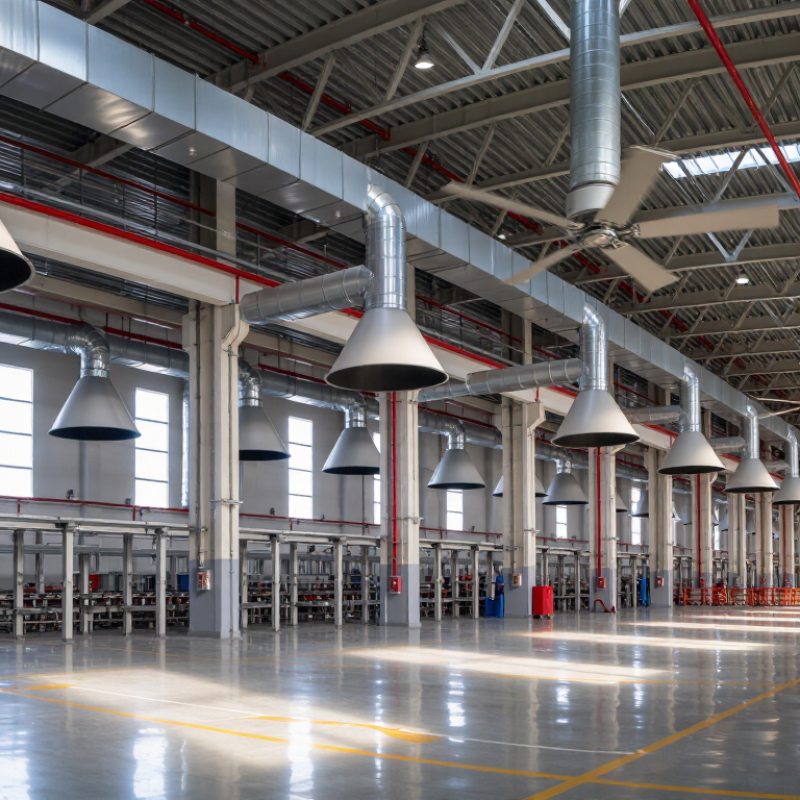
China Top 10 Industrial Exhaust Fan Manufacturers

Industrial Exhaust Fans: Types, Functions, and Applications

Industrial exhaust fans remove heat, fumes, moisture, and airborne particles from enclosed spaces. The right design depends on the air volume required, duct resistance, and the conditions inside the building. A fan that moves plenty of air in an open room may struggle when connected to long, narrow ductwork.

Axial fans push air along the direction of the blades. They suit walls, windows, and short ventilation paths where resistance is low. Centrifugal fans draw air into the center and discharge it outward, making them useful for duct systems with filters or bends.

Roof-mounted units can exhaust warm air from large facilities, while portable fans support temporary work areas. Each type has limits.

Applications vary. Workshops may need steady removal of heat and general fumes; kitchens often require grease-resistant equipment and accessible cleaning points. Warehouses benefit from air exchange that helps control stagnant, humid zones. Fan selection should account for room size, process heat, contaminants, and make-up air. Without replacement air, even a powerful exhaust fan can create uncomfortable pressure differences or perform poorly.

Check the details. Measure the duct route, not just the room. Noise, vibration, and maintenance access matter too, though they are easy to overlook during early planning. Airflow figures alone can be misleading; actual performance changes with system resistance. A simple site review helps, but it may miss seasonal conditions. That deserves a second look.

Criteria for Evaluating Chinese Industrial Exhaust Fan Manufacturers

When comparing Chinese industrial exhaust fan manufacturers, judge the evidence behind performance claims, not just the catalog figures. The International Energy Agency has estimated that electric motor systems use about 45% of global electricity. This makes efficiency at the required operating point a practical selection criterion. Ask for a fan curve showing airflow, static pressure, power, and efficiency, then compare it with your actual duct resistance and operating conditions.

Check whether performance testing follows a recognized method, such as ISO 5801 or AMCA 210/ASHRAE 51. Request the test conditions and a sample report; a headline airflow number alone can mislead. Also inspect material specifications, motor protection, vibration controls, and quality records. For corrosive or dusty sites, ask what the casing and impeller are made of, and how they are checked. A polished factory tour is useful, but it cannot replace traceable test data. I would also verify spare-part lead times and warranty response in writing; these details are easy to overlook.

Tips: Give each supplier the same duty point and site conditions. Compare noise and power at that point, not at different speeds. Keep one question open: does the quoted efficiency hold after installation?

Profiles of China’s Top 10 Industrial Exhaust Fan Manufacturers

Profiles of China’s Top 10 Industrial Exhaust Fan Manufacturers

A useful profile of each manufacturer should show more than product photos. Compare its experience with axial and centrifugal fans, airflow and pressure ranges, motor options, materials, and customization. For a dusty workshop, corrosion-prone process area, or hot production line, the right housing and impeller details matter. Check whether performance data comes from standardized testing, and whether the company can provide drawings, operating curves, and maintenance guidance. A polished catalog is not proof of field performance.

The U.S. Department of Energy’s Improving Fan System Performance: A Sourcebook for Industry estimates that fan-system improvements can offer energy savings of 5% to 50%, depending on the application. That range is broad. It is a reminder to assess the whole system, not just the fan: duct resistance, dampers, controls, and operating hours all affect energy use. Profiles should also identify manufacturing capacity, quality-control practices, export experience, and after-sales support. Comparisons remain imperfect when suppliers publish different test conditions.

Tips: Ask for a fan curve at your actual operating point. Confirm noise, vibration, and material specifications in writing. Request references for similar installations, but treat them as supporting evidence, not guarantees. A small mismatch can matter.

Comparing Product Range, Performance, and Manufacturing Capabilities

When comparing China’s top industrial exhaust fan manufacturers, look beyond catalog size. Product range matters because factories may need axial, centrifugal, roof, or corrosion-resistant fans for different processes. Check available impeller diameters, motor options, materials, and control features. A broad range is useful only when models match real operating conditions. Ask for airflow and pressure data at the expected duty point, not just maximum figures.

Performance depends on more than motor power. Compare airflow, static pressure, noise, vibration, and energy use under comparable test conditions. Request performance curves and confirm whether measurements reflect the complete fan assembly. Manufacturing capability also deserves close attention: inspect material traceability, balancing procedures, assembly checks, and the maker’s ability to maintain consistent tolerances. A capable workshop should explain these steps clearly. Still, a polished factory profile does not guarantee every order will be uniform; sample inspections and delivery records provide useful evidence.

Tips: Share your duct layout, operating temperature, and dust conditions before requesting quotations. Compare like with like, and note where data is missing. A ranking can help start research, but it cannot replace a technical review.

Choosing a Manufacturer for Your Industrial Ventilation Project

Choosing a manufacturer for an industrial ventilation project starts with the air the system must move. Share the required airflow, static pressure, operating hours, and site conditions before comparing proposals. Heat, fine dust, moisture, and corrosive vapors can all affect fan materials and service life. Numbers matter.

Ask each manufacturer how its team selects fan size, motor power, and impeller type for your duty point. A useful proposal should state its assumptions, expected performance, noise levels, and testing method. Request test records for comparable equipment, not just a general product sheet. Check whether the unit can fit existing ductwork, access doors, and lifting routes. A glossy catalog can hide practical gaps.

After-sales support deserves equal attention. Confirm spare-part availability, installation guidance, commissioning support, and response times for technical questions. If possible, speak with operators at a similar facility and ask what required adjustment after startup. A site visit may reveal details that drawings miss, such as vibration near a support frame. No checklist removes every risk; early airflow estimates can be wrong, and project conditions change. Leave room in the specification for verified measurements and a documented review before production.

FAQS

What information should I provide when requesting an industrial exhaust fan quotation?

Share required airflow, static pressure, operating hours, duct layout, and site conditions. Include heat, dust, moisture, and corrosive vapors if present.

Why should I request a fan performance curve?

It shows airflow, pressure, power, and efficiency across operating conditions. Compare the curve with your actual duct resistance, not just maximum airflow.

What test evidence should I ask for?

Request the test method, conditions, and a sample report for comparable equipment. A headline airflow figure alone can mislead.

How can I compare energy use between proposed fans?

Compare power and efficiency at the same duty point and operating conditions. Different speeds make direct comparisons unreliable. Numbers matter.

Which construction details matter at dusty or corrosive sites?

Ask about casing and impeller materials, motor protection, vibration controls, and inspection records. Fine dust can change what seems like a suitable choice.

How can I judge a manufacturer’s production consistency?

Ask about material traceability, balancing, assembly checks, and dimensional tolerances. Sample inspections and delivery records offer better evidence than a polished factory tour.

What should I confirm about installation and after-sales support?

Check fit with existing ducts, access doors, and lifting routes. Confirm spare-part lead times, commissioning help, and written response times.

Can a checklist guarantee the fan will perform as expected?

No. Measurements after installation may differ from early estimates, and site conditions can change. Leave room for a documented review before production.

Conclusion

Industrial Exhaust Fans play a vital role in maintaining safe, comfortable, and efficient working environments by removing heat, fumes, dust, and stale air. This article introduces common fan types, their functions, and their uses across different industrial settings. It also explains practical criteria for assessing manufacturers in China, including product quality, technical expertise, production capacity, customization options, and after-sales support.

Profiles of ten leading manufacturers provide a framework for comparing product ranges, performance, and manufacturing capabilities without relying on brand promotion. The article concludes with guidance for matching a manufacturer to a project’s ventilation requirements, operating conditions, budget, and installation needs. By considering these factors together, buyers can make a more informed choice and select equipment suited to both immediate demands and long-term performance.

Charlotte

Charlotte

Charlotte is a dedicated marketing professional with a deep understanding of the company’s products, customers, and industry landscape. With a strong combination of strategic thinking, market insight, and practical communication skills, she plays an important role in presenting the company’s value......