

0%

China has become a major production base for Industrial Axial Fans, serving factories, warehouses, power stations, tunnels, and agricultural facilities. This guide examines leading Chinese manufacturers through practical buying criteria, not attractive brochures alone. A reliable supplier should explain airflow volume, static pressure, motor efficiency, blade material, operating temperature, and expected service life. Those details matter when a fan must run beside a hot furnace or remove humid air from a chemical-processing hall.

James Dyson, a well-known engineering innovator, once said, “It’s not failure if you learn from it.” His words apply to fan selection. An oversized impeller may consume unnecessary power, while an undersized unit may leave workers facing stagnant, overheated air. Real performance depends on system resistance, duct length, inlet conditions, controls, and maintenance access. The best Industrial Axial Fans are not always the loudest or most expensive models.

This overview compares manufacturers by engineering capability, production experience, testing practices, customization options, and after-sales support. It considers whether suppliers provide performance curves, balancing records, motor documentation, and inspection evidence. Certifications can help, but they do not replace independent verification. That is an uncomfortable limitation. Some product claims remain difficult to compare because testing methods vary between factories. Buyers should request clear data, sample testing, and written warranty terms before placing a large order. A careful shortlist can reduce noise, energy waste, vibration, and costly downtime in demanding industrial environments.
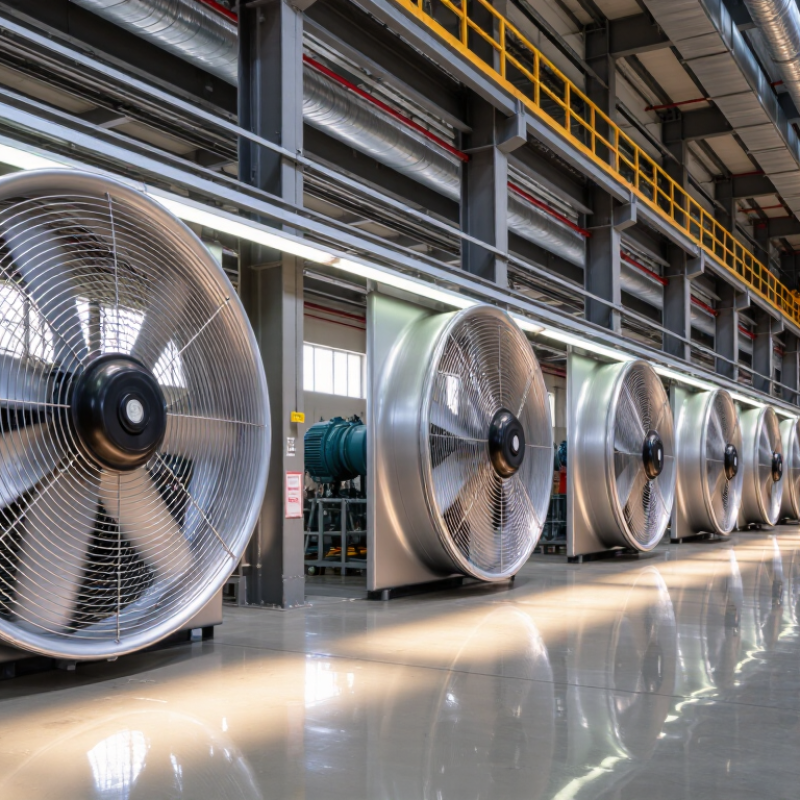
Top Industrial Axial Fan Manufacturers in China

Industrial Axial Fan Manufacturing in China: An Industry Overview

Industrial Axial Fan Manufacturing in China: An Industry Overview

China remains a major production base for industrial axial fans, supported by strong metalworking, motor, and control-system supply chains. The United Nations Industrial Development Organization reported that China contributed about 31% of global manufacturing value added in 2023. This scale supports competitive pricing and shorter component lead times. However, factory quality varies widely.

Market estimates are not perfectly consistent. Grand View Research projects steady global growth for industrial fans through 2030, while other reports show different rates because product categories overlap. Chinese manufacturers commonly produce tube axial, vane axial, and high-temperature models for workshops, tunnels, warehouses, and process plants. Better facilities document airflow, static pressure, vibration, noise, and motor efficiency. Testing should follow recognized methods, such as AMCA 210 or comparable national standards. In practice, real installation conditions can still reduce performance. Dust, poor duct alignment, and incorrect speed selection are often overlooked.

Tips: Request a complete performance curve, not only an airflow figure. Check balancing records and motor certificates. Ask for endurance-test evidence under your operating temperature. A useful factory audit should include blade inspection, welding quality, electrical protection, and final vibration testing. Do not judge reliability from price alone. A cheaper fan may require more maintenance. That lesson is easy to miss.

Industrial Axial Fan Manufacturing in China: Engineering Performance Overview

The chart presents normalized axial-fan performance at different rotational speeds. Based on the standard fan affinity laws, airflow changes in direct proportion to speed, while static pressure changes approximately with the square of speed. These relationships are widely used in industrial ventilation, cooling, process-air handling, and smoke-extraction fan design. The values are normalized engineering indicators rather than company or brand sales data.

Key Types of Industrial Axial Fans and Their Applications

Top Industrial Axial Fan Manufacturers in China

Industrial axial fans differ by blade design, casing, and pressure requirement. Propeller fans move large air volumes at low pressure, making them suitable for warehouses, workshops, and agricultural buildings. Tube axial fans use a cylindrical housing for steadier airflow through ducts. Vane axial fans add guide vanes, improving pressure recovery in tunnels, factories, and process ventilation systems. Jet fans create directional air movement without long duct runs. They are common in underground parking areas and smoke-control systems.

The U.S. Department of Energy reports that fan-system improvements can reduce energy use through better motors, controls, duct design, and maintenance. This matters because an oversized fan may waste power every operating hour. Variable-frequency drives help match airflow to changing production loads. However, their benefits depend on correct motor selection and minimum operating speed. A practical test is simple: check airflow, static pressure, vibration, and noise under real working conditions. Laboratory figures alone can mislead.

Tips: Ask for performance data tested under recognized AMCA or ISO procedures. Compare air volume at the required pressure, not only the motor rating. Inspect blade balance and bearing access before purchase. In humid or dusty plants, corrosion-resistant materials and washable guards deserve attention. Selection is not perfectly tidy. Site conditions often change after installation, so leave reasonable control flexibility and document the measured baseline. Industry reports frequently emphasize lifecycle cost, yet many buyers still compare only the initial quotation.

Leading Industrial Axial Fan Manufacturers in China

Leading Industrial Axial Fan Manufacturers in China

China’s industrial axial fan sector serves power plants, warehouses, tunnels, and process factories. The 2024 MarketsandMarkets report estimates the global industrial fan market will reach about USD 9.5 billion by 2028. Demand is rising for efficient airflow, lower noise, and dependable operation.

Leading industrial axial fan manufacturers in China usually provide engineering support, not only catalog products. Experienced teams calculate air volume, static pressure, temperature, and corrosion exposure before recommending a model. Their factories commonly use automated balancing, laser cutting, and controlled motor assembly. Performance testing should follow recognized AMCA or ISO methods, with records covering airflow, vibration, noise, and power consumption.

Details matter greatly.

The U.S. Department of Energy’s Fan System Assessment Tool highlights system-level losses from throttling, oversized equipment, and poor duct design. A high-efficiency motor cannot repair an unsuitable fan curve. Buyers should request test certificates, material specifications, bearing-life data, and factory acceptance procedures. Site experience also reveals practical weaknesses, such as difficult access to inspection doors or insufficient drainage around outdoor units.

Some supplier claims remain difficult to compare. Published efficiency figures may use different test conditions. That gap deserves scrutiny. A manufacturer can appear strong on price but weak on after-sales response, spare-part availability, or commissioning guidance. Careful buyers should inspect production records and verify reference projects before approving large orders.

Quality Standards, Technologies, and Production Capabilities

Top Industrial Axial Fan Manufacturers in China

Quality standards shape every stage of industrial axial fan production in China. Reliable manufacturers verify airflow, static pressure, vibration, noise, and motor temperature. Test data should match recognized international standards and documented customer requirements. Quality teams inspect steel thickness, weld penetration, impeller balance, and coating adhesion. Small defects matter.

Modern production often combines 3D modeling, CNC cutting, automated welding, and dynamic balancing equipment. These technologies improve repeatability and reduce assembly errors. Some factories use variable-frequency drive testing to examine performance under changing speeds. Thermal cameras can reveal motor heating during extended operation. Production lines also benefit from digital inspection records and barcode tracking.

Capabilities vary widely between manufacturers. An experienced facility should show its testing area, calibration records, and process controls without hesitation. It should explain how engineers select blade angles, materials, and motor ratings for dusty or humid environments. Yet no factory is flawless. A rushed inspection, unclear tolerance, or poorly trained operator can weaken a strong design. Buyers should review sample reports, request site audits, and compare measured results with promised performance. Factory scale helps, but disciplined workmanship matters more.

How to Select a Reliable Chinese Axial Fan Manufacturer

Selecting a reliable Chinese axial fan manufacturer requires more than comparing quotations. The International Energy Agency reports that motor-driven systems consume about 50% of global electricity. In industry, their share can reach nearly 70%. Fan efficiency affects operating costs for years.

Ask each manufacturer for airflow, static pressure, noise, power, and efficiency data. Request performance tests based on ISO 5801 or AMCA 210. Numbers matter. A trustworthy supplier should explain test conditions, not only show a catalogue curve.

Check impeller balancing, welding quality, motor protection, bearing life, and corrosion-resistant coatings. Factory videos are useful, but an independent audit is stronger.

Review production capacity and traceability. Can the supplier identify the steel batch, motor source, and final inspector? Request a sample unit before signing a large order. Measure vibration and sound at your expected duty point. MarketsandMarkets estimates continued growth in the industrial fan sector through 2030, increasing pressure on manufacturers to deliver consistent quality. However, market growth does not prove reliability. A low price may hide thinner blades, weaker insulation, or limited after-sales support.

No checklist is perfect. Your application data may also be incomplete. Share duct dimensions, temperature, dust level, duty cycle, and installation location. Then compare technical responses, warranty terms, spare-parts availability, and documented export experience.

FAQS

What are the main types of industrial axial fans?

Propeller fans move high air volumes at low pressure. They suit warehouses, workshops, and agricultural buildings. Tube axial fans provide steadier airflow through ducts. Vane axial fans improve pressure recovery in tunnels and factories. Jet fans create directional airflow without long duct runs.

How should I choose an axial fan for my facility?

Match the fan to air volume, static pressure, temperature, and site conditions. Consider dust, humidity, corrosion, noise, and available installation space. Do not compare motor ratings alone. The larger motor may waste energy.

Why can an oversized fan increase operating costs?

An oversized fan may move more air than the process requires. Throttling then wastes energy during every operating hour. Variable-frequency drives can reduce airflow when production loads fall. Their results depend on correct motor selection and minimum speed settings.

What performance information should suppliers provide?

Request airflow and static-pressure data from recognized test procedures. Ask for vibration, noise, power, and motor-temperature records. Compare results under similar conditions. Laboratory figures can mislead.

Which details should buyers inspect before placing an order?

Check blade balance, bearing access, steel thickness, weld quality, and coating adhesion. Inspect washable guards for dusty or humid environments. Outdoor units need suitable drainage. Small defects matter.

How can factory quality be evaluated?

Review calibration records, sample test reports, and documented process controls. Visit the testing area if possible. Ask about dynamic balancing, motor assembly, and inspection records. Factory scale helps, but workmanship matters more.

What problems may appear after installation?

Site conditions can change after installation. Duct resistance, production loads, noise, and vibration may differ from estimates. Measure airflow, static pressure, vibration, and noise during real operation. Leave reasonable control flexibility.

How should buyers compare suppliers beyond the initial price?

Examine spare-part availability, commissioning support, reference projects, and after-sales response. Review material specifications and bearing-life data. Compare lifecycle costs, not only quotations. The cheapest offer may become expensive later.

Conclusion

China has developed a strong industrial base for producing Industrial Axial Fans, supported by mature metalworking, motor manufacturing, and assembly capabilities. Manufacturers commonly supply tube axial, vane axial, and variable-pitch axial fans for factories, warehouses, power facilities, tunnels, agricultural buildings, and process ventilation systems. These products are designed to provide high air volume, stable operation, and flexible installation across demanding environments.

When evaluating a Chinese axial fan manufacturer, buyers should consider product design expertise, airflow and pressure performance, motor efficiency, noise control, corrosion resistance, and customization capabilities. Reliable suppliers should maintain consistent quality management, conduct performance and safety testing, and provide clear technical documentation. Production capacity, delivery reliability, after-sales support, and experience with international project requirements are also important factors. A careful comparison of certifications, testing procedures, materials, warranty terms, and communication efficiency can help customers select a dependable partner for long-term ventilation applications.

Ethan

Ethan

Ethan is a highly experienced marketing professional dedicated to helping businesses understand how thoughtful products and reliable services can create measurable value. With a strong command of the company’s offerings, he combines market insight, product knowledge, and clear communication to......