

+91 98209 33660
Selecting the right Double Inlet Centrifugal Blowers begins with the system, not the catalogue.
The U.S. Department of Energy reports that fan systems can represent a significant share of commercial and industrial electricity use. Its fan-system guidance also shows that improved design and controls can deliver substantial energy savings. AMCA International’s AMCA 210 standard provides the foundation for measuring airflow, pressure, power, and efficiency under controlled conditions. These details matter when comparing two blowers that look almost identical on paper.
Performance must match the duty point.
AMCA technical expert Mark Stevens has stated, “Fan performance cannot be separated from the system in which the fan operates.” This principle is easy to overlook. A blower may deliver impressive airflow at free discharge, yet struggle against a dirty filter, narrow duct, or sharp elbow. Selection should therefore examine required volume, static pressure, fan speed, motor efficiency, noise, vibration, and operating temperature. The U.S. Department of Energy and AHRI guidance both support evaluating equipment at realistic operating conditions, rather than relying only on maximum ratings.
Small errors become expensive.
A practical review should include the fan curve, system resistance curve, motor service factor, and expected operating hours. Double inlet designs can offer balanced loading and compact installation, but they are not automatically the best choice. Maintenance access, bearing life, inlet clearance, and control compatibility still require attention. The perfect selection rarely exists. A slightly conservative choice may reduce risk, while an oversized blower can waste energy and create unstable control. This guide explains how to compare evidence, question attractive specifications, and choose a dependable blower for its actual application.
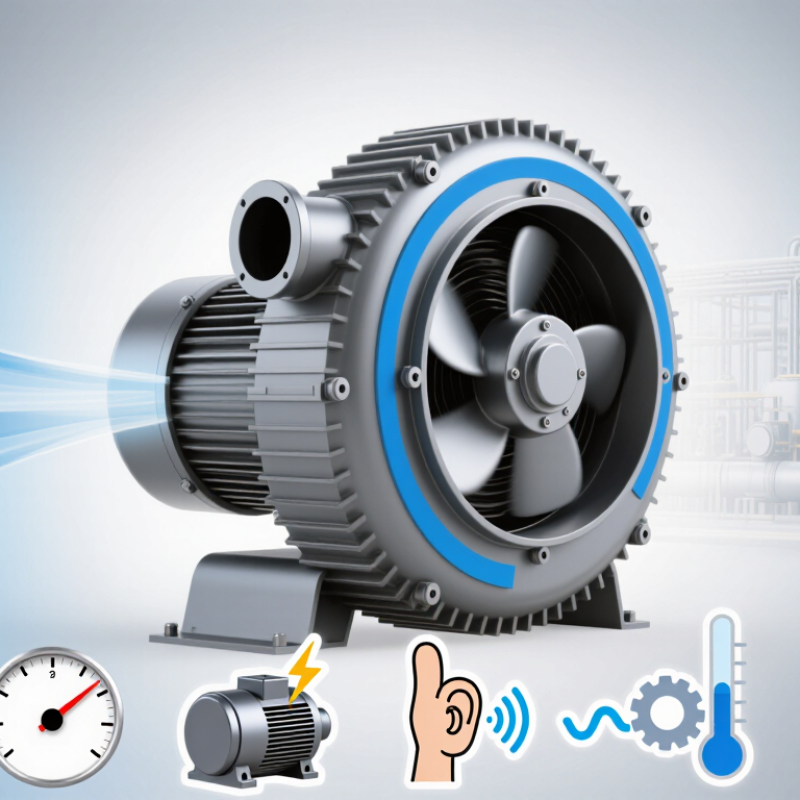
A double inlet centrifugal blower draws air through two separate openings on opposite sides of its impeller. It then discharges air radially through a scroll-shaped housing. Air enters axially.
The rotating impeller transfers mechanical energy to the air. Centrifugal force moves air outward between the blades, increasing its velocity. The housing gradually converts part of that velocity into useful static pressure. Two inlet paths can provide higher airflow within a compact arrangement. They may also improve load balance around the impeller.
Choosing the best unit requires more than comparing maximum airflow. Check the required volume, static pressure, air temperature, filter resistance, and operating hours. A blower rated at 10,000 cubic meters per hour may perform poorly against a restrictive duct system. I have seen selection errors caused by ignoring pressure loss. That detail matters.
Impeller diameter, blade design, motor speed, and inlet area affect efficiency and noise. A technician should verify rotation direction, bearing condition, belt tension, and vibration after installation. Small imbalance becomes obvious through rising vibration or uneven sound. Keep measurements.
Double inlet designs are not automatically better for every application. Space, maintenance access, corrosion exposure, and control requirements can change the decision. Performance data should come from tested operating curves, not only a catalog headline. Real systems often differ from clean laboratory conditions. That difference deserves honest attention.
| Selection Dimension | Definition or Operating Principle | Typical Engineering Data | How It Affects Selection |
|---|---|---|---|
| Basic Configuration | A double inlet centrifugal blower uses an impeller with two air-entry sides. Air enters from both sides of the wheel, is accelerated radially outward by the rotating blades, and is converted into static pressure inside the housing. | Two inlet paths; one common discharge outlet; air capacity is commonly about 1.8 to 2.0 times that of a comparable single-inlet arrangement when diameter, speed, and blade design are similar. | Choose this configuration when high airflow is required within a relatively compact casing width. Confirm the actual performance curve because inlet losses and casing geometry can prevent an exact two-times increase. |
| Airflow Capacity | Airflow is the volume of air moved per unit of time. It is normally specified at the operating point where the system resistance and blower performance curve intersect. | Common industrial applications may range from approximately 1,000 to 100,000 m³/h, depending on impeller diameter, rotational speed, and construction. | Select the blower using the required airflow at the required pressure, not airflow alone. Include the design margin recommended by the system designer rather than oversizing unnecessarily. |
| Static Pressure | Static pressure is the pressure available to overcome duct friction, filters, coils, dampers, heat exchangers, and other system resistance. | Many general-purpose centrifugal blowers operate in the approximate range of 500 to 3,000 Pa. Specialized designs can operate outside this range. | The selected blower should deliver the required airflow at the calculated system static pressure. A high-flow blower is unsuitable if it cannot overcome the system resistance. |
| Total Pressure | Total pressure combines static pressure and velocity pressure. It is useful when evaluating the complete energy increase provided to the air. | Total pressure is generally higher than static pressure by the velocity-pressure component at the measurement location. | Confirm whether the performance data are stated as static pressure or total pressure. Comparing unlike pressure definitions can lead to incorrect blower selection. |
| Operating Speed | The impeller transfers energy to the air through rotational motion. Increasing speed generally increases airflow, pressure, power consumption, and noise. |
Fan-law relationships for a fixed blower are approximately:
Airflow ∝ speed Pressure ∝ speed² Power ∝ speed³ |
Avoid selecting a speed that exceeds the impeller’s mechanical limit. Variable-speed control can improve regulation, but the motor, drive, bearings, and vibration limits must be checked. |
| Impeller Diameter | The impeller diameter influences the peripheral velocity and the amount of air that can be processed. Larger wheels generally provide greater capacity or pressure at a given speed. | Industrial double-inlet impellers may range from approximately 200 mm to more than 1,500 mm in diameter, depending on the application. | Check the available installation space, inlet clearance, discharge orientation, and required maintenance access before choosing a larger impeller. |
| Efficiency | Blower efficiency is the ratio of useful air power to shaft or electrical input power. It is affected by blade profile, clearances, inlet design, operating point, and casing losses. | Forward-curved centrifugal blowers may commonly achieve approximately 55% to 75% total efficiency, while optimized backward-curved designs may reach approximately 70% to 85% under suitable conditions. | Compare efficiency at the actual duty point. A blower operating far from its best-efficiency region may consume more energy and produce unstable airflow. |
| Blade Orientation | Forward-curved blades generally provide high airflow at relatively low speed. Backward-curved blades typically offer better efficiency and a non-overloading power characteristic. Radial blades are more resistant to particulate loading. | Blade selection depends on air cleanliness, pressure requirement, efficiency target, and resistance to dust or material buildup. | Use backward-curved blades for energy-conscious clean-air systems, forward-curved blades for compact high-volume applications, and radial designs for more demanding particulate environments. |
| Motor Power | Motor input must cover the blower shaft power at the maximum expected operating load, including transmission losses and an appropriate service margin. |
Required power can be estimated from:
Power (kW) ≈ Airflow (m³/s) × Pressure (Pa) ÷ Efficiency ÷ 1,000 |
Select the motor from the complete operating range, not only the normal duty point. Check starting current, voltage, frequency, enclosure rating, and variable-frequency-drive compatibility. |
| Air Temperature | Temperature changes air density and can affect motor loading, bearing life, clearances, seals, and material selection. | Standard general-purpose designs often handle approximately -20°C to 60°C air, while higher-temperature applications require dedicated materials, cooling, or high-temperature components. | State the minimum and maximum air temperature, not only the average value. Correct pressure and power calculations for the actual operating temperature and density. |
| Air Cleanliness | Dust, fibers, moisture, corrosive vapors, and combustible particles can damage the impeller or create deposits that reduce balance and performance. | Clean-air blowers can use narrower blade passages and higher-efficiency profiles. Dust-laden air may require wider passages, abrasion-resistant materials, filtration, or inspection access. | Identify particle size, concentration, moisture content, and chemical exposure before choosing blade material, coating, sealing, and maintenance intervals. |
| Noise and Vibration | Noise is generated by blade-passing effects, turbulence, motor operation, and airflow through ducts. Vibration may result from imbalance, misalignment, resonance, or bearing wear. | Sound levels are commonly specified in dB(A) at a defined distance and test condition. Vibration limits should be evaluated according to the applicable fan or machinery standard. | Consider inlet and outlet silencers, flexible connectors, isolation mounts, balancing quality, and structural stiffness when low noise or low vibration is required. |
| Inlet and Outlet Arrangement | The two inlets must receive reasonably uniform airflow. Poor approach conditions, sharp elbows, or unequal inlet resistance can reduce capacity and increase noise. | Allow straight, unobstructed approach space where possible. Use the manufacturer’s recommended clearance and duct transition geometry. | Confirm rotation direction, discharge angle, access side, duct size, and installation orientation before ordering. A correct blower can perform poorly with unsuitable ductwork. |
| System Operating Point | The actual operating point is determined by the intersection of the blower performance curve and the system resistance curve. |
System resistance typically increases approximately with the square of airflow:
Pressure loss ∝ airflow² |
Calculate duct, filter, coil, damper, and equipment losses at the design airflow. Select a blower whose stable operating region includes both normal and expected reduced-load conditions. |
| Maintenance Requirements | Routine maintenance may include cleaning the impeller, checking bearings, inspecting belts or couplings, verifying fasteners, and monitoring vibration. | Inspection frequency depends on operating hours, dust loading, temperature, speed, and bearing type. Dirty or unbalanced impellers can significantly reduce service life. | Choose a design with suitable access doors, drain provisions, replaceable wear components, and readily available service parts for the intended environment. |
| Selection Checklist | A complete specification should define the required airflow, pressure, air density, temperature, cleanliness, operating schedule, electrical supply, noise limit, installation arrangement, and control method. |
Minimum specification data:
Airflow, pressure, temperature, altitude, gas composition, motor power, speed control, duty cycle, and allowable noise. |
The best double inlet centrifugal blower is the one that meets the duty point efficiently and reliably while fitting the installation, environmental, safety, and maintenance requirements. |
| Engineering note: The numerical ranges above are general selection references rather than guaranteed ratings. Final selection should be based on a certified performance curve, the actual system resistance calculation, applicable safety requirements, and the blower’s specified operating limits. | |||
It draws air through two opposite openings and discharges air radially through a scroll-shaped housing. Air enters axially.
A rotating impeller transfers mechanical energy to the air. Centrifugal force increases air velocity, while the housing converts some velocity into static pressure.
Confirm airflow, static pressure, temperature, filter resistance, operating hours, space, and control requirements. Maximum airflow alone is not enough.
Not always. They can increase airflow and balance shaft loading, but maintenance access and installation space may change the decision.
Backward-curved impellers usually offer better efficiency and stable operation at higher pressure. Forward-curved wheels suit compact, lower-pressure applications.
Galvanized steel suits many indoor environments. Stainless steel handles humid or corrosive conditions better. Aluminum reduces weight but has limitations.
Measure motor input power at the actual duty point. Compare watts per unit of delivered airflow, including part-load operation.
Verify rotation, bearing condition, belt tension, vibration, motor current, airflow, and temperature. Keep the measurements.
Leave access for belt and bearing inspections. Request service drawings and check whether nearby ductwork blocks removal.
Request tested performance curves, airflow and pressure tolerances, sound levels, drawings, delivery dates, warranty terms, and commissioning support. Vague documents deserve caution.
Choosing the right Double Inlet Centrifugal Blowers begins with understanding how they draw air through two inlets and use centrifugal force to create steady airflow and pressure. Start by defining the required air volume, static pressure, operating temperature, and overall system resistance. These factors help determine the appropriate blower size and performance range while preventing inefficient operation or insufficient ventilation.
Next, compare blower construction, impeller design, materials, motor type, speed control, and energy efficiency. Consider the available installation space, inlet and outlet arrangement, noise limits, vibration control, accessibility for maintenance, and essential safety protections. A reliable selection should balance initial purchase cost with long-term energy use, service requirements, durability, and operating reliability. Finally, review technical specifications carefully and evaluate the supplier’s documentation, customization options, warranty, replacement parts, and after-sales support. The best blower is not simply the most powerful model, but the one that delivers stable performance, efficient operation, safe installation, and dependable value for the entire system.