Choosing the right Single Inlet Centrifugal Blowers can shape airflow, energy use, and maintenance costs. Global buyers face a crowded market. Product pages often highlight pressure figures without explaining test conditions. That gap can create expensive surprises.
This guide examines seven strong blower options for international applications. We compare airflow, static pressure, motor efficiency, noise, construction, and service access. Practical details matter. A balanced impeller should run smoothly, without harsh vibration through the housing. Durable steel or aluminum can improve performance in dusty factories and commercial ventilation systems. Motor voltage, frequency, insulation class, and mounting direction also require careful checking. Small specification differences matter.
Not every model suits every project. A compact blower may fit a tight cabinet but struggle under long duct resistance. A high-pressure unit may perform well yet consume more power than expected. We consider those trade-offs instead of presenting a perfect winner. That would be misleading. Selection should follow measured system resistance, operating temperature, duty cycle, and local electrical requirements. Buyers should verify certificates, warranty coverage, spare-part availability, and delivery terms with suppliers. Regional compliance can also affect installation approval. Our comparison uses manufacturer data, engineering principles, and practical purchasing concerns. Still, specifications can change between production batches. Treat this list as a starting point, not a final engineering approval.
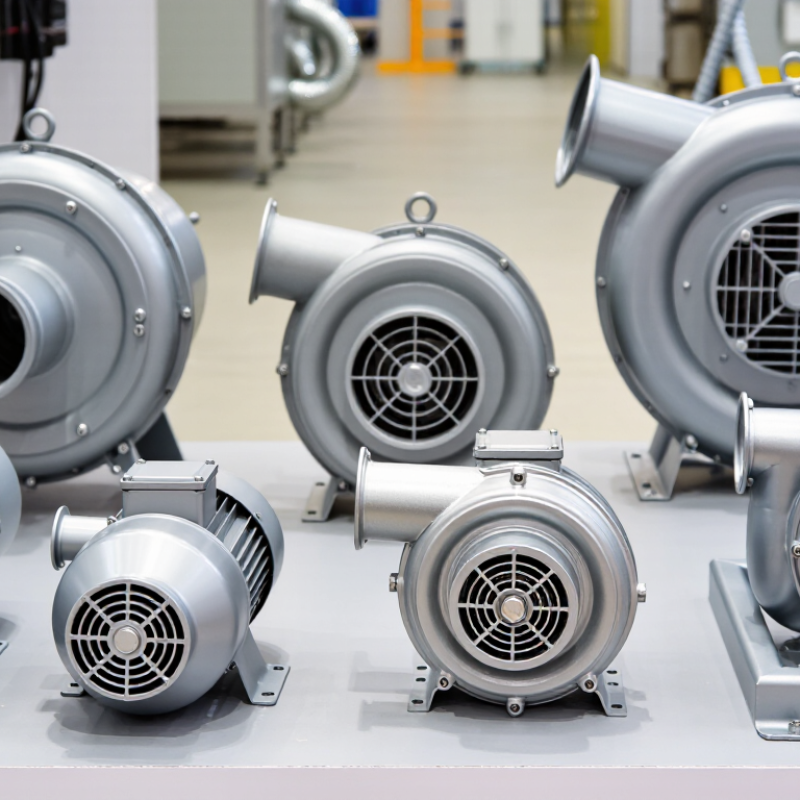
Single Inlet Centrifugal Blower Basics and Operating Principles
A single inlet centrifugal blower draws air through one side of its impeller. The motor rotates the wheel inside a shaped housing. Air enters near the hub, gains velocity, and moves outward through centrifugal force. The housing converts part of that velocity into static pressure. This pressure pushes air through ductwork, filters, or process equipment. Direction matters. An incorrectly fitted inlet can reduce capacity and increase noise.
Impeller blade shape controls much of the blower’s behavior. Backward-curved blades often deliver efficient operation across changing resistance. Forward-curved designs can provide high airflow in compact packages, but they may overload under certain conditions. Radial blades tolerate heavier dust more effectively, although efficiency can be lower. Actual performance depends on speed, air density, temperature, and system resistance. A catalog rating alone is not enough. Measure the working point.
For reliable verification, compare airflow, static pressure, current draw, and vibration after installation. A clamp meter can reveal an overloaded motor. A simple manometer helps verify pressure. Listen for rubbing, pulsation, or a loose bearing. Small changes matter. Filters gradually clog, pushing the fan away from its intended operating point. Global buyers should also confirm voltage, frequency, enclosure protection, and local installation requirements. I have seen teams trust rated airflow while ignoring blocked ducts. That shortcut created heat and disappointing output. The calculation was not always the problem.
7 Best Single Inlet Centrifugal Blowers for Global Buyers
Single Inlet Centrifugal Blower Basics and Operating Principles
This normalized chart illustrates the fan affinity laws used to evaluate centrifugal blower operation. When impeller speed changes, airflow varies directly with speed, pressure varies with the square of speed, and power varies with the cube of speed. The values are indexed to 100% at rated speed and are independent of any company or brand.
Key Specifications for Comparing Global Blower Models
7 Best Single Inlet Centrifugal Blowers for Global Buyers
Key Specifications for Comparing Global Blower Models
Selecting a single inlet centrifugal blower requires more than comparing airflow figures. Check rated volume, static pressure, rotational speed, and operating temperature together. A model delivering 8,000 m³/h may fail if the system needs higher pressure. Review the performance curve, not only the advertised peak value. Impeller diameter, blade shape, and inlet size also influence efficiency and vibration. In practical installations, a small mismatch can create noticeable noise and heat.
Tips: Confirm voltage, frequency, motor protection, and mounting dimensions before ordering. Ask for test conditions and tolerances. “Maximum airflow” often describes an unloaded point. That detail matters. Compare sound pressure data from similar distances, preferably under the same operating load. Inspect housing materials when moisture, dust, or mild corrosion is expected. Stainless components may help, but they are not automatically necessary.
Global buyers should also evaluate service life, bearing design, balancing quality, and replacement access. Request documented factory testing, efficiency data, and applicable safety certifications for the destination market. Packaging deserves attention too; a damaged shaft or bent inlet can appear after a long shipment. I have seen technically suitable units rejected because their control interface did not match local equipment. Datasheets can be incomplete, and assumptions become expensive. Leave room for verification through drawings, samples, and a written duty-point confirmation. Sometimes the “best” blower is not the largest one. It is the unit that remains stable, serviceable, and predictable in the real system.
Seven Recommended Single Inlet Centrifugal Blower Types
Seven Recommended Single Inlet Centrifugal Blower Types
For global buyers, seven single inlet centrifugal blower types deserve close attention. They include backward-curved, forward-curved, backward-inclined, airfoil, radial-blade, high-pressure, and dust-handling designs. Each type creates a different balance between airflow, pressure, efficiency, noise, and maintenance.
Backward-curved blowers suit clean-air systems needing strong efficiency. Forward-curved models deliver high airflow from compact housings. Backward-inclined designs offer stable operation across changing resistance. Airfoil blades reduce turbulence and energy loss, but they need cleaner air. Radial-blade blowers handle tougher air streams with greater durability. High-pressure types support long ducts, filters, and compact industrial equipment. Dust-handling designs use wider passages and reinforced blades for particulate-laden air.
Check the operating point carefully.
A fan producing impressive free-air volume may perform poorly after filters and bends are installed. I have seen buyers compare only motor power, then face weak airflow during real operation. That mistake is easy to repeat.
Request performance curves, sound data, vibration limits, and material details.
Confirm inlet dimensions, rotation direction, ambient temperature, and service access. Independent airflow testing adds confidence, especially for international projects. Yet test results can vary with installation quality. Leave room for adjustment.
Corrosion resistance also matters near moisture or chemical vapors.
Sealed bearings may reduce maintenance, while accessible bearings can simplify repairs. The best choice is not always the most powerful model. It is the type that matches the actual system resistance, air cleanliness, duty cycle, and local service conditions.
Application Matching Across Industrial and Commercial Systems
7 Best Single Inlet Centrifugal Blowers for Global Buyers
Application Matching Across Industrial and Commercial Systems
Choosing among the seven best single inlet centrifugal blowers starts with the application, not the catalog rating. A metalworking line may need high static pressure for filters and duct resistance. A commercial kitchen usually prioritizes grease control, cleanable surfaces, and manageable noise. These are different operating problems.
For drying cabinets, select a blower that tolerates elevated temperatures and continuous duty. Packaging equipment often needs stable airflow for cooling, sealing, or product separation. In HVAC systems, energy use, sound levels, and variable-speed control deserve equal attention. Dust collection requires suitable impeller design, accessible maintenance points, and protection against abrasive particles. Small ovens may need reliable heat movement, but insulation and motor placement remain critical.
Check airflow at the actual system pressure, not at free-air conditions. Confirm inlet orientation, motor enclosure, voltage, frequency, and installation space before approval. Field assessments often uncover undersized ducts, unexpected bends, or filters that load faster than expected. A blower can appear powerful and still perform poorly after installation. That is easy to miss.
The best choice may also change by region. Local electrical standards, ambient temperature, service access, and replacement-part availability affect reliability. Noise limits matter in offices, retail spaces, and shared production areas. Leave some design margin, but avoid excessive oversizing; it can increase energy use and create unstable control. A perfect match is uncommon. Careful measurement is better.
Installation, Maintenance, Safety, and International Purchasing Factors
Selecting the seven best single inlet centrifugal blowers requires more than comparing airflow figures. In field installations, inlet diameter, pressure demand, motor efficiency, and operating temperature must match the application. A blower that performs well in a test room may struggle with long ducts or dusty air. I have learned this the hard way.
Installation should include a rigid base, flexible connectors, balanced ductwork, and enough service clearance. The impeller must rotate freely before startup. Technicians should check alignment, fasteners, belt tension, and electrical connections. Guards must cover rotating parts. Lockout procedures are essential during cleaning or repairs. Small vibration changes matter. They often reveal bearing wear or impeller fouling before failure occurs.
Maintenance records should include vibration readings, current draw, bearing temperature, and filter condition. Safety switches need functional testing, not just visual inspection. For international purchasing, confirm voltage, frequency, motor protection, enclosure rating, duty cycle, and compatible spare parts. Request performance curves, material details, inspection reports, packing dimensions, and installation drawings. Export documents and destination requirements should be checked before payment. Incoterms, insurance, customs classification, and local certification can affect the real cost. A low quotation may hide expensive adaptation work. I still leave room for uncertainty, because site conditions are rarely as clean as the original specification.
FAQS
Compare airflow, static pressure, speed, temperature range, impeller size, and inlet dimensions together.
Maximum airflow usually occurs near free-air conditions.
Metalworking systems often need strong pressure for filters and long ducts.
Kitchens may need cleanable surfaces, grease control, and manageable noise.
Confirm voltage, frequency, motor protection, enclosure type, and mounting dimensions.
Elevated-temperature systems need suitable materials and motor placement.
Request drawings, samples, factory test records, efficiency data, and destination-market safety certifications.
No. Oversizing can increase energy use and create unstable control.
Conclusion
This guide explains the fundamentals and operating principles of Single Inlet Centrifugal Blowers, including how rotating impellers generate airflow and pressure for different system requirements. It outlines the key specifications global buyers should compare, such as airflow, static pressure, motor power, efficiency, noise level, materials, temperature range, dimensions, and electrical compatibility. The article also introduces seven recommended blower types, covering practical configurations for varied performance, installation, and environmental needs.
Readers will learn how to match blower designs with industrial and commercial applications, including ventilation, process air movement, cooling, dust control, and equipment support. It also provides practical guidance on installation, routine maintenance, safety precautions, packaging, documentation, certification, shipping, warranty terms, and supplier communication. By considering operating conditions, total lifecycle cost, local standards, and after-sales support, international purchasers can select a dependable solution that delivers stable performance and long-term value.